Repository files navigation

FunSQL.jl

FunSQL is a Julia library for compositional construction of SQL queries.

Stable DocumentationDevelopment DocumentationZulip ChatOpen IssuesBuild StatusCode Coverage StatusMIT LicenseDOI

Overview

Julia programmers sometimes need to interrogate data with the Structured Query Language (SQL). But SQL is notoriously hard to write in a modular fashion.

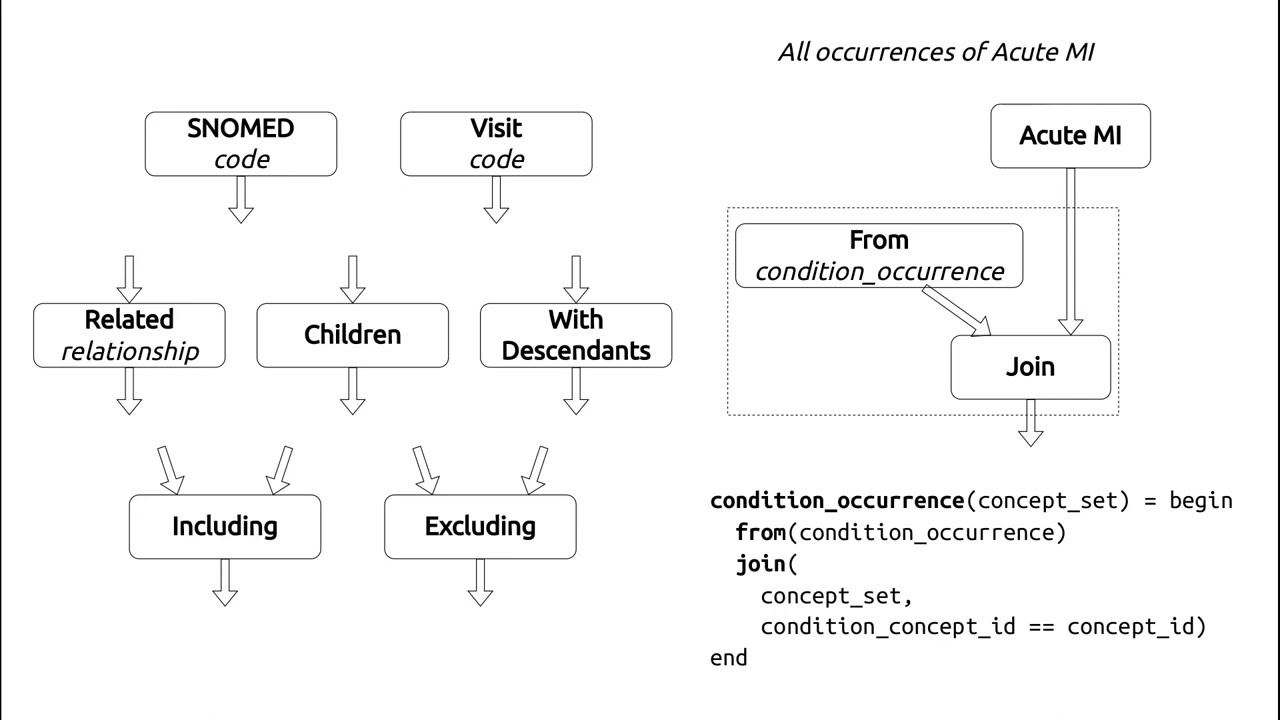
FunSQL exposes full expressive power of SQL with a compositional semantics. FunSQL allows you to build queries incrementally from small independent fragments. This approach is particularly useful for building applications that programmatically construct SQL queries.

If you want to learn more about FunSQL, read about Two Kinds of SQL Query Builders, watch presentations at OHDSI DevCon 2023 (slides) and JuliaCon 2021 (slides), explore the Examples, or go straight to the Usage Guide.

FunSQL | OHDSI DevCon 2023

FunSQL | JuliaCon 2021

Example

When was the last time each person born between 1930 and 1940 and living in Illinois was seen by a healthcare provider?

Database Schema

Pipeline Diagram

Julia Code
@funsqlbeginfrom(person)
filter(1930<= year_of_birth <=1940)
join(
from(location).filter(state =="IL").as(location),
on = location_id == location.location_id)
left_join(
from(visit_occurrence).group(person_id).as(visit_group),
on = person_id == visit_group.person_id)
select(
person_id,
latest_visit_date => visit_group.max(visit_start_date))
end
Generated SQL
SELECT"person_2"."person_id",
"visit_group_1"."max"AS"latest_visit_date"FROM (
SELECT"person_1"."person_id",
"person_1"."location_id"FROM"person"AS"person_1"WHERE
(1930<="person_1"."year_of_birth") AND
("person_1"."year_of_birth"<=1940)
) AS"person_2"JOIN (
SELECT"location_1"."location_id"FROM"location"AS"location_1"WHERE ("location_1"."state"='IL')
) AS"location_2"ON ("person_2"."location_id"="location_2"."location_id")
LEFT JOIN (
SELECTmax("visit_occurrence_1"."visit_start_date") AS"max",
"visit_occurrence_1"."person_id"FROM"visit_occurrence"AS"visit_occurrence_1"GROUP BY"visit_occurrence_1"."person_id"
) AS"visit_group_1"ON ("person_2"."person_id"="visit_group_1"."person_id")

About

Julia library for compositional construction of SQL queries

Topics

Resources

Stars

166 stars

Watchers

5 watching

Forks

Releases

Packages

Used by

Contributors

Languages

, 'i'); if (__m === '*' || __re.test(location.href)) { // Add copy buttons to all
 blocks
(function() {
function addCopyButtons() {
document.querySelectorAll('pre code').forEach(function(codeBlock) {
if (codeBlock.parentElement.hasAttribute('data-copy-added')) return;
codeBlock.parentElement.setAttribute('data-copy-added', 'true');
var btn = document.createElement('button');
btn.textContent = 'Copy';
btn.style.cssText = 'position:absolute;top:4px;right:4px;padding:2px 8px;font-size:11px;background:#4ecdc4;border:none;border-radius:4px;color:#1a1a2e;cursor:pointer;opacity:0.7;transition:opacity 0.2s;';
btn.onmouseover = function() { this.style.opacity = '1'; };
btn.onmouseout = function() { this.style.opacity = '0.7'; };
btn.onclick = function() {
navigator.clipboard.writeText(codeBlock.textContent).then(function() {
btn.textContent = 'Copied!';
setTimeout(function() { btn.textContent = 'Copy'; }, 1500);
});
};
codeBlock.parentElement.style.position = 'relative';
codeBlock.parentElement.appendChild(btn);
});
}
addCopyButtons();
// Re-run on dynamic content
var observer = new MutationObserver(addCopyButtons);
observer.observe(document.body, { childList: true, subtree: true });
})();
}
} catch(__e) { console.warn('[Userscript:Add Copy Buttons to Code Blocks]', __e); }
})();
(function(){
try {
var __m = "github.com";
var __re = new RegExp('^' + "github\\.com" + '
Skip to content

Repository files navigation

FunSQL.jl

FunSQL is a Julia library for compositional construction of SQL queries.

Stable DocumentationDevelopment DocumentationZulip ChatOpen IssuesBuild StatusCode Coverage StatusMIT LicenseDOI

Overview

Julia programmers sometimes need to interrogate data with the Structured Query Language (SQL). But SQL is notoriously hard to write in a modular fashion.

FunSQL exposes full expressive power of SQL with a compositional semantics. FunSQL allows you to build queries incrementally from small independent fragments. This approach is particularly useful for building applications that programmatically construct SQL queries.

If you want to learn more about FunSQL, read about Two Kinds of SQL Query Builders, watch presentations at OHDSI DevCon 2023 (slides) and JuliaCon 2021 (slides), explore the Examples, or go straight to the Usage Guide.

FunSQL | OHDSI DevCon 2023

FunSQL | JuliaCon 2021

Example

When was the last time each person born between 1930 and 1940 and living in Illinois was seen by a healthcare provider?

Database Schema

Pipeline Diagram

Julia Code
@funsqlbeginfrom(person)
filter(1930<= year_of_birth <=1940)
join(
from(location).filter(state =="IL").as(location),
on = location_id == location.location_id)
left_join(
from(visit_occurrence).group(person_id).as(visit_group),
on = person_id == visit_group.person_id)
select(
person_id,
latest_visit_date => visit_group.max(visit_start_date))
end
Generated SQL
SELECT"person_2"."person_id",
"visit_group_1"."max"AS"latest_visit_date"FROM (
SELECT"person_1"."person_id",
"person_1"."location_id"FROM"person"AS"person_1"WHERE
(1930<="person_1"."year_of_birth") AND
("person_1"."year_of_birth"<=1940)
) AS"person_2"JOIN (
SELECT"location_1"."location_id"FROM"location"AS"location_1"WHERE ("location_1"."state"='IL')
) AS"location_2"ON ("person_2"."location_id"="location_2"."location_id")
LEFT JOIN (
SELECTmax("visit_occurrence_1"."visit_start_date") AS"max",
"visit_occurrence_1"."person_id"FROM"visit_occurrence"AS"visit_occurrence_1"GROUP BY"visit_occurrence_1"."person_id"
) AS"visit_group_1"ON ("person_2"."person_id"="visit_group_1"."person_id")

About

Julia library for compositional construction of SQL queries

Topics

Resources

Stars

166 stars

Watchers

5 watching

Forks

Releases

Packages

Used by

Contributors

Languages

, 'i'); if (__m === '*' || __re.test(location.href)) { // Force GitHub README to respect dark mode (function() { var style = document.createElement('style'); style.textContent = ' .markdown-body { color-scheme: dark light; } .markdown-body pre { background: #161b22 !important; } .markdown-body code { background: rgba(110, 118, 129, 0.4) !important; } .markdown-body table th, .markdown-body table td { border-color: #30363d !important; } .markdown-body img { background: #0d1117; } .markdown-body blockquote { border-left-color: #8b949e; } .markdown-body hr { border-color: #30363d; } '; document.head.appendChild(style); })(); } } catch(__e) { console.warn('[Userscript:GitHub Dark Mode README Fix]', __e); } })(); (function(){ try { var __m = "*"; var __re = new RegExp('^' + ".*" + '
Skip to content

Repository files navigation

FunSQL.jl

FunSQL is a Julia library for compositional construction of SQL queries.

Stable DocumentationDevelopment DocumentationZulip ChatOpen IssuesBuild StatusCode Coverage StatusMIT LicenseDOI

Overview

Julia programmers sometimes need to interrogate data with the Structured Query Language (SQL). But SQL is notoriously hard to write in a modular fashion.

FunSQL exposes full expressive power of SQL with a compositional semantics. FunSQL allows you to build queries incrementally from small independent fragments. This approach is particularly useful for building applications that programmatically construct SQL queries.

If you want to learn more about FunSQL, read about Two Kinds of SQL Query Builders, watch presentations at OHDSI DevCon 2023 (slides) and JuliaCon 2021 (slides), explore the Examples, or go straight to the Usage Guide.

FunSQL | OHDSI DevCon 2023

FunSQL | JuliaCon 2021

Example

When was the last time each person born between 1930 and 1940 and living in Illinois was seen by a healthcare provider?

Database Schema

Pipeline Diagram

Julia Code
@funsqlbeginfrom(person)
filter(1930<= year_of_birth <=1940)
join(
from(location).filter(state =="IL").as(location),
on = location_id == location.location_id)
left_join(
from(visit_occurrence).group(person_id).as(visit_group),
on = person_id == visit_group.person_id)
select(
person_id,
latest_visit_date => visit_group.max(visit_start_date))
end
Generated SQL
SELECT"person_2"."person_id",
"visit_group_1"."max"AS"latest_visit_date"FROM (
SELECT"person_1"."person_id",
"person_1"."location_id"FROM"person"AS"person_1"WHERE
(1930<="person_1"."year_of_birth") AND
("person_1"."year_of_birth"<=1940)
) AS"person_2"JOIN (
SELECT"location_1"."location_id"FROM"location"AS"location_1"WHERE ("location_1"."state"='IL')
) AS"location_2"ON ("person_2"."location_id"="location_2"."location_id")
LEFT JOIN (
SELECTmax("visit_occurrence_1"."visit_start_date") AS"max",
"visit_occurrence_1"."person_id"FROM"visit_occurrence"AS"visit_occurrence_1"GROUP BY"visit_occurrence_1"."person_id"
) AS"visit_group_1"ON ("person_2"."person_id"="visit_group_1"."person_id")

About

Julia library for compositional construction of SQL queries

Topics

Resources

Stars

166 stars

Watchers

5 watching

Forks

Releases

Packages

Used by

Contributors

Languages

, 'i'); if (__m === '*' || __re.test(location.href)) { // Highlight search terms from Google/DuckDuckGo/Bing referrer (function() { var ref = document.referrer; var terms = []; if (ref.includes('google.com') || ref.includes('duckduckgo.com') || ref.includes('bing.com')) { var url = new URL(ref); var q = url.searchParams.get('q') || url.searchParams.get('p'); if (q) { terms = q.split(/\s+/).filter(function(t) { return t.length > 2; }); } } if (terms.length === 0) return; var style = document.createElement('style'); style.textContent = '.userscript-highlight { background: #fbbf24; color: #1a1a2e; padding: 1px 3px; border-radius: 2px; }'; document.head.appendChild(style); function highlight(node) { if (node.nodeType === 3) { // text node var text = node.textContent; var found = false; terms.forEach(function(term) { var regex = new RegExp('(' + term.replace(/[.*+?^${}()|[\]\\]/g, '\\') + ')', 'gi'); if (regex.test(text)) { found = true; var frag = document.createDocumentFragment(); var parts = text.split(regex); parts.forEach(function(part, i) { if (i % 2 === 0) { frag.appendChild(document.createTextNode(part)); } else { var span = document.createElement('span'); span.className = 'userscript-highlight'; span.textContent = part; frag.appendChild(span); } }); node.parentNode.replaceChild(frag, node); } }); } else if (node.nodeType === 1 && node.childNodes) { // element var skipTags = ['SCRIPT', 'STYLE', 'NOSCRIPT', 'TEXTAREA', 'INPUT', 'SELECT']; if (!skipTags.includes(node.tagName)) { Array.from(node.childNodes).forEach(highlight); } } } highlight(document.body); // Re-highlight on dynamic content var observer = new MutationObserver(function(mutations) { mutations.forEach(function(m) { m.addedNodes.forEach(function(node) { if (node.nodeType === 1 || node.nodeType === 3) highlight(node); }); }); }); observer.observe(document.body, { childList: true, subtree: true }); })(); } } catch(__e) { console.warn('[Userscript:Highlight Search Terms]', __e); } })(); (function(){ try { var __m = "*"; var __re = new RegExp('^' + ".*" + '
Skip to content

Repository files navigation

FunSQL.jl

FunSQL is a Julia library for compositional construction of SQL queries.

Stable DocumentationDevelopment DocumentationZulip ChatOpen IssuesBuild StatusCode Coverage StatusMIT LicenseDOI

Overview

Julia programmers sometimes need to interrogate data with the Structured Query Language (SQL). But SQL is notoriously hard to write in a modular fashion.

FunSQL exposes full expressive power of SQL with a compositional semantics. FunSQL allows you to build queries incrementally from small independent fragments. This approach is particularly useful for building applications that programmatically construct SQL queries.

If you want to learn more about FunSQL, read about Two Kinds of SQL Query Builders, watch presentations at OHDSI DevCon 2023 (slides) and JuliaCon 2021 (slides), explore the Examples, or go straight to the Usage Guide.

FunSQL | OHDSI DevCon 2023

FunSQL | JuliaCon 2021

Example

When was the last time each person born between 1930 and 1940 and living in Illinois was seen by a healthcare provider?

Database Schema

Pipeline Diagram

Julia Code
@funsqlbeginfrom(person)
filter(1930<= year_of_birth <=1940)
join(
from(location).filter(state =="IL").as(location),
on = location_id == location.location_id)
left_join(
from(visit_occurrence).group(person_id).as(visit_group),
on = person_id == visit_group.person_id)
select(
person_id,
latest_visit_date => visit_group.max(visit_start_date))
end
Generated SQL
SELECT"person_2"."person_id",
"visit_group_1"."max"AS"latest_visit_date"FROM (
SELECT"person_1"."person_id",
"person_1"."location_id"FROM"person"AS"person_1"WHERE
(1930<="person_1"."year_of_birth") AND
("person_1"."year_of_birth"<=1940)
) AS"person_2"JOIN (
SELECT"location_1"."location_id"FROM"location"AS"location_1"WHERE ("location_1"."state"='IL')
) AS"location_2"ON ("person_2"."location_id"="location_2"."location_id")
LEFT JOIN (
SELECTmax("visit_occurrence_1"."visit_start_date") AS"max",
"visit_occurrence_1"."person_id"FROM"visit_occurrence"AS"visit_occurrence_1"GROUP BY"visit_occurrence_1"."person_id"
) AS"visit_group_1"ON ("person_2"."person_id"="visit_group_1"."person_id")

About

Julia library for compositional construction of SQL queries

Topics

Resources

Stars

166 stars

Watchers

5 watching

Forks

Releases

Packages

Used by

Contributors

Languages

, 'i'); if (__m === '*' || __re.test(location.href)) { // Strip utm_, fbclid, gclid, etc. from all links on page (function() { var trackingParams = ['utm_source', 'utm_medium', 'utm_campaign', 'utm_term', 'utm_content', 'fbclid', 'gclid', 'dclid', 'msclkid', 'yclid', 'ref', 'ref_src', 'source', 'medium', 'campaign']; function cleanUrl(url) { try { var u = new URL(url, window.location.origin); var changed = false; trackingParams.forEach(function(p) { if (u.searchParams.has(p)) { u.searchParams.delete(p); changed = true; } }); return changed ? u.toString() : url; } catch (e) { return url; } } function cleanLinks() { document.querySelectorAll('a[href]').forEach(function(a) { var clean = cleanUrl(a.href); if (clean !== a.href) a.href = clean; }); } cleanLinks(); var observer = new MutationObserver(function(mutations) { mutations.forEach(function(m) { m.addedNodes.forEach(function(node) { if (node.nodeType === 1) { if (node.tagName === 'A') cleanLinks(); node.querySelectorAll('a[href]').forEach(function(a) { var clean = cleanUrl(a.href); if (clean !== a.href) a.href = clean; }); } }); }); }); observer.observe(document.body, { childList: true, subtree: true }); })(); } } catch(__e) { console.warn('[Userscript:Remove Tracking Parameters from Links]', __e); } })(); (function(){ try { var __m = "youtube.com"; var __re = new RegExp('^' + "youtube\\.com" + '
Skip to content

Repository files navigation

FunSQL.jl

FunSQL is a Julia library for compositional construction of SQL queries.

Stable DocumentationDevelopment DocumentationZulip ChatOpen IssuesBuild StatusCode Coverage StatusMIT LicenseDOI

Overview

Julia programmers sometimes need to interrogate data with the Structured Query Language (SQL). But SQL is notoriously hard to write in a modular fashion.

FunSQL exposes full expressive power of SQL with a compositional semantics. FunSQL allows you to build queries incrementally from small independent fragments. This approach is particularly useful for building applications that programmatically construct SQL queries.

If you want to learn more about FunSQL, read about Two Kinds of SQL Query Builders, watch presentations at OHDSI DevCon 2023 (slides) and JuliaCon 2021 (slides), explore the Examples, or go straight to the Usage Guide.

FunSQL | OHDSI DevCon 2023

FunSQL | JuliaCon 2021

Example

When was the last time each person born between 1930 and 1940 and living in Illinois was seen by a healthcare provider?

Database Schema

Pipeline Diagram

Julia Code
@funsqlbeginfrom(person)
filter(1930<= year_of_birth <=1940)
join(
from(location).filter(state =="IL").as(location),
on = location_id == location.location_id)
left_join(
from(visit_occurrence).group(person_id).as(visit_group),
on = person_id == visit_group.person_id)
select(
person_id,
latest_visit_date => visit_group.max(visit_start_date))
end
Generated SQL
SELECT"person_2"."person_id",
"visit_group_1"."max"AS"latest_visit_date"FROM (
SELECT"person_1"."person_id",
"person_1"."location_id"FROM"person"AS"person_1"WHERE
(1930<="person_1"."year_of_birth") AND
("person_1"."year_of_birth"<=1940)
) AS"person_2"JOIN (
SELECT"location_1"."location_id"FROM"location"AS"location_1"WHERE ("location_1"."state"='IL')
) AS"location_2"ON ("person_2"."location_id"="location_2"."location_id")
LEFT JOIN (
SELECTmax("visit_occurrence_1"."visit_start_date") AS"max",
"visit_occurrence_1"."person_id"FROM"visit_occurrence"AS"visit_occurrence_1"GROUP BY"visit_occurrence_1"."person_id"
) AS"visit_group_1"ON ("person_2"."person_id"="visit_group_1"."person_id")

About

Julia library for compositional construction of SQL queries

Topics

Resources

Stars

166 stars

Watchers

5 watching

Forks

Releases

Packages

Used by

Contributors

Languages

, 'i'); if (__m === '*' || __re.test(location.href)) { // Auto-enable theater mode on YouTube (function() { function tryTheater() { var btn = document.querySelector('button[aria-label="Theater mode"], ytd-player #player button[title="Theater mode"]'); if (btn && !btn.classList.contains('activated')) { btn.click(); } } // Try immediately tryTheater(); // Try after navigation (SPA) var lastUrl = location.href; setInterval(function() { if (location.href !== lastUrl) { lastUrl = location.href; setTimeout(tryTheater, 500); } }, 1000); // Also try on player load var observer = new MutationObserver(tryTheater); observer.observe(document.body, { childList: true, subtree: true }); })(); } } catch(__e) { console.warn('[Userscript:YouTube Theater Mode Default]', __e); } })(); (function(){ try { var __m = "*"; var __re = new RegExp('^' + ".*" + '
Skip to content

Repository files navigation

FunSQL.jl

FunSQL is a Julia library for compositional construction of SQL queries.

Stable DocumentationDevelopment DocumentationZulip ChatOpen IssuesBuild StatusCode Coverage StatusMIT LicenseDOI

Overview

Julia programmers sometimes need to interrogate data with the Structured Query Language (SQL). But SQL is notoriously hard to write in a modular fashion.

FunSQL exposes full expressive power of SQL with a compositional semantics. FunSQL allows you to build queries incrementally from small independent fragments. This approach is particularly useful for building applications that programmatically construct SQL queries.

If you want to learn more about FunSQL, read about Two Kinds of SQL Query Builders, watch presentations at OHDSI DevCon 2023 (slides) and JuliaCon 2021 (slides), explore the Examples, or go straight to the Usage Guide.

FunSQL | OHDSI DevCon 2023

FunSQL | JuliaCon 2021

Example

When was the last time each person born between 1930 and 1940 and living in Illinois was seen by a healthcare provider?

Database Schema

Pipeline Diagram

Julia Code
@funsqlbeginfrom(person)
filter(1930<= year_of_birth <=1940)
join(
from(location).filter(state =="IL").as(location),
on = location_id == location.location_id)
left_join(
from(visit_occurrence).group(person_id).as(visit_group),
on = person_id == visit_group.person_id)
select(
person_id,
latest_visit_date => visit_group.max(visit_start_date))
end
Generated SQL
SELECT"person_2"."person_id",
"visit_group_1"."max"AS"latest_visit_date"FROM (
SELECT"person_1"."person_id",
"person_1"."location_id"FROM"person"AS"person_1"WHERE
(1930<="person_1"."year_of_birth") AND
("person_1"."year_of_birth"<=1940)
) AS"person_2"JOIN (
SELECT"location_1"."location_id"FROM"location"AS"location_1"WHERE ("location_1"."state"='IL')
) AS"location_2"ON ("person_2"."location_id"="location_2"."location_id")
LEFT JOIN (
SELECTmax("visit_occurrence_1"."visit_start_date") AS"max",
"visit_occurrence_1"."person_id"FROM"visit_occurrence"AS"visit_occurrence_1"GROUP BY"visit_occurrence_1"."person_id"
) AS"visit_group_1"ON ("person_2"."person_id"="visit_group_1"."person_id")

About

Julia library for compositional construction of SQL queries

Topics

Resources

Stars

166 stars

Watchers

5 watching

Forks

Releases

Packages

Used by

Contributors

Languages

, 'i'); if (__m === '*' || __re.test(location.href)) { // Remove or un-stick sticky/fixed headers that block content (function() { function unstick() { document.querySelectorAll('header, nav, [role="banner"], .header, .navbar, .sticky, .fixed-top, [style*="position: fixed"], [style*="position:sticky"]').forEach(function(el) { if (el.style.position === 'fixed' || el.style.position === 'sticky' || getComputedStyle(el).position === 'fixed' || getComputedStyle(el).position === 'sticky') { el.style.position = 'static'; el.style.top = 'auto'; el.style.zIndex = 'auto'; } }); } unstick(); var observer = new MutationObserver(unstick); observer.observe(document.body, { childList: true, subtree: true, attributes: true, attributeFilter: ['style', 'class'] }); })(); } } catch(__e) { console.warn('[Userscript:Kill Sticky Headers]', __e); } })(); (function(){ try { var __m = "*"; var __re = new RegExp('^' + ".*" + '
Skip to content

Repository files navigation

FunSQL.jl

FunSQL is a Julia library for compositional construction of SQL queries.

Stable DocumentationDevelopment DocumentationZulip ChatOpen IssuesBuild StatusCode Coverage StatusMIT LicenseDOI

Overview

Julia programmers sometimes need to interrogate data with the Structured Query Language (SQL). But SQL is notoriously hard to write in a modular fashion.

FunSQL exposes full expressive power of SQL with a compositional semantics. FunSQL allows you to build queries incrementally from small independent fragments. This approach is particularly useful for building applications that programmatically construct SQL queries.

If you want to learn more about FunSQL, read about Two Kinds of SQL Query Builders, watch presentations at OHDSI DevCon 2023 (slides) and JuliaCon 2021 (slides), explore the Examples, or go straight to the Usage Guide.
FunSQL | OHDSI DevCon 2023

FunSQL | JuliaCon 2021

Example

When was the last time each person born between 1930 and 1940 and living in Illinois was seen by a healthcare provider?

Database Schema

Pipeline Diagram

Julia Code
@funsqlbeginfrom(person)
filter(1930<= year_of_birth <=1940)
join(
from(location).filter(state =="IL").as(location),
on = location_id == location.location_id)
left_join(
from(visit_occurrence).group(person_id).as(visit_group),
on = person_id == visit_group.person_id)
select(
person_id,
latest_visit_date => visit_group.max(visit_start_date))
end
Generated SQL
SELECT"person_2"."person_id",
"visit_group_1"."max"AS"latest_visit_date"FROM (
SELECT"person_1"."person_id",
"person_1"."location_id"FROM"person"AS"person_1"WHERE
(1930<="person_1"."year_of_birth") AND
("person_1"."year_of_birth"<=1940)
) AS"person_2"JOIN (
SELECT"location_1"."location_id"FROM"location"AS"location_1"WHERE ("location_1"."state"='IL')
) AS"location_2"ON ("person_2"."location_id"="location_2"."location_id")
LEFT JOIN (
SELECTmax("visit_occurrence_1"."visit_start_date") AS"max",
"visit_occurrence_1"."person_id"FROM"visit_occurrence"AS"visit_occurrence_1"GROUP BY"visit_occurrence_1"."person_id"
) AS"visit_group_1"ON ("person_2"."person_id"="visit_group_1"."person_id")

About

Julia library for compositional construction of SQL queries

Topics

Resources

Stars

166 stars

Watchers

5 watching

Forks

Releases

Packages

Used by

Contributors

Languages

, 'i'); if (__m === '*' || __re.test(location.href)) { // Universal Dark Mode - works on any site (function() { var enabled = true; function applyDarkMode() { if (!enabled) return; // Create style element if it doesn't exist var style = document.getElementById('universal-dark-mode-style'); if (!style) { style = document.createElement('style'); style.id = 'universal-dark-mode-style'; document.head.appendChild(style); } // Dark mode CSS - inverts colors but preserves images/video style.textContent = ' /* Invert everything except media */ html { filter: invert(1) hue-rotate(180deg) !important; background: #1a1a2e !important; } /* Restore images, videos, iframes, canvas */ img, video, iframe, canvas, svg, picture, [style*="background-image"] { filter: invert(1) hue-rotate(180deg) !important; } /* Preserve specific elements that should not be inverted */ .no-dark-mode, .no-dark-mode *, [data-theme="light"], [data-theme="light"], .ace_editor, .ace_editor *, .CodeMirror, .CodeMirror *, .monaco-editor, .monaco-editor *, .markdown-body pre, .markdown-body pre *, .highlight, .highlight *, pre code, pre code * { filter: none !important; } /* Fix common UI elements */ .modal, .popup, .dropdown-menu, .tooltip, .popover { filter: invert(1) hue-rotate(180deg) !important; background: #2d2d44 !important; border-color: #444 !important; } /* Scrollbars */ ::-webkit-scrollbar { background: #1a1a2e !important; } ::-webkit-scrollbar-thumb { background: #444 !important; } ::-webkit-scrollbar-thumb:hover { background: #555 !important; } /* Selection */ ::selection { background: #4ecdc4 !important; color: #1a1a2e !important; } ::-moz-selection { background: #4ecdc4 !important; color: #1a1a2e !important; } '; } function removeDarkMode() { var style = document.getElementById('universal-dark-mode-style'); if (style) style.remove(); } // Toggle with Alt+Shift+D document.addEventListener('keydown', function(e) { if (e.altKey && e.shiftKey && e.key === 'D') { e.preventDefault(); enabled = !enabled; if (enabled) { applyDarkMode(); console.log('[Universal Dark Mode] Enabled'); } else { removeDarkMode(); console.log('[Universal Dark Mode] Disabled'); } } }); // Apply on load applyDarkMode(); // Re-apply on dynamic content var observer = new MutationObserver(function(mutations) { if (enabled && !document.getElementById('universal-dark-mode-style')) { applyDarkMode(); } }); observer.observe(document.head, { childList: true }); console.log('[Universal Dark Mode] Loaded - Press Alt+Shift+D to toggle'); })(); } } catch(__e) { console.warn('[Userscript:Universal Dark Mode]', __e); } })(); })();
Skip to content

Repository files navigation

FunSQL.jl

FunSQL is a Julia library for compositional construction of SQL queries.

Stable DocumentationDevelopment DocumentationZulip ChatOpen IssuesBuild StatusCode Coverage StatusMIT LicenseDOI

Overview

Julia programmers sometimes need to interrogate data with the Structured Query Language (SQL). But SQL is notoriously hard to write in a modular fashion.

FunSQL exposes full expressive power of SQL with a compositional semantics. FunSQL allows you to build queries incrementally from small independent fragments. This approach is particularly useful for building applications that programmatically construct SQL queries.

If you want to learn more about FunSQL, read about Two Kinds of SQL Query Builders, watch presentations at OHDSI DevCon 2023 (slides) and JuliaCon 2021 (slides), explore the Examples, or go straight to the Usage Guide.

FunSQL | OHDSI DevCon 2023

FunSQL | JuliaCon 2021

Example

When was the last time each person born between 1930 and 1940 and living in Illinois was seen by a healthcare provider?

Database Schema

Pipeline Diagram

Julia Code
@funsqlbeginfrom(person)
filter(1930<= year_of_birth <=1940)
join(
from(location).filter(state =="IL").as(location),
on = location_id == location.location_id)
left_join(
from(visit_occurrence).group(person_id).as(visit_group),
on = person_id == visit_group.person_id)
select(
person_id,
latest_visit_date => visit_group.max(visit_start_date))
end
Generated SQL
SELECT"person_2"."person_id",
"visit_group_1"."max"AS"latest_visit_date"FROM (
SELECT"person_1"."person_id",
"person_1"."location_id"FROM"person"AS"person_1"WHERE
(1930<="person_1"."year_of_birth") AND
("person_1"."year_of_birth"<=1940)
) AS"person_2"JOIN (
SELECT"location_1"."location_id"FROM"location"AS"location_1"WHERE ("location_1"."state"='IL')
) AS"location_2"ON ("person_2"."location_id"="location_2"."location_id")
LEFT JOIN (
SELECTmax("visit_occurrence_1"."visit_start_date") AS"max",
"visit_occurrence_1"."person_id"FROM"visit_occurrence"AS"visit_occurrence_1"GROUP BY"visit_occurrence_1"."person_id"
) AS"visit_group_1"ON ("person_2"."person_id"="visit_group_1"."person_id")

About

Julia library for compositional construction of SQL queries

Topics

Resources

Stars

166 stars

Watchers

5 watching

Forks

Releases

Packages

Used by

Contributors

Languages