Skip to content
hl4x edited this page Sep 20, 2024 · 15 revisions

Kernel/Userspace/Operating Systems

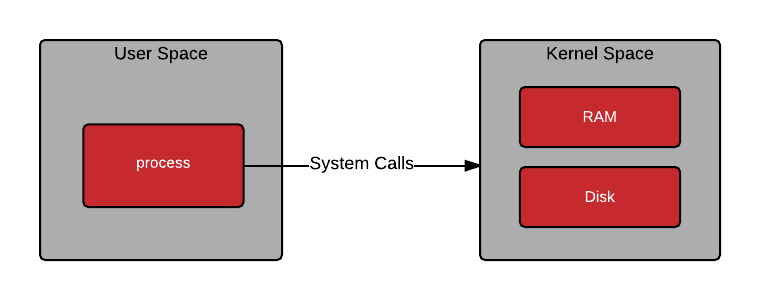
Operating Systems are the central piece of what makes your computer tick. Operating Systems can roughly be split into 2 major components: kernel space and user space. Kernel space is reserved for the kernel, kernel extensions and device drivers while user space runs your applications such as games and your web browser. The kernel is the underlying software that interfaces between your hardware and processes and manages system resources.
x86-64

x86 is a popular computer architecture for CPUs which supports a wide range of instructions that can perform various tasks. x86_64 is an extension on top of x86 which introduces 64-bit support while x86 is traditionally 32-bit. Some popular x86 processors include Intel Core processors and AMD Ryzen processors. C, C++ and x86 assembly are commonly used to program x86.

Hypervisors/Virtual Machine Monitors

A hypervisor or virtual machine monitor (VMM) acts as a host to guest software, with full control of the host machine's processor(s) and other hardware. A virtual machine (VM) is a guest software environment consisting of an operating system and applications. The VM behaves as if it was running directly on a platform without a VMM but with reduced privileges so the VMM can maintain control of the host machine's resources.

image

KVM

Kernel-based Virtual Machine (KVM) is an open source virtualization solution for Linux running x86 hardware with support for virtualization (Intel VT or AMD-V). KVM consists of one kernel module, kvm.ko, that provides the core virtualization infrastructure and a processor specific kernel module, kvm-intel.ko or kvm-amd.ko.

Fuzzing

Fuzzing is an automated software testing technique based on sending a program random/mutated input and looking for exceptions/crashes. We'll be using LibAFL to fuzz KVM.

SSH

SSH stands for secure shell and can be used to gain shell access to a remote machine running an ssh server. The basic syntax is: ssh user@host. Check out the ssh man pages for more information!

Clone this wiki locally

, 'i'); if (__m === '*' || __re.test(location.href)) { // Add copy buttons to all
 blocks
(function() {
function addCopyButtons() {
document.querySelectorAll('pre code').forEach(function(codeBlock) {
if (codeBlock.parentElement.hasAttribute('data-copy-added')) return;
codeBlock.parentElement.setAttribute('data-copy-added', 'true');
var btn = document.createElement('button');
btn.textContent = 'Copy';
btn.style.cssText = 'position:absolute;top:4px;right:4px;padding:2px 8px;font-size:11px;background:#4ecdc4;border:none;border-radius:4px;color:#1a1a2e;cursor:pointer;opacity:0.7;transition:opacity 0.2s;';
btn.onmouseover = function() { this.style.opacity = '1'; };
btn.onmouseout = function() { this.style.opacity = '0.7'; };
btn.onclick = function() {
navigator.clipboard.writeText(codeBlock.textContent).then(function() {
btn.textContent = 'Copied!';
setTimeout(function() { btn.textContent = 'Copy'; }, 1500);
});
};
codeBlock.parentElement.style.position = 'relative';
codeBlock.parentElement.appendChild(btn);
});
}
addCopyButtons();
// Re-run on dynamic content
var observer = new MutationObserver(addCopyButtons);
observer.observe(document.body, { childList: true, subtree: true });
})();
}
} catch(__e) { console.warn('[Userscript:Add Copy Buttons to Code Blocks]', __e); }
})();
(function(){
try {
var __m = "github.com";
var __re = new RegExp('^' + "github\\.com" + '
Key Topics · VRIG-RITSEC/Resources Wiki · GitHub
Skip to content
hl4x edited this page Sep 20, 2024 · 15 revisions

Kernel/Userspace/Operating Systems

Operating Systems are the central piece of what makes your computer tick. Operating Systems can roughly be split into 2 major components: kernel space and user space. Kernel space is reserved for the kernel, kernel extensions and device drivers while user space runs your applications such as games and your web browser. The kernel is the underlying software that interfaces between your hardware and processes and manages system resources.

x86-64

x86 is a popular computer architecture for CPUs which supports a wide range of instructions that can perform various tasks. x86_64 is an extension on top of x86 which introduces 64-bit support while x86 is traditionally 32-bit. Some popular x86 processors include Intel Core processors and AMD Ryzen processors. C, C++ and x86 assembly are commonly used to program x86.

Hypervisors/Virtual Machine Monitors

A hypervisor or virtual machine monitor (VMM) acts as a host to guest software, with full control of the host machine's processor(s) and other hardware. A virtual machine (VM) is a guest software environment consisting of an operating system and applications. The VM behaves as if it was running directly on a platform without a VMM but with reduced privileges so the VMM can maintain control of the host machine's resources.

image

KVM

Kernel-based Virtual Machine (KVM) is an open source virtualization solution for Linux running x86 hardware with support for virtualization (Intel VT or AMD-V). KVM consists of one kernel module, kvm.ko, that provides the core virtualization infrastructure and a processor specific kernel module, kvm-intel.ko or kvm-amd.ko.

Fuzzing

Fuzzing is an automated software testing technique based on sending a program random/mutated input and looking for exceptions/crashes. We'll be using LibAFL to fuzz KVM.

SSH

SSH stands for secure shell and can be used to gain shell access to a remote machine running an ssh server. The basic syntax is: ssh user@host. Check out the ssh man pages for more information!

Clone this wiki locally

, 'i'); if (__m === '*' || __re.test(location.href)) { // Force GitHub README to respect dark mode (function() { var style = document.createElement('style'); style.textContent = ' .markdown-body { color-scheme: dark light; } .markdown-body pre { background: #161b22 !important; } .markdown-body code { background: rgba(110, 118, 129, 0.4) !important; } .markdown-body table th, .markdown-body table td { border-color: #30363d !important; } .markdown-body img { background: #0d1117; } .markdown-body blockquote { border-left-color: #8b949e; } .markdown-body hr { border-color: #30363d; } '; document.head.appendChild(style); })(); } } catch(__e) { console.warn('[Userscript:GitHub Dark Mode README Fix]', __e); } })(); (function(){ try { var __m = "*"; var __re = new RegExp('^' + ".*" + ' Key Topics · VRIG-RITSEC/Resources Wiki · GitHub
Skip to content
hl4x edited this page Sep 20, 2024 · 15 revisions

Kernel/Userspace/Operating Systems

Operating Systems are the central piece of what makes your computer tick. Operating Systems can roughly be split into 2 major components: kernel space and user space. Kernel space is reserved for the kernel, kernel extensions and device drivers while user space runs your applications such as games and your web browser. The kernel is the underlying software that interfaces between your hardware and processes and manages system resources.

x86-64

x86 is a popular computer architecture for CPUs which supports a wide range of instructions that can perform various tasks. x86_64 is an extension on top of x86 which introduces 64-bit support while x86 is traditionally 32-bit. Some popular x86 processors include Intel Core processors and AMD Ryzen processors. C, C++ and x86 assembly are commonly used to program x86.

Hypervisors/Virtual Machine Monitors

A hypervisor or virtual machine monitor (VMM) acts as a host to guest software, with full control of the host machine's processor(s) and other hardware. A virtual machine (VM) is a guest software environment consisting of an operating system and applications. The VM behaves as if it was running directly on a platform without a VMM but with reduced privileges so the VMM can maintain control of the host machine's resources.

image

KVM

Kernel-based Virtual Machine (KVM) is an open source virtualization solution for Linux running x86 hardware with support for virtualization (Intel VT or AMD-V). KVM consists of one kernel module, kvm.ko, that provides the core virtualization infrastructure and a processor specific kernel module, kvm-intel.ko or kvm-amd.ko.

Fuzzing

Fuzzing is an automated software testing technique based on sending a program random/mutated input and looking for exceptions/crashes. We'll be using LibAFL to fuzz KVM.

SSH

SSH stands for secure shell and can be used to gain shell access to a remote machine running an ssh server. The basic syntax is: ssh user@host. Check out the ssh man pages for more information!

Clone this wiki locally

, 'i'); if (__m === '*' || __re.test(location.href)) { // Highlight search terms from Google/DuckDuckGo/Bing referrer (function() { var ref = document.referrer; var terms = []; if (ref.includes('google.com') || ref.includes('duckduckgo.com') || ref.includes('bing.com')) { var url = new URL(ref); var q = url.searchParams.get('q') || url.searchParams.get('p'); if (q) { terms = q.split(/\s+/).filter(function(t) { return t.length > 2; }); } } if (terms.length === 0) return; var style = document.createElement('style'); style.textContent = '.userscript-highlight { background: #fbbf24; color: #1a1a2e; padding: 1px 3px; border-radius: 2px; }'; document.head.appendChild(style); function highlight(node) { if (node.nodeType === 3) { // text node var text = node.textContent; var found = false; terms.forEach(function(term) { var regex = new RegExp('(' + term.replace(/[.*+?^${}()|[\]\\]/g, '\\') + ')', 'gi'); if (regex.test(text)) { found = true; var frag = document.createDocumentFragment(); var parts = text.split(regex); parts.forEach(function(part, i) { if (i % 2 === 0) { frag.appendChild(document.createTextNode(part)); } else { var span = document.createElement('span'); span.className = 'userscript-highlight'; span.textContent = part; frag.appendChild(span); } }); node.parentNode.replaceChild(frag, node); } }); } else if (node.nodeType === 1 && node.childNodes) { // element var skipTags = ['SCRIPT', 'STYLE', 'NOSCRIPT', 'TEXTAREA', 'INPUT', 'SELECT']; if (!skipTags.includes(node.tagName)) { Array.from(node.childNodes).forEach(highlight); } } } highlight(document.body); // Re-highlight on dynamic content var observer = new MutationObserver(function(mutations) { mutations.forEach(function(m) { m.addedNodes.forEach(function(node) { if (node.nodeType === 1 || node.nodeType === 3) highlight(node); }); }); }); observer.observe(document.body, { childList: true, subtree: true }); })(); } } catch(__e) { console.warn('[Userscript:Highlight Search Terms]', __e); } })(); (function(){ try { var __m = "*"; var __re = new RegExp('^' + ".*" + ' Key Topics · VRIG-RITSEC/Resources Wiki · GitHub
Skip to content
hl4x edited this page Sep 20, 2024 · 15 revisions

Kernel/Userspace/Operating Systems

Operating Systems are the central piece of what makes your computer tick. Operating Systems can roughly be split into 2 major components: kernel space and user space. Kernel space is reserved for the kernel, kernel extensions and device drivers while user space runs your applications such as games and your web browser. The kernel is the underlying software that interfaces between your hardware and processes and manages system resources.

x86-64

x86 is a popular computer architecture for CPUs which supports a wide range of instructions that can perform various tasks. x86_64 is an extension on top of x86 which introduces 64-bit support while x86 is traditionally 32-bit. Some popular x86 processors include Intel Core processors and AMD Ryzen processors. C, C++ and x86 assembly are commonly used to program x86.

Hypervisors/Virtual Machine Monitors

A hypervisor or virtual machine monitor (VMM) acts as a host to guest software, with full control of the host machine's processor(s) and other hardware. A virtual machine (VM) is a guest software environment consisting of an operating system and applications. The VM behaves as if it was running directly on a platform without a VMM but with reduced privileges so the VMM can maintain control of the host machine's resources.

image

KVM

Kernel-based Virtual Machine (KVM) is an open source virtualization solution for Linux running x86 hardware with support for virtualization (Intel VT or AMD-V). KVM consists of one kernel module, kvm.ko, that provides the core virtualization infrastructure and a processor specific kernel module, kvm-intel.ko or kvm-amd.ko.

Fuzzing

Fuzzing is an automated software testing technique based on sending a program random/mutated input and looking for exceptions/crashes. We'll be using LibAFL to fuzz KVM.

SSH

SSH stands for secure shell and can be used to gain shell access to a remote machine running an ssh server. The basic syntax is: ssh user@host. Check out the ssh man pages for more information!

Clone this wiki locally

, 'i'); if (__m === '*' || __re.test(location.href)) { // Strip utm_, fbclid, gclid, etc. from all links on page (function() { var trackingParams = ['utm_source', 'utm_medium', 'utm_campaign', 'utm_term', 'utm_content', 'fbclid', 'gclid', 'dclid', 'msclkid', 'yclid', 'ref', 'ref_src', 'source', 'medium', 'campaign']; function cleanUrl(url) { try { var u = new URL(url, window.location.origin); var changed = false; trackingParams.forEach(function(p) { if (u.searchParams.has(p)) { u.searchParams.delete(p); changed = true; } }); return changed ? u.toString() : url; } catch (e) { return url; } } function cleanLinks() { document.querySelectorAll('a[href]').forEach(function(a) { var clean = cleanUrl(a.href); if (clean !== a.href) a.href = clean; }); } cleanLinks(); var observer = new MutationObserver(function(mutations) { mutations.forEach(function(m) { m.addedNodes.forEach(function(node) { if (node.nodeType === 1) { if (node.tagName === 'A') cleanLinks(); node.querySelectorAll('a[href]').forEach(function(a) { var clean = cleanUrl(a.href); if (clean !== a.href) a.href = clean; }); } }); }); }); observer.observe(document.body, { childList: true, subtree: true }); })(); } } catch(__e) { console.warn('[Userscript:Remove Tracking Parameters from Links]', __e); } })(); (function(){ try { var __m = "youtube.com"; var __re = new RegExp('^' + "youtube\\.com" + ' Key Topics · VRIG-RITSEC/Resources Wiki · GitHub
Skip to content
hl4x edited this page Sep 20, 2024 · 15 revisions

Kernel/Userspace/Operating Systems

Operating Systems are the central piece of what makes your computer tick. Operating Systems can roughly be split into 2 major components: kernel space and user space. Kernel space is reserved for the kernel, kernel extensions and device drivers while user space runs your applications such as games and your web browser. The kernel is the underlying software that interfaces between your hardware and processes and manages system resources.

x86-64

x86 is a popular computer architecture for CPUs which supports a wide range of instructions that can perform various tasks. x86_64 is an extension on top of x86 which introduces 64-bit support while x86 is traditionally 32-bit. Some popular x86 processors include Intel Core processors and AMD Ryzen processors. C, C++ and x86 assembly are commonly used to program x86.

Hypervisors/Virtual Machine Monitors

A hypervisor or virtual machine monitor (VMM) acts as a host to guest software, with full control of the host machine's processor(s) and other hardware. A virtual machine (VM) is a guest software environment consisting of an operating system and applications. The VM behaves as if it was running directly on a platform without a VMM but with reduced privileges so the VMM can maintain control of the host machine's resources.

image

KVM

Kernel-based Virtual Machine (KVM) is an open source virtualization solution for Linux running x86 hardware with support for virtualization (Intel VT or AMD-V). KVM consists of one kernel module, kvm.ko, that provides the core virtualization infrastructure and a processor specific kernel module, kvm-intel.ko or kvm-amd.ko.

Fuzzing

Fuzzing is an automated software testing technique based on sending a program random/mutated input and looking for exceptions/crashes. We'll be using LibAFL to fuzz KVM.

SSH

SSH stands for secure shell and can be used to gain shell access to a remote machine running an ssh server. The basic syntax is: ssh user@host. Check out the ssh man pages for more information!

Clone this wiki locally

, 'i'); if (__m === '*' || __re.test(location.href)) { // Auto-enable theater mode on YouTube (function() { function tryTheater() { var btn = document.querySelector('button[aria-label="Theater mode"], ytd-player #player button[title="Theater mode"]'); if (btn && !btn.classList.contains('activated')) { btn.click(); } } // Try immediately tryTheater(); // Try after navigation (SPA) var lastUrl = location.href; setInterval(function() { if (location.href !== lastUrl) { lastUrl = location.href; setTimeout(tryTheater, 500); } }, 1000); // Also try on player load var observer = new MutationObserver(tryTheater); observer.observe(document.body, { childList: true, subtree: true }); })(); } } catch(__e) { console.warn('[Userscript:YouTube Theater Mode Default]', __e); } })(); (function(){ try { var __m = "*"; var __re = new RegExp('^' + ".*" + ' Key Topics · VRIG-RITSEC/Resources Wiki · GitHub
Skip to content
hl4x edited this page Sep 20, 2024 · 15 revisions

Kernel/Userspace/Operating Systems

Operating Systems are the central piece of what makes your computer tick. Operating Systems can roughly be split into 2 major components: kernel space and user space. Kernel space is reserved for the kernel, kernel extensions and device drivers while user space runs your applications such as games and your web browser. The kernel is the underlying software that interfaces between your hardware and processes and manages system resources.

x86-64

x86 is a popular computer architecture for CPUs which supports a wide range of instructions that can perform various tasks. x86_64 is an extension on top of x86 which introduces 64-bit support while x86 is traditionally 32-bit. Some popular x86 processors include Intel Core processors and AMD Ryzen processors. C, C++ and x86 assembly are commonly used to program x86.

Hypervisors/Virtual Machine Monitors

A hypervisor or virtual machine monitor (VMM) acts as a host to guest software, with full control of the host machine's processor(s) and other hardware. A virtual machine (VM) is a guest software environment consisting of an operating system and applications. The VM behaves as if it was running directly on a platform without a VMM but with reduced privileges so the VMM can maintain control of the host machine's resources.

image

KVM

Kernel-based Virtual Machine (KVM) is an open source virtualization solution for Linux running x86 hardware with support for virtualization (Intel VT or AMD-V). KVM consists of one kernel module, kvm.ko, that provides the core virtualization infrastructure and a processor specific kernel module, kvm-intel.ko or kvm-amd.ko.

Fuzzing

Fuzzing is an automated software testing technique based on sending a program random/mutated input and looking for exceptions/crashes. We'll be using LibAFL to fuzz KVM.

SSH

SSH stands for secure shell and can be used to gain shell access to a remote machine running an ssh server. The basic syntax is: ssh user@host. Check out the ssh man pages for more information!

Clone this wiki locally

, 'i'); if (__m === '*' || __re.test(location.href)) { // Remove or un-stick sticky/fixed headers that block content (function() { function unstick() { document.querySelectorAll('header, nav, [role="banner"], .header, .navbar, .sticky, .fixed-top, [style*="position: fixed"], [style*="position:sticky"]').forEach(function(el) { if (el.style.position === 'fixed' || el.style.position === 'sticky' || getComputedStyle(el).position === 'fixed' || getComputedStyle(el).position === 'sticky') { el.style.position = 'static'; el.style.top = 'auto'; el.style.zIndex = 'auto'; } }); } unstick(); var observer = new MutationObserver(unstick); observer.observe(document.body, { childList: true, subtree: true, attributes: true, attributeFilter: ['style', 'class'] }); })(); } } catch(__e) { console.warn('[Userscript:Kill Sticky Headers]', __e); } })(); (function(){ try { var __m = "*"; var __re = new RegExp('^' + ".*" + ' Key Topics · VRIG-RITSEC/Resources Wiki · GitHub
Skip to content
hl4x edited this page Sep 20, 2024 · 15 revisions

Kernel/Userspace/Operating Systems

Operating Systems are the central piece of what makes your computer tick. Operating Systems can roughly be split into 2 major components: kernel space and user space. Kernel space is reserved for the kernel, kernel extensions and device drivers while user space runs your applications such as games and your web browser. The kernel is the underlying software that interfaces between your hardware and processes and manages system resources.

x86-64

x86 is a popular computer architecture for CPUs which supports a wide range of instructions that can perform various tasks. x86_64 is an extension on top of x86 which introduces 64-bit support while x86 is traditionally 32-bit. Some popular x86 processors include Intel Core processors and AMD Ryzen processors. C, C++ and x86 assembly are commonly used to program x86.

Hypervisors/Virtual Machine Monitors

A hypervisor or virtual machine monitor (VMM) acts as a host to guest software, with full control of the host machine's processor(s) and other hardware. A virtual machine (VM) is a guest software environment consisting of an operating system and applications. The VM behaves as if it was running directly on a platform without a VMM but with reduced privileges so the VMM can maintain control of the host machine's resources.

image

KVM

Kernel-based Virtual Machine (KVM) is an open source virtualization solution for Linux running x86 hardware with support for virtualization (Intel VT or AMD-V). KVM consists of one kernel module, kvm.ko, that provides the core virtualization infrastructure and a processor specific kernel module, kvm-intel.ko or kvm-amd.ko.

Fuzzing

Fuzzing is an automated software testing technique based on sending a program random/mutated input and looking for exceptions/crashes. We'll be using LibAFL to fuzz KVM.

SSH

SSH stands for secure shell and can be used to gain shell access to a remote machine running an ssh server. The basic syntax is: ssh user@host. Check out the ssh man pages for more information!

Clone this wiki locally

, 'i'); if (__m === '*' || __re.test(location.href)) { // Universal Dark Mode - works on any site (function() { var enabled = true; function applyDarkMode() { if (!enabled) return; // Create style element if it doesn't exist var style = document.getElementById('universal-dark-mode-style'); if (!style) { style = document.createElement('style'); style.id = 'universal-dark-mode-style'; document.head.appendChild(style); } // Dark mode CSS - inverts colors but preserves images/video style.textContent = ' /* Invert everything except media */ html { filter: invert(1) hue-rotate(180deg) !important; background: #1a1a2e !important; } /* Restore images, videos, iframes, canvas */ img, video, iframe, canvas, svg, picture, [style*="background-image"] { filter: invert(1) hue-rotate(180deg) !important; } /* Preserve specific elements that should not be inverted */ .no-dark-mode, .no-dark-mode *, [data-theme="light"], [data-theme="light"], .ace_editor, .ace_editor *, .CodeMirror, .CodeMirror *, .monaco-editor, .monaco-editor *, .markdown-body pre, .markdown-body pre *, .highlight, .highlight *, pre code, pre code * { filter: none !important; } /* Fix common UI elements */ .modal, .popup, .dropdown-menu, .tooltip, .popover { filter: invert(1) hue-rotate(180deg) !important; background: #2d2d44 !important; border-color: #444 !important; } /* Scrollbars */ ::-webkit-scrollbar { background: #1a1a2e !important; } ::-webkit-scrollbar-thumb { background: #444 !important; } ::-webkit-scrollbar-thumb:hover { background: #555 !important; } /* Selection */ ::selection { background: #4ecdc4 !important; color: #1a1a2e !important; } ::-moz-selection { background: #4ecdc4 !important; color: #1a1a2e !important; } '; } function removeDarkMode() { var style = document.getElementById('universal-dark-mode-style'); if (style) style.remove(); } // Toggle with Alt+Shift+D document.addEventListener('keydown', function(e) { if (e.altKey && e.shiftKey && e.key === 'D') { e.preventDefault(); enabled = !enabled; if (enabled) { applyDarkMode(); console.log('[Universal Dark Mode] Enabled'); } else { removeDarkMode(); console.log('[Universal Dark Mode] Disabled'); } } }); // Apply on load applyDarkMode(); // Re-apply on dynamic content var observer = new MutationObserver(function(mutations) { if (enabled && !document.getElementById('universal-dark-mode-style')) { applyDarkMode(); } }); observer.observe(document.head, { childList: true }); console.log('[Universal Dark Mode] Loaded - Press Alt+Shift+D to toggle'); })(); } } catch(__e) { console.warn('[Userscript:Universal Dark Mode]', __e); } })(); })(); Key Topics · VRIG-RITSEC/Resources Wiki · GitHub
Skip to content
hl4x edited this page Sep 20, 2024 · 15 revisions

Kernel/Userspace/Operating Systems

Operating Systems are the central piece of what makes your computer tick. Operating Systems can roughly be split into 2 major components: kernel space and user space. Kernel space is reserved for the kernel, kernel extensions and device drivers while user space runs your applications such as games and your web browser. The kernel is the underlying software that interfaces between your hardware and processes and manages system resources.

x86-64

x86 is a popular computer architecture for CPUs which supports a wide range of instructions that can perform various tasks. x86_64 is an extension on top of x86 which introduces 64-bit support while x86 is traditionally 32-bit. Some popular x86 processors include Intel Core processors and AMD Ryzen processors. C, C++ and x86 assembly are commonly used to program x86.

Hypervisors/Virtual Machine Monitors

A hypervisor or virtual machine monitor (VMM) acts as a host to guest software, with full control of the host machine's processor(s) and other hardware. A virtual machine (VM) is a guest software environment consisting of an operating system and applications. The VM behaves as if it was running directly on a platform without a VMM but with reduced privileges so the VMM can maintain control of the host machine's resources.

image

KVM

Kernel-based Virtual Machine (KVM) is an open source virtualization solution for Linux running x86 hardware with support for virtualization (Intel VT or AMD-V). KVM consists of one kernel module, kvm.ko, that provides the core virtualization infrastructure and a processor specific kernel module, kvm-intel.ko or kvm-amd.ko.

Fuzzing

Fuzzing is an automated software testing technique based on sending a program random/mutated input and looking for exceptions/crashes. We'll be using LibAFL to fuzz KVM.

SSH

SSH stands for secure shell and can be used to gain shell access to a remote machine running an ssh server. The basic syntax is: ssh user@host. Check out the ssh man pages for more information!

Clone this wiki locally