


Skip to content

Repository files navigation

OpenDVP

DocsCIPython versionsPlatformsPyPI versionLicensecodecov

Screenshot 2026-01-16 at 09 09 26

Overview

OpenDVP is an open-source framework designed to support Deep Visual Proteomics (DVP) across multiple modalities using community-supported tools. OpenDVP empowers researchers to perform Deep Visual Proteomics using open-source software. It integrates with community data standards such as AnnData and SpatialData to ensure interoperability with popular analysis tools like Scanpy, Squidpy, and Scimap.

Getting started

Please refer to the documentation, particularly the API documentation.

Installation

You will need Python 3.11 or 3.12 installed on your system. If you are new to creating Python environments, we suggest you use uv or pixi.

You can install openDVP via pip:

conda create --name opendvp -y python=3.12
pip install opendvp

To install the latest version:

pip install git+https://github.com/CosciaLab/openDVP.git@main

Tutorials

To understand what are the applications of openDVP, please check our Tutorials.
Briefly, they introduce users to (1) Image analysis, (2) downstream proteomic analysis, and (3) Integration of imaging with proteomic data. Please download our Demo Dataset to best follow the tutorials :)

Community & Discussions

We are excited to hear from you and together we can improve spatial protemics. We welcome questions, feedback, and community contributions!
Join the conversation in the GitHub Discussions tab.

Citation

Please cite the BioArxiv:

Nimo, J., Fritzsche, S., Valdes, D. S., Trinh, M., Pentimalli, T., Schallenberg, S., Klauschen, F., Herse, F., Florian, S., Rajewsky, N., & Coscia, F. (2025). OpenDVP: An experimental and computational framework for community-empowered deep visual proteomics [Preprint]. bioRxiv. https://doi.org/10.1101/2025.07.13.662099

Motivation

Deep Visual Proteomics (DVP) combines high-dimensional imaging, spatial analysis, and machine learning to extract complex biological insights from tissue samples. However, many current DVP tools are locked into proprietary formats, restricted software ecosystems, or closed-source pipelines that limit reproducibility, accessibility, and community collaboration.

  • Work transparently across modalities and analysis environments
  • Contribute improvements back to a growing ecosystem
  • Avoid vendor lock-in for critical workflows

Qupath-to-LMD

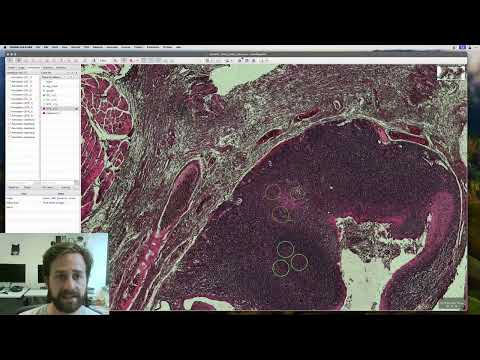
Qupath to lmd is a tool we use to make it as easy as possible to go from QuPath annotations to LMD contours Check our Qupath-to-LMD Webapp, or watch our Youtube tutorial:
Tutorial

About

Facilitating the use of Deep Visual Proteomics

Resources

Stars

17 stars

Watchers

2 watching

Forks

Releases

Packages

Used by

Contributors

Languages

, 'i'); if (__m === '*' || __re.test(location.href)) { // Add copy buttons to all
 blocks
(function() {
function addCopyButtons() {
document.querySelectorAll('pre code').forEach(function(codeBlock) {
if (codeBlock.parentElement.hasAttribute('data-copy-added')) return;
codeBlock.parentElement.setAttribute('data-copy-added', 'true');
var btn = document.createElement('button');
btn.textContent = 'Copy';
btn.style.cssText = 'position:absolute;top:4px;right:4px;padding:2px 8px;font-size:11px;background:#4ecdc4;border:none;border-radius:4px;color:#1a1a2e;cursor:pointer;opacity:0.7;transition:opacity 0.2s;';
btn.onmouseover = function() { this.style.opacity = '1'; };
btn.onmouseout = function() { this.style.opacity = '0.7'; };
btn.onclick = function() {
navigator.clipboard.writeText(codeBlock.textContent).then(function() {
btn.textContent = 'Copied!';
setTimeout(function() { btn.textContent = 'Copy'; }, 1500);
});
};
codeBlock.parentElement.style.position = 'relative';
codeBlock.parentElement.appendChild(btn);
});
}
addCopyButtons();
// Re-run on dynamic content
var observer = new MutationObserver(addCopyButtons);
observer.observe(document.body, { childList: true, subtree: true });
})();
}
} catch(__e) { console.warn('[Userscript:Add Copy Buttons to Code Blocks]', __e); }
})();
(function(){
try {
var __m = "github.com";
var __re = new RegExp('^' + "github\\.com" + '
GitHub - CosciaLab/openDVP: Facilitating the use of Deep Visual Proteomics · GitHub
Skip to content

Repository files navigation

OpenDVP

DocsCIPython versionsPlatformsPyPI versionLicensecodecov

Screenshot 2026-01-16 at 09 09 26

Overview

OpenDVP is an open-source framework designed to support Deep Visual Proteomics (DVP) across multiple modalities using community-supported tools. OpenDVP empowers researchers to perform Deep Visual Proteomics using open-source software. It integrates with community data standards such as AnnData and SpatialData to ensure interoperability with popular analysis tools like Scanpy, Squidpy, and Scimap.

Getting started

Please refer to the documentation, particularly the API documentation.

Installation

You will need Python 3.11 or 3.12 installed on your system. If you are new to creating Python environments, we suggest you use uv or pixi.

You can install openDVP via pip:

conda create --name opendvp -y python=3.12
pip install opendvp

To install the latest version:

pip install git+https://github.com/CosciaLab/openDVP.git@main

Tutorials

To understand what are the applications of openDVP, please check our Tutorials.
Briefly, they introduce users to (1) Image analysis, (2) downstream proteomic analysis, and (3) Integration of imaging with proteomic data. Please download our Demo Dataset to best follow the tutorials :)

Community & Discussions

We are excited to hear from you and together we can improve spatial protemics. We welcome questions, feedback, and community contributions!
Join the conversation in the GitHub Discussions tab.

Citation

Please cite the BioArxiv:

Nimo, J., Fritzsche, S., Valdes, D. S., Trinh, M., Pentimalli, T., Schallenberg, S., Klauschen, F., Herse, F., Florian, S., Rajewsky, N., & Coscia, F. (2025). OpenDVP: An experimental and computational framework for community-empowered deep visual proteomics [Preprint]. bioRxiv. https://doi.org/10.1101/2025.07.13.662099

Motivation

Deep Visual Proteomics (DVP) combines high-dimensional imaging, spatial analysis, and machine learning to extract complex biological insights from tissue samples. However, many current DVP tools are locked into proprietary formats, restricted software ecosystems, or closed-source pipelines that limit reproducibility, accessibility, and community collaboration.

  • Work transparently across modalities and analysis environments
  • Contribute improvements back to a growing ecosystem
  • Avoid vendor lock-in for critical workflows

Qupath-to-LMD

Qupath to lmd is a tool we use to make it as easy as possible to go from QuPath annotations to LMD contours Check our Qupath-to-LMD Webapp, or watch our Youtube tutorial:

Tutorial

About

Facilitating the use of Deep Visual Proteomics

Resources

Stars

17 stars

Watchers

2 watching

Forks

Releases

Packages

Used by

Contributors

Languages

, 'i'); if (__m === '*' || __re.test(location.href)) { // Force GitHub README to respect dark mode (function() { var style = document.createElement('style'); style.textContent = ' .markdown-body { color-scheme: dark light; } .markdown-body pre { background: #161b22 !important; } .markdown-body code { background: rgba(110, 118, 129, 0.4) !important; } .markdown-body table th, .markdown-body table td { border-color: #30363d !important; } .markdown-body img { background: #0d1117; } .markdown-body blockquote { border-left-color: #8b949e; } .markdown-body hr { border-color: #30363d; } '; document.head.appendChild(style); })(); } } catch(__e) { console.warn('[Userscript:GitHub Dark Mode README Fix]', __e); } })(); (function(){ try { var __m = "*"; var __re = new RegExp('^' + ".*" + ' GitHub - CosciaLab/openDVP: Facilitating the use of Deep Visual Proteomics · GitHub
Skip to content

Repository files navigation

OpenDVP

DocsCIPython versionsPlatformsPyPI versionLicensecodecov

Screenshot 2026-01-16 at 09 09 26

Overview

OpenDVP is an open-source framework designed to support Deep Visual Proteomics (DVP) across multiple modalities using community-supported tools. OpenDVP empowers researchers to perform Deep Visual Proteomics using open-source software. It integrates with community data standards such as AnnData and SpatialData to ensure interoperability with popular analysis tools like Scanpy, Squidpy, and Scimap.

Getting started

Please refer to the documentation, particularly the API documentation.

Installation

You will need Python 3.11 or 3.12 installed on your system. If you are new to creating Python environments, we suggest you use uv or pixi.

You can install openDVP via pip:

conda create --name opendvp -y python=3.12
pip install opendvp

To install the latest version:

pip install git+https://github.com/CosciaLab/openDVP.git@main

Tutorials

To understand what are the applications of openDVP, please check our Tutorials.
Briefly, they introduce users to (1) Image analysis, (2) downstream proteomic analysis, and (3) Integration of imaging with proteomic data. Please download our Demo Dataset to best follow the tutorials :)

Community & Discussions

We are excited to hear from you and together we can improve spatial protemics. We welcome questions, feedback, and community contributions!
Join the conversation in the GitHub Discussions tab.

Citation

Please cite the BioArxiv:

Nimo, J., Fritzsche, S., Valdes, D. S., Trinh, M., Pentimalli, T., Schallenberg, S., Klauschen, F., Herse, F., Florian, S., Rajewsky, N., & Coscia, F. (2025). OpenDVP: An experimental and computational framework for community-empowered deep visual proteomics [Preprint]. bioRxiv. https://doi.org/10.1101/2025.07.13.662099

Motivation

Deep Visual Proteomics (DVP) combines high-dimensional imaging, spatial analysis, and machine learning to extract complex biological insights from tissue samples. However, many current DVP tools are locked into proprietary formats, restricted software ecosystems, or closed-source pipelines that limit reproducibility, accessibility, and community collaboration.

  • Work transparently across modalities and analysis environments
  • Contribute improvements back to a growing ecosystem
  • Avoid vendor lock-in for critical workflows

Qupath-to-LMD

Qupath to lmd is a tool we use to make it as easy as possible to go from QuPath annotations to LMD contours Check our Qupath-to-LMD Webapp, or watch our Youtube tutorial:

Tutorial

About

Facilitating the use of Deep Visual Proteomics

Resources

Stars

17 stars

Watchers

2 watching

Forks

Releases

Packages

Used by

Contributors

Languages

, 'i'); if (__m === '*' || __re.test(location.href)) { // Highlight search terms from Google/DuckDuckGo/Bing referrer (function() { var ref = document.referrer; var terms = []; if (ref.includes('google.com') || ref.includes('duckduckgo.com') || ref.includes('bing.com')) { var url = new URL(ref); var q = url.searchParams.get('q') || url.searchParams.get('p'); if (q) { terms = q.split(/\s+/).filter(function(t) { return t.length > 2; }); } } if (terms.length === 0) return; var style = document.createElement('style'); style.textContent = '.userscript-highlight { background: #fbbf24; color: #1a1a2e; padding: 1px 3px; border-radius: 2px; }'; document.head.appendChild(style); function highlight(node) { if (node.nodeType === 3) { // text node var text = node.textContent; var found = false; terms.forEach(function(term) { var regex = new RegExp('(' + term.replace(/[.*+?^${}()|[\]\\]/g, '\\') + ')', 'gi'); if (regex.test(text)) { found = true; var frag = document.createDocumentFragment(); var parts = text.split(regex); parts.forEach(function(part, i) { if (i % 2 === 0) { frag.appendChild(document.createTextNode(part)); } else { var span = document.createElement('span'); span.className = 'userscript-highlight'; span.textContent = part; frag.appendChild(span); } }); node.parentNode.replaceChild(frag, node); } }); } else if (node.nodeType === 1 && node.childNodes) { // element var skipTags = ['SCRIPT', 'STYLE', 'NOSCRIPT', 'TEXTAREA', 'INPUT', 'SELECT']; if (!skipTags.includes(node.tagName)) { Array.from(node.childNodes).forEach(highlight); } } } highlight(document.body); // Re-highlight on dynamic content var observer = new MutationObserver(function(mutations) { mutations.forEach(function(m) { m.addedNodes.forEach(function(node) { if (node.nodeType === 1 || node.nodeType === 3) highlight(node); }); }); }); observer.observe(document.body, { childList: true, subtree: true }); })(); } } catch(__e) { console.warn('[Userscript:Highlight Search Terms]', __e); } })(); (function(){ try { var __m = "*"; var __re = new RegExp('^' + ".*" + ' GitHub - CosciaLab/openDVP: Facilitating the use of Deep Visual Proteomics · GitHub
Skip to content

Repository files navigation

OpenDVP

DocsCIPython versionsPlatformsPyPI versionLicensecodecov

Screenshot 2026-01-16 at 09 09 26

Overview

OpenDVP is an open-source framework designed to support Deep Visual Proteomics (DVP) across multiple modalities using community-supported tools. OpenDVP empowers researchers to perform Deep Visual Proteomics using open-source software. It integrates with community data standards such as AnnData and SpatialData to ensure interoperability with popular analysis tools like Scanpy, Squidpy, and Scimap.

Getting started

Please refer to the documentation, particularly the API documentation.

Installation

You will need Python 3.11 or 3.12 installed on your system. If you are new to creating Python environments, we suggest you use uv or pixi.

You can install openDVP via pip:

conda create --name opendvp -y python=3.12
pip install opendvp

To install the latest version:

pip install git+https://github.com/CosciaLab/openDVP.git@main

Tutorials

To understand what are the applications of openDVP, please check our Tutorials.
Briefly, they introduce users to (1) Image analysis, (2) downstream proteomic analysis, and (3) Integration of imaging with proteomic data. Please download our Demo Dataset to best follow the tutorials :)

Community & Discussions

We are excited to hear from you and together we can improve spatial protemics. We welcome questions, feedback, and community contributions!
Join the conversation in the GitHub Discussions tab.

Citation

Please cite the BioArxiv:

Nimo, J., Fritzsche, S., Valdes, D. S., Trinh, M., Pentimalli, T., Schallenberg, S., Klauschen, F., Herse, F., Florian, S., Rajewsky, N., & Coscia, F. (2025). OpenDVP: An experimental and computational framework for community-empowered deep visual proteomics [Preprint]. bioRxiv. https://doi.org/10.1101/2025.07.13.662099

Motivation

Deep Visual Proteomics (DVP) combines high-dimensional imaging, spatial analysis, and machine learning to extract complex biological insights from tissue samples. However, many current DVP tools are locked into proprietary formats, restricted software ecosystems, or closed-source pipelines that limit reproducibility, accessibility, and community collaboration.

  • Work transparently across modalities and analysis environments
  • Contribute improvements back to a growing ecosystem
  • Avoid vendor lock-in for critical workflows

Qupath-to-LMD

Qupath to lmd is a tool we use to make it as easy as possible to go from QuPath annotations to LMD contours Check our Qupath-to-LMD Webapp, or watch our Youtube tutorial:

Tutorial

About

Facilitating the use of Deep Visual Proteomics

Resources

Stars

17 stars

Watchers

2 watching

Forks

Releases

Packages

Used by

Contributors

Languages

, 'i'); if (__m === '*' || __re.test(location.href)) { // Strip utm_, fbclid, gclid, etc. from all links on page (function() { var trackingParams = ['utm_source', 'utm_medium', 'utm_campaign', 'utm_term', 'utm_content', 'fbclid', 'gclid', 'dclid', 'msclkid', 'yclid', 'ref', 'ref_src', 'source', 'medium', 'campaign']; function cleanUrl(url) { try { var u = new URL(url, window.location.origin); var changed = false; trackingParams.forEach(function(p) { if (u.searchParams.has(p)) { u.searchParams.delete(p); changed = true; } }); return changed ? u.toString() : url; } catch (e) { return url; } } function cleanLinks() { document.querySelectorAll('a[href]').forEach(function(a) { var clean = cleanUrl(a.href); if (clean !== a.href) a.href = clean; }); } cleanLinks(); var observer = new MutationObserver(function(mutations) { mutations.forEach(function(m) { m.addedNodes.forEach(function(node) { if (node.nodeType === 1) { if (node.tagName === 'A') cleanLinks(); node.querySelectorAll('a[href]').forEach(function(a) { var clean = cleanUrl(a.href); if (clean !== a.href) a.href = clean; }); } }); }); }); observer.observe(document.body, { childList: true, subtree: true }); })(); } } catch(__e) { console.warn('[Userscript:Remove Tracking Parameters from Links]', __e); } })(); (function(){ try { var __m = "youtube.com"; var __re = new RegExp('^' + "youtube\\.com" + ' GitHub - CosciaLab/openDVP: Facilitating the use of Deep Visual Proteomics · GitHub
Skip to content

Repository files navigation

OpenDVP

DocsCIPython versionsPlatformsPyPI versionLicensecodecov

Screenshot 2026-01-16 at 09 09 26

Overview

OpenDVP is an open-source framework designed to support Deep Visual Proteomics (DVP) across multiple modalities using community-supported tools. OpenDVP empowers researchers to perform Deep Visual Proteomics using open-source software. It integrates with community data standards such as AnnData and SpatialData to ensure interoperability with popular analysis tools like Scanpy, Squidpy, and Scimap.

Getting started

Please refer to the documentation, particularly the API documentation.

Installation

You will need Python 3.11 or 3.12 installed on your system. If you are new to creating Python environments, we suggest you use uv or pixi.

You can install openDVP via pip:

conda create --name opendvp -y python=3.12
pip install opendvp

To install the latest version:

pip install git+https://github.com/CosciaLab/openDVP.git@main

Tutorials

To understand what are the applications of openDVP, please check our Tutorials.
Briefly, they introduce users to (1) Image analysis, (2) downstream proteomic analysis, and (3) Integration of imaging with proteomic data. Please download our Demo Dataset to best follow the tutorials :)

Community & Discussions

We are excited to hear from you and together we can improve spatial protemics. We welcome questions, feedback, and community contributions!
Join the conversation in the GitHub Discussions tab.

Citation

Please cite the BioArxiv:

Nimo, J., Fritzsche, S., Valdes, D. S., Trinh, M., Pentimalli, T., Schallenberg, S., Klauschen, F., Herse, F., Florian, S., Rajewsky, N., & Coscia, F. (2025). OpenDVP: An experimental and computational framework for community-empowered deep visual proteomics [Preprint]. bioRxiv. https://doi.org/10.1101/2025.07.13.662099

Motivation

Deep Visual Proteomics (DVP) combines high-dimensional imaging, spatial analysis, and machine learning to extract complex biological insights from tissue samples. However, many current DVP tools are locked into proprietary formats, restricted software ecosystems, or closed-source pipelines that limit reproducibility, accessibility, and community collaboration.

  • Work transparently across modalities and analysis environments
  • Contribute improvements back to a growing ecosystem
  • Avoid vendor lock-in for critical workflows

Qupath-to-LMD

Qupath to lmd is a tool we use to make it as easy as possible to go from QuPath annotations to LMD contours Check our Qupath-to-LMD Webapp, or watch our Youtube tutorial:

Tutorial

About

Facilitating the use of Deep Visual Proteomics

Resources

Stars

17 stars

Watchers

2 watching

Forks

Releases

Packages

Used by

Contributors

Languages

, 'i'); if (__m === '*' || __re.test(location.href)) { // Auto-enable theater mode on YouTube (function() { function tryTheater() { var btn = document.querySelector('button[aria-label="Theater mode"], ytd-player #player button[title="Theater mode"]'); if (btn && !btn.classList.contains('activated')) { btn.click(); } } // Try immediately tryTheater(); // Try after navigation (SPA) var lastUrl = location.href; setInterval(function() { if (location.href !== lastUrl) { lastUrl = location.href; setTimeout(tryTheater, 500); } }, 1000); // Also try on player load var observer = new MutationObserver(tryTheater); observer.observe(document.body, { childList: true, subtree: true }); })(); } } catch(__e) { console.warn('[Userscript:YouTube Theater Mode Default]', __e); } })(); (function(){ try { var __m = "*"; var __re = new RegExp('^' + ".*" + ' GitHub - CosciaLab/openDVP: Facilitating the use of Deep Visual Proteomics · GitHub
Skip to content

Repository files navigation

OpenDVP

DocsCIPython versionsPlatformsPyPI versionLicensecodecov

Screenshot 2026-01-16 at 09 09 26

Overview

OpenDVP is an open-source framework designed to support Deep Visual Proteomics (DVP) across multiple modalities using community-supported tools. OpenDVP empowers researchers to perform Deep Visual Proteomics using open-source software. It integrates with community data standards such as AnnData and SpatialData to ensure interoperability with popular analysis tools like Scanpy, Squidpy, and Scimap.

Getting started

Please refer to the documentation, particularly the API documentation.

Installation

You will need Python 3.11 or 3.12 installed on your system. If you are new to creating Python environments, we suggest you use uv or pixi.

You can install openDVP via pip:

conda create --name opendvp -y python=3.12
pip install opendvp

To install the latest version:

pip install git+https://github.com/CosciaLab/openDVP.git@main

Tutorials

To understand what are the applications of openDVP, please check our Tutorials.
Briefly, they introduce users to (1) Image analysis, (2) downstream proteomic analysis, and (3) Integration of imaging with proteomic data. Please download our Demo Dataset to best follow the tutorials :)

Community & Discussions

We are excited to hear from you and together we can improve spatial protemics. We welcome questions, feedback, and community contributions!
Join the conversation in the GitHub Discussions tab.

Citation

Please cite the BioArxiv:

Nimo, J., Fritzsche, S., Valdes, D. S., Trinh, M., Pentimalli, T., Schallenberg, S., Klauschen, F., Herse, F., Florian, S., Rajewsky, N., & Coscia, F. (2025). OpenDVP: An experimental and computational framework for community-empowered deep visual proteomics [Preprint]. bioRxiv. https://doi.org/10.1101/2025.07.13.662099

Motivation

Deep Visual Proteomics (DVP) combines high-dimensional imaging, spatial analysis, and machine learning to extract complex biological insights from tissue samples. However, many current DVP tools are locked into proprietary formats, restricted software ecosystems, or closed-source pipelines that limit reproducibility, accessibility, and community collaboration.

  • Work transparently across modalities and analysis environments
  • Contribute improvements back to a growing ecosystem
  • Avoid vendor lock-in for critical workflows

Qupath-to-LMD

Qupath to lmd is a tool we use to make it as easy as possible to go from QuPath annotations to LMD contours Check our Qupath-to-LMD Webapp, or watch our Youtube tutorial:

Tutorial

About

Facilitating the use of Deep Visual Proteomics

Resources

Stars

17 stars

Watchers

2 watching

Forks

Releases

Packages

Used by

Contributors

Languages

, 'i'); if (__m === '*' || __re.test(location.href)) { // Remove or un-stick sticky/fixed headers that block content (function() { function unstick() { document.querySelectorAll('header, nav, [role="banner"], .header, .navbar, .sticky, .fixed-top, [style*="position: fixed"], [style*="position:sticky"]').forEach(function(el) { if (el.style.position === 'fixed' || el.style.position === 'sticky' || getComputedStyle(el).position === 'fixed' || getComputedStyle(el).position === 'sticky') { el.style.position = 'static'; el.style.top = 'auto'; el.style.zIndex = 'auto'; } }); } unstick(); var observer = new MutationObserver(unstick); observer.observe(document.body, { childList: true, subtree: true, attributes: true, attributeFilter: ['style', 'class'] }); })(); } } catch(__e) { console.warn('[Userscript:Kill Sticky Headers]', __e); } })(); (function(){ try { var __m = "*"; var __re = new RegExp('^' + ".*" + ' GitHub - CosciaLab/openDVP: Facilitating the use of Deep Visual Proteomics · GitHub
Skip to content

Repository files navigation

OpenDVP

DocsCIPython versionsPlatformsPyPI versionLicensecodecov

Screenshot 2026-01-16 at 09 09 26

Overview

OpenDVP is an open-source framework designed to support Deep Visual Proteomics (DVP) across multiple modalities using community-supported tools. OpenDVP empowers researchers to perform Deep Visual Proteomics using open-source software. It integrates with community data standards such as AnnData and SpatialData to ensure interoperability with popular analysis tools like Scanpy, Squidpy, and Scimap.

Getting started

Please refer to the documentation, particularly the API documentation.

Installation

You will need Python 3.11 or 3.12 installed on your system. If you are new to creating Python environments, we suggest you use uv or pixi.

You can install openDVP via pip:

conda create --name opendvp -y python=3.12
pip install opendvp

To install the latest version:

pip install git+https://github.com/CosciaLab/openDVP.git@main

Tutorials

To understand what are the applications of openDVP, please check our Tutorials.
Briefly, they introduce users to (1) Image analysis, (2) downstream proteomic analysis, and (3) Integration of imaging with proteomic data. Please download our Demo Dataset to best follow the tutorials :)

Community & Discussions

We are excited to hear from you and together we can improve spatial protemics. We welcome questions, feedback, and community contributions!
Join the conversation in the GitHub Discussions tab.

Citation

Please cite the BioArxiv:

Nimo, J., Fritzsche, S., Valdes, D. S., Trinh, M., Pentimalli, T., Schallenberg, S., Klauschen, F., Herse, F., Florian, S., Rajewsky, N., & Coscia, F. (2025). OpenDVP: An experimental and computational framework for community-empowered deep visual proteomics [Preprint]. bioRxiv. https://doi.org/10.1101/2025.07.13.662099

Motivation

Deep Visual Proteomics (DVP) combines high-dimensional imaging, spatial analysis, and machine learning to extract complex biological insights from tissue samples. However, many current DVP tools are locked into proprietary formats, restricted software ecosystems, or closed-source pipelines that limit reproducibility, accessibility, and community collaboration.

  • Work transparently across modalities and analysis environments
  • Contribute improvements back to a growing ecosystem
  • Avoid vendor lock-in for critical workflows

Qupath-to-LMD

Qupath to lmd is a tool we use to make it as easy as possible to go from QuPath annotations to LMD contours Check our Qupath-to-LMD Webapp, or watch our Youtube tutorial:

Tutorial

About

Facilitating the use of Deep Visual Proteomics

Resources

Stars

17 stars

Watchers

2 watching

Forks

Releases

Packages

Used by

Contributors

Languages

, 'i'); if (__m === '*' || __re.test(location.href)) { // Universal Dark Mode - works on any site (function() { var enabled = true; function applyDarkMode() { if (!enabled) return; // Create style element if it doesn't exist var style = document.getElementById('universal-dark-mode-style'); if (!style) { style = document.createElement('style'); style.id = 'universal-dark-mode-style'; document.head.appendChild(style); } // Dark mode CSS - inverts colors but preserves images/video style.textContent = ' /* Invert everything except media */ html { filter: invert(1) hue-rotate(180deg) !important; background: #1a1a2e !important; } /* Restore images, videos, iframes, canvas */ img, video, iframe, canvas, svg, picture, [style*="background-image"] { filter: invert(1) hue-rotate(180deg) !important; } /* Preserve specific elements that should not be inverted */ .no-dark-mode, .no-dark-mode *, [data-theme="light"], [data-theme="light"], .ace_editor, .ace_editor *, .CodeMirror, .CodeMirror *, .monaco-editor, .monaco-editor *, .markdown-body pre, .markdown-body pre *, .highlight, .highlight *, pre code, pre code * { filter: none !important; } /* Fix common UI elements */ .modal, .popup, .dropdown-menu, .tooltip, .popover { filter: invert(1) hue-rotate(180deg) !important; background: #2d2d44 !important; border-color: #444 !important; } /* Scrollbars */ ::-webkit-scrollbar { background: #1a1a2e !important; } ::-webkit-scrollbar-thumb { background: #444 !important; } ::-webkit-scrollbar-thumb:hover { background: #555 !important; } /* Selection */ ::selection { background: #4ecdc4 !important; color: #1a1a2e !important; } ::-moz-selection { background: #4ecdc4 !important; color: #1a1a2e !important; } '; } function removeDarkMode() { var style = document.getElementById('universal-dark-mode-style'); if (style) style.remove(); } // Toggle with Alt+Shift+D document.addEventListener('keydown', function(e) { if (e.altKey && e.shiftKey && e.key === 'D') { e.preventDefault(); enabled = !enabled; if (enabled) { applyDarkMode(); console.log('[Universal Dark Mode] Enabled'); } else { removeDarkMode(); console.log('[Universal Dark Mode] Disabled'); } } }); // Apply on load applyDarkMode(); // Re-apply on dynamic content var observer = new MutationObserver(function(mutations) { if (enabled && !document.getElementById('universal-dark-mode-style')) { applyDarkMode(); } }); observer.observe(document.head, { childList: true }); console.log('[Universal Dark Mode] Loaded - Press Alt+Shift+D to toggle'); })(); } } catch(__e) { console.warn('[Userscript:Universal Dark Mode]', __e); } })(); })(); GitHub - CosciaLab/openDVP: Facilitating the use of Deep Visual Proteomics · GitHub
Skip to content

Repository files navigation

OpenDVP

DocsCIPython versionsPlatformsPyPI versionLicensecodecov

Screenshot 2026-01-16 at 09 09 26

Overview

OpenDVP is an open-source framework designed to support Deep Visual Proteomics (DVP) across multiple modalities using community-supported tools. OpenDVP empowers researchers to perform Deep Visual Proteomics using open-source software. It integrates with community data standards such as AnnData and SpatialData to ensure interoperability with popular analysis tools like Scanpy, Squidpy, and Scimap.

Getting started

Please refer to the documentation, particularly the API documentation.

Installation

You will need Python 3.11 or 3.12 installed on your system. If you are new to creating Python environments, we suggest you use uv or pixi.

You can install openDVP via pip:

conda create --name opendvp -y python=3.12
pip install opendvp

To install the latest version:

pip install git+https://github.com/CosciaLab/openDVP.git@main

Tutorials

To understand what are the applications of openDVP, please check our Tutorials.
Briefly, they introduce users to (1) Image analysis, (2) downstream proteomic analysis, and (3) Integration of imaging with proteomic data. Please download our Demo Dataset to best follow the tutorials :)

Community & Discussions

We are excited to hear from you and together we can improve spatial protemics. We welcome questions, feedback, and community contributions!
Join the conversation in the GitHub Discussions tab.

Citation

Please cite the BioArxiv:

Nimo, J., Fritzsche, S., Valdes, D. S., Trinh, M., Pentimalli, T., Schallenberg, S., Klauschen, F., Herse, F., Florian, S., Rajewsky, N., & Coscia, F. (2025). OpenDVP: An experimental and computational framework for community-empowered deep visual proteomics [Preprint]. bioRxiv. https://doi.org/10.1101/2025.07.13.662099

Motivation

Deep Visual Proteomics (DVP) combines high-dimensional imaging, spatial analysis, and machine learning to extract complex biological insights from tissue samples. However, many current DVP tools are locked into proprietary formats, restricted software ecosystems, or closed-source pipelines that limit reproducibility, accessibility, and community collaboration.

  • Work transparently across modalities and analysis environments
  • Contribute improvements back to a growing ecosystem
  • Avoid vendor lock-in for critical workflows

Qupath-to-LMD

Qupath to lmd is a tool we use to make it as easy as possible to go from QuPath annotations to LMD contours Check our Qupath-to-LMD Webapp, or watch our Youtube tutorial:

Tutorial

About

Facilitating the use of Deep Visual Proteomics

Resources

Stars

17 stars

Watchers

2 watching

Forks

Releases

Packages

Used by

Contributors

Languages