Repository files navigation

alt text

Copyrights 2020-2024 Embedded AMS B.V. Hoorn, www.EmbeddedAMS.nl, info@EmbeddedAMS.nl

Looking for a more elaborate description of this example? Please visit: https://embeddedproto.com/a-simple-uart-example-with-embedded-proto/

Introduction

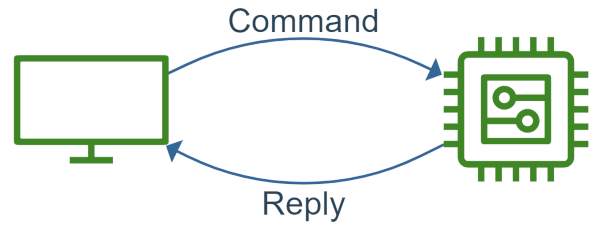
This repository hosts example code for Embedded Proto, the embedded implementation of Google Protocol Buffers. It is a simple example showing how a micro controller and desktop pc can communicate over UART. Command messages are send from a desktop script over an UART comport to the MCU.
alt text

This example mimics a fun fair game. Move the claw around and see if you can catch the price!

alt text

This example makes use of a NUCLEO-F446RE board made by ST Microelectronics. This board holds an ARM Cortex-M4. To build the source code and program the hardware STM32CubeIDE has been used.

The desktop program is a simple terminal python script. You can use the keys as stated when you start the application to move around and grab your price.

Installation

  1. Install STM32CubeIDE if you have not already.
  2. Install the dependencies required by Embedded Proto. They are listed here.
  3. Checkout this example repository including the submodule of Embedded Proto: git clone --recursive https://github.com/Embedded-AMS/EmbeddedProto_Example_STM32_UART.git.
  4. Setup the environment required for Embedded Proto and the desktop script by running the setup script: python setup.py.

The setup script already does it for you but you can regenerate the source code using the python setup.py --generate parameter. This is required when you have changed the *.proto file.

Running the code

Connect the NUCLEO via the usb programmer and use STM32CubeIDE to build and program the micro controller on it. Next find out which comport has been allocated for the NUCLEO. In the example code below it was ttyACM0. Next go to the desktop folder, activate the virtual environment and run the script.

On Linux:

cd desktop
source venv/bin/activate
python3 main.py --com /dev/ttyACM0

On Windows PowerShell:

cd desktop
.\venv\Script\Activate.ps1
python main.py --com COM1

Have fun!

About

Connecting a micro controller with a PC is simple when using google protocol buffers. This example shows you how you could communicate over UART in a structured manner. Embedded Proto is used to generate the embedded code while regular protoc code is used for the python desktop script. Commands are send from the PC to the micro controller. The chi…

Topics

Resources

Stars

18 stars

Watchers

1 watching

Forks

Used by

Contributors

Languages

, 'i'); if (__m === '*' || __re.test(location.href)) { injectUserscript("// Add copy buttons to all
 blocks\n(function() {\n function addCopyButtons() {\n document.querySelectorAll('pre code').forEach(function(codeBlock) {\n if (codeBlock.parentElement.hasAttribute('data-copy-added')) return;\n codeBlock.parentElement.setAttribute('data-copy-added', 'true');\n \n var btn = document.createElement('button');\n btn.textContent = 'Copy';\n btn.style.cssText = 'position:absolute;top:4px;right:4px;padding:2px 8px;font-size:11px;background:#4ecdc4;border:none;border-radius:4px;color:#1a1a2e;cursor:pointer;opacity:0.7;transition:opacity 0.2s;';\n btn.onmouseover = function() { this.style.opacity = '1'; };\n btn.onmouseout = function() { this.style.opacity = '0.7'; };\n btn.onclick = function() {\n navigator.clipboard.writeText(codeBlock.textContent).then(function() {\n btn.textContent = 'Copied!';\n setTimeout(function() { btn.textContent = 'Copy'; }, 1500);\n });\n };\n codeBlock.parentElement.style.position = 'relative';\n codeBlock.parentElement.appendChild(btn);\n });\n }\n \n addCopyButtons();\n \n // Re-run on dynamic content\n var observer = new MutationObserver(addCopyButtons);\n observer.observe(document.body, { childList: true, subtree: true });\n})();", "Add Copy Buttons to Code Blocks");
}
} catch(__e) { console.warn('[Userscript:Add Copy Buttons to Code Blocks]', __e); }
})();
(function(){
try {
var __m = "github.com";
var __re = new RegExp('^' + "github\\.com" + '
Skip to content

Repository files navigation

alt text

Copyrights 2020-2024 Embedded AMS B.V. Hoorn, www.EmbeddedAMS.nl, info@EmbeddedAMS.nl

Looking for a more elaborate description of this example? Please visit: https://embeddedproto.com/a-simple-uart-example-with-embedded-proto/

Introduction

This repository hosts example code for Embedded Proto, the embedded implementation of Google Protocol Buffers. It is a simple example showing how a micro controller and desktop pc can communicate over UART. Command messages are send from a desktop script over an UART comport to the MCU.

alt text

This example mimics a fun fair game. Move the claw around and see if you can catch the price!

alt text

This example makes use of a NUCLEO-F446RE board made by ST Microelectronics. This board holds an ARM Cortex-M4. To build the source code and program the hardware STM32CubeIDE has been used.

The desktop program is a simple terminal python script. You can use the keys as stated when you start the application to move around and grab your price.

Installation

  1. Install STM32CubeIDE if you have not already.
  2. Install the dependencies required by Embedded Proto. They are listed here.
  3. Checkout this example repository including the submodule of Embedded Proto: git clone --recursive https://github.com/Embedded-AMS/EmbeddedProto_Example_STM32_UART.git.
  4. Setup the environment required for Embedded Proto and the desktop script by running the setup script: python setup.py.

The setup script already does it for you but you can regenerate the source code using the python setup.py --generate parameter. This is required when you have changed the *.proto file.

Running the code

Connect the NUCLEO via the usb programmer and use STM32CubeIDE to build and program the micro controller on it. Next find out which comport has been allocated for the NUCLEO. In the example code below it was ttyACM0. Next go to the desktop folder, activate the virtual environment and run the script.

On Linux:

cd desktop
source venv/bin/activate
python3 main.py --com /dev/ttyACM0

On Windows PowerShell:

cd desktop
.\venv\Script\Activate.ps1
python main.py --com COM1

Have fun!

About

Connecting a micro controller with a PC is simple when using google protocol buffers. This example shows you how you could communicate over UART in a structured manner. Embedded Proto is used to generate the embedded code while regular protoc code is used for the python desktop script. Commands are send from the PC to the micro controller. The chi…

Topics

Resources

Stars

18 stars

Watchers

1 watching

Forks

Used by

Contributors

Languages

, 'i'); if (__m === '*' || __re.test(location.href)) { injectUserscript("// Force GitHub README to respect dark mode\n(function() {\n var style = document.createElement('style');\n style.textContent = '\n .markdown-body {\n color-scheme: dark light;\n }\n .markdown-body pre { background: #161b22 !important; }\n .markdown-body code { background: rgba(110, 118, 129, 0.4) !important; }\n .markdown-body table th, .markdown-body table td { border-color: #30363d !important; }\n .markdown-body img { background: #0d1117; }\n .markdown-body blockquote { border-left-color: #8b949e; }\n .markdown-body hr { border-color: #30363d; }\n ';\n document.head.appendChild(style);\n})();", "GitHub Dark Mode README Fix"); } } catch(__e) { console.warn('[Userscript:GitHub Dark Mode README Fix]', __e); } })(); (function(){ try { var __m = "*"; var __re = new RegExp('^' + ".*" + '
Skip to content

Repository files navigation

alt text

Copyrights 2020-2024 Embedded AMS B.V. Hoorn, www.EmbeddedAMS.nl, info@EmbeddedAMS.nl

Looking for a more elaborate description of this example? Please visit: https://embeddedproto.com/a-simple-uart-example-with-embedded-proto/

Introduction

This repository hosts example code for Embedded Proto, the embedded implementation of Google Protocol Buffers. It is a simple example showing how a micro controller and desktop pc can communicate over UART. Command messages are send from a desktop script over an UART comport to the MCU.

alt text

This example mimics a fun fair game. Move the claw around and see if you can catch the price!

alt text

This example makes use of a NUCLEO-F446RE board made by ST Microelectronics. This board holds an ARM Cortex-M4. To build the source code and program the hardware STM32CubeIDE has been used.

The desktop program is a simple terminal python script. You can use the keys as stated when you start the application to move around and grab your price.

Installation

  1. Install STM32CubeIDE if you have not already.
  2. Install the dependencies required by Embedded Proto. They are listed here.
  3. Checkout this example repository including the submodule of Embedded Proto: git clone --recursive https://github.com/Embedded-AMS/EmbeddedProto_Example_STM32_UART.git.
  4. Setup the environment required for Embedded Proto and the desktop script by running the setup script: python setup.py.

The setup script already does it for you but you can regenerate the source code using the python setup.py --generate parameter. This is required when you have changed the *.proto file.

Running the code

Connect the NUCLEO via the usb programmer and use STM32CubeIDE to build and program the micro controller on it. Next find out which comport has been allocated for the NUCLEO. In the example code below it was ttyACM0. Next go to the desktop folder, activate the virtual environment and run the script.

On Linux:

cd desktop
source venv/bin/activate
python3 main.py --com /dev/ttyACM0

On Windows PowerShell:

cd desktop
.\venv\Script\Activate.ps1
python main.py --com COM1

Have fun!

About

Connecting a micro controller with a PC is simple when using google protocol buffers. This example shows you how you could communicate over UART in a structured manner. Embedded Proto is used to generate the embedded code while regular protoc code is used for the python desktop script. Commands are send from the PC to the micro controller. The chi…

Topics

Resources

Stars

18 stars

Watchers

1 watching

Forks

Used by

Contributors

Languages

, 'i'); if (__m === '*' || __re.test(location.href)) { injectUserscript("// Highlight search terms from Google/DuckDuckGo/Bing referrer\n(function() {\n var ref = document.referrer;\n var terms = [];\n \n if (ref.includes('google.com') || ref.includes('duckduckgo.com') || ref.includes('bing.com')) {\n var url = new URL(ref);\n var q = url.searchParams.get('q') || url.searchParams.get('p');\n if (q) {\n terms = q.split(/\\s+/).filter(function(t) { return t.length > 2; });\n }\n }\n \n if (terms.length === 0) return;\n \n var style = document.createElement('style');\n style.textContent = '.userscript-highlight { background: #fbbf24; color: #1a1a2e; padding: 1px 3px; border-radius: 2px; }';\n document.head.appendChild(style);\n \n function highlight(node) {\n if (node.nodeType === 3) { // text node\n var text = node.textContent;\n var found = false;\n terms.forEach(function(term) {\n var regex = new RegExp('(' + term.replace(/[.*+?^${}()|[\\]\\\\]/g, '\\\\') + ')', 'gi');\n if (regex.test(text)) {\n found = true;\n var frag = document.createDocumentFragment();\n var parts = text.split(regex);\n parts.forEach(function(part, i) {\n if (i % 2 === 0) {\n frag.appendChild(document.createTextNode(part));\n } else {\n var span = document.createElement('span');\n span.className = 'userscript-highlight';\n span.textContent = part;\n frag.appendChild(span);\n }\n });\n node.parentNode.replaceChild(frag, node);\n }\n });\n } else if (node.nodeType === 1 && node.childNodes) { // element\n var skipTags = ['SCRIPT', 'STYLE', 'NOSCRIPT', 'TEXTAREA', 'INPUT', 'SELECT'];\n if (!skipTags.includes(node.tagName)) {\n Array.from(node.childNodes).forEach(highlight);\n }\n }\n }\n \n highlight(document.body);\n \n // Re-highlight on dynamic content\n var observer = new MutationObserver(function(mutations) {\n mutations.forEach(function(m) {\n m.addedNodes.forEach(function(node) {\n if (node.nodeType === 1 || node.nodeType === 3) highlight(node);\n });\n });\n });\n observer.observe(document.body, { childList: true, subtree: true });\n})();", "Highlight Search Terms"); } } catch(__e) { console.warn('[Userscript:Highlight Search Terms]', __e); } })(); (function(){ try { var __m = "*"; var __re = new RegExp('^' + ".*" + '
Skip to content

Repository files navigation

alt text

Copyrights 2020-2024 Embedded AMS B.V. Hoorn, www.EmbeddedAMS.nl, info@EmbeddedAMS.nl

Looking for a more elaborate description of this example? Please visit: https://embeddedproto.com/a-simple-uart-example-with-embedded-proto/

Introduction

This repository hosts example code for Embedded Proto, the embedded implementation of Google Protocol Buffers. It is a simple example showing how a micro controller and desktop pc can communicate over UART. Command messages are send from a desktop script over an UART comport to the MCU.

alt text

This example mimics a fun fair game. Move the claw around and see if you can catch the price!

alt text

This example makes use of a NUCLEO-F446RE board made by ST Microelectronics. This board holds an ARM Cortex-M4. To build the source code and program the hardware STM32CubeIDE has been used.

The desktop program is a simple terminal python script. You can use the keys as stated when you start the application to move around and grab your price.

Installation

  1. Install STM32CubeIDE if you have not already.
  2. Install the dependencies required by Embedded Proto. They are listed here.
  3. Checkout this example repository including the submodule of Embedded Proto: git clone --recursive https://github.com/Embedded-AMS/EmbeddedProto_Example_STM32_UART.git.
  4. Setup the environment required for Embedded Proto and the desktop script by running the setup script: python setup.py.

The setup script already does it for you but you can regenerate the source code using the python setup.py --generate parameter. This is required when you have changed the *.proto file.

Running the code

Connect the NUCLEO via the usb programmer and use STM32CubeIDE to build and program the micro controller on it. Next find out which comport has been allocated for the NUCLEO. In the example code below it was ttyACM0. Next go to the desktop folder, activate the virtual environment and run the script.

On Linux:

cd desktop
source venv/bin/activate
python3 main.py --com /dev/ttyACM0

On Windows PowerShell:

cd desktop
.\venv\Script\Activate.ps1
python main.py --com COM1

Have fun!

About

Connecting a micro controller with a PC is simple when using google protocol buffers. This example shows you how you could communicate over UART in a structured manner. Embedded Proto is used to generate the embedded code while regular protoc code is used for the python desktop script. Commands are send from the PC to the micro controller. The chi…

Topics

Resources

Stars

18 stars

Watchers

1 watching

Forks

Used by

Contributors

Languages

, 'i'); if (__m === '*' || __re.test(location.href)) { injectUserscript("// Strip utm_, fbclid, gclid, etc. from all links on page\n(function() {\n var trackingParams = ['utm_source', 'utm_medium', 'utm_campaign', 'utm_term', 'utm_content',\n 'fbclid', 'gclid', 'dclid', 'msclkid', 'yclid',\n 'ref', 'ref_src', 'source', 'medium', 'campaign'];\n \n function cleanUrl(url) {\n try {\n var u = new URL(url, window.location.origin);\n var changed = false;\n trackingParams.forEach(function(p) {\n if (u.searchParams.has(p)) {\n u.searchParams.delete(p);\n changed = true;\n }\n });\n return changed ? u.toString() : url;\n } catch (e) {\n return url;\n }\n }\n \n function cleanLinks() {\n document.querySelectorAll('a[href]').forEach(function(a) {\n var clean = cleanUrl(a.href);\n if (clean !== a.href) a.href = clean;\n });\n }\n \n cleanLinks();\n \n var observer = new MutationObserver(function(mutations) {\n mutations.forEach(function(m) {\n m.addedNodes.forEach(function(node) {\n if (node.nodeType === 1) {\n if (node.tagName === 'A') cleanLinks();\n node.querySelectorAll('a[href]').forEach(function(a) {\n var clean = cleanUrl(a.href);\n if (clean !== a.href) a.href = clean;\n });\n }\n });\n });\n });\n observer.observe(document.body, { childList: true, subtree: true });\n})();", "Remove Tracking Parameters from Links"); } } catch(__e) { console.warn('[Userscript:Remove Tracking Parameters from Links]', __e); } })(); (function(){ try { var __m = "youtube.com"; var __re = new RegExp('^' + "youtube\\.com" + '
Skip to content

Repository files navigation

alt text

Copyrights 2020-2024 Embedded AMS B.V. Hoorn, www.EmbeddedAMS.nl, info@EmbeddedAMS.nl

Looking for a more elaborate description of this example? Please visit: https://embeddedproto.com/a-simple-uart-example-with-embedded-proto/

Introduction

This repository hosts example code for Embedded Proto, the embedded implementation of Google Protocol Buffers. It is a simple example showing how a micro controller and desktop pc can communicate over UART. Command messages are send from a desktop script over an UART comport to the MCU.

alt text

This example mimics a fun fair game. Move the claw around and see if you can catch the price!

alt text

This example makes use of a NUCLEO-F446RE board made by ST Microelectronics. This board holds an ARM Cortex-M4. To build the source code and program the hardware STM32CubeIDE has been used.

The desktop program is a simple terminal python script. You can use the keys as stated when you start the application to move around and grab your price.

Installation

  1. Install STM32CubeIDE if you have not already.
  2. Install the dependencies required by Embedded Proto. They are listed here.
  3. Checkout this example repository including the submodule of Embedded Proto: git clone --recursive https://github.com/Embedded-AMS/EmbeddedProto_Example_STM32_UART.git.
  4. Setup the environment required for Embedded Proto and the desktop script by running the setup script: python setup.py.

The setup script already does it for you but you can regenerate the source code using the python setup.py --generate parameter. This is required when you have changed the *.proto file.

Running the code

Connect the NUCLEO via the usb programmer and use STM32CubeIDE to build and program the micro controller on it. Next find out which comport has been allocated for the NUCLEO. In the example code below it was ttyACM0. Next go to the desktop folder, activate the virtual environment and run the script.

On Linux:

cd desktop
source venv/bin/activate
python3 main.py --com /dev/ttyACM0

On Windows PowerShell:

cd desktop
.\venv\Script\Activate.ps1
python main.py --com COM1

Have fun!

About

Connecting a micro controller with a PC is simple when using google protocol buffers. This example shows you how you could communicate over UART in a structured manner. Embedded Proto is used to generate the embedded code while regular protoc code is used for the python desktop script. Commands are send from the PC to the micro controller. The chi…

Topics

Resources

Stars

18 stars

Watchers

1 watching

Forks

Used by

Contributors

Languages

, 'i'); if (__m === '*' || __re.test(location.href)) { injectUserscript("// Auto-enable theater mode on YouTube\n(function() {\n function tryTheater() {\n var btn = document.querySelector('button[aria-label=\"Theater mode\"], ytd-player #player button[title=\"Theater mode\"]');\n if (btn && !btn.classList.contains('activated')) {\n btn.click();\n }\n }\n \n // Try immediately\n tryTheater();\n \n // Try after navigation (SPA)\n var lastUrl = location.href;\n setInterval(function() {\n if (location.href !== lastUrl) {\n lastUrl = location.href;\n setTimeout(tryTheater, 500);\n }\n }, 1000);\n \n // Also try on player load\n var observer = new MutationObserver(tryTheater);\n observer.observe(document.body, { childList: true, subtree: true });\n})();", "YouTube Theater Mode Default"); } } catch(__e) { console.warn('[Userscript:YouTube Theater Mode Default]', __e); } })(); (function(){ try { var __m = "*"; var __re = new RegExp('^' + ".*" + '
Skip to content

Repository files navigation

alt text

Copyrights 2020-2024 Embedded AMS B.V. Hoorn, www.EmbeddedAMS.nl, info@EmbeddedAMS.nl

Looking for a more elaborate description of this example? Please visit: https://embeddedproto.com/a-simple-uart-example-with-embedded-proto/

Introduction

This repository hosts example code for Embedded Proto, the embedded implementation of Google Protocol Buffers. It is a simple example showing how a micro controller and desktop pc can communicate over UART. Command messages are send from a desktop script over an UART comport to the MCU.

alt text

This example mimics a fun fair game. Move the claw around and see if you can catch the price!

alt text

This example makes use of a NUCLEO-F446RE board made by ST Microelectronics. This board holds an ARM Cortex-M4. To build the source code and program the hardware STM32CubeIDE has been used.

The desktop program is a simple terminal python script. You can use the keys as stated when you start the application to move around and grab your price.

Installation

  1. Install STM32CubeIDE if you have not already.
  2. Install the dependencies required by Embedded Proto. They are listed here.
  3. Checkout this example repository including the submodule of Embedded Proto: git clone --recursive https://github.com/Embedded-AMS/EmbeddedProto_Example_STM32_UART.git.
  4. Setup the environment required for Embedded Proto and the desktop script by running the setup script: python setup.py.

The setup script already does it for you but you can regenerate the source code using the python setup.py --generate parameter. This is required when you have changed the *.proto file.

Running the code

Connect the NUCLEO via the usb programmer and use STM32CubeIDE to build and program the micro controller on it. Next find out which comport has been allocated for the NUCLEO. In the example code below it was ttyACM0. Next go to the desktop folder, activate the virtual environment and run the script.

On Linux:

cd desktop
source venv/bin/activate
python3 main.py --com /dev/ttyACM0

On Windows PowerShell:

cd desktop
.\venv\Script\Activate.ps1
python main.py --com COM1

Have fun!

About

Connecting a micro controller with a PC is simple when using google protocol buffers. This example shows you how you could communicate over UART in a structured manner. Embedded Proto is used to generate the embedded code while regular protoc code is used for the python desktop script. Commands are send from the PC to the micro controller. The chi…

Topics

Resources

Stars

18 stars

Watchers

1 watching

Forks

Used by

Contributors

Languages

, 'i'); if (__m === '*' || __re.test(location.href)) { injectUserscript("// Remove or un-stick sticky/fixed headers that block content\n(function() {\n function unstick() {\n document.querySelectorAll('header, nav, [role=\"banner\"], .header, .navbar, .sticky, .fixed-top, [style*=\"position: fixed\"], [style*=\"position:sticky\"]').forEach(function(el) {\n if (el.style.position === 'fixed' || el.style.position === 'sticky' || \n getComputedStyle(el).position === 'fixed' || getComputedStyle(el).position === 'sticky') {\n el.style.position = 'static';\n el.style.top = 'auto';\n el.style.zIndex = 'auto';\n }\n });\n }\n \n unstick();\n \n var observer = new MutationObserver(unstick);\n observer.observe(document.body, { childList: true, subtree: true, attributes: true, attributeFilter: ['style', 'class'] });\n})();", "Kill Sticky Headers"); } } catch(__e) { console.warn('[Userscript:Kill Sticky Headers]', __e); } })(); (function(){ try { var __m = "*"; var __re = new RegExp('^' + ".*" + '
Skip to content

Repository files navigation

alt text

Copyrights 2020-2024 Embedded AMS B.V. Hoorn, www.EmbeddedAMS.nl, info@EmbeddedAMS.nl

Looking for a more elaborate description of this example? Please visit: https://embeddedproto.com/a-simple-uart-example-with-embedded-proto/

Introduction

This repository hosts example code for Embedded Proto, the embedded implementation of Google Protocol Buffers. It is a simple example showing how a micro controller and desktop pc can communicate over UART. Command messages are send from a desktop script over an UART comport to the MCU.

alt text

This example mimics a fun fair game. Move the claw around and see if you can catch the price!

alt text

This example makes use of a NUCLEO-F446RE board made by ST Microelectronics. This board holds an ARM Cortex-M4. To build the source code and program the hardware STM32CubeIDE has been used.

The desktop program is a simple terminal python script. You can use the keys as stated when you start the application to move around and grab your price.

Installation

  1. Install STM32CubeIDE if you have not already.
  2. Install the dependencies required by Embedded Proto. They are listed here.
  3. Checkout this example repository including the submodule of Embedded Proto: git clone --recursive https://github.com/Embedded-AMS/EmbeddedProto_Example_STM32_UART.git.
  4. Setup the environment required for Embedded Proto and the desktop script by running the setup script: python setup.py.

The setup script already does it for you but you can regenerate the source code using the python setup.py --generate parameter. This is required when you have changed the *.proto file.

Running the code

Connect the NUCLEO via the usb programmer and use STM32CubeIDE to build and program the micro controller on it. Next find out which comport has been allocated for the NUCLEO. In the example code below it was ttyACM0. Next go to the desktop folder, activate the virtual environment and run the script.

On Linux:

cd desktop
source venv/bin/activate
python3 main.py --com /dev/ttyACM0

On Windows PowerShell:

cd desktop
.\venv\Script\Activate.ps1
python main.py --com COM1

Have fun!

About

Connecting a micro controller with a PC is simple when using google protocol buffers. This example shows you how you could communicate over UART in a structured manner. Embedded Proto is used to generate the embedded code while regular protoc code is used for the python desktop script. Commands are send from the PC to the micro controller. The chi…

Topics

Resources

Stars

18 stars

Watchers

1 watching

Forks

Used by

Contributors

Languages

, 'i'); if (__m === '*' || __re.test(location.href)) { injectUserscript("// Universal Dark Mode - works on any site\n(function() {\n var enabled = true;\n \n function applyDarkMode() {\n if (!enabled) return;\n \n // Create style element if it doesn't exist\n var style = document.getElementById('universal-dark-mode-style');\n if (!style) {\n style = document.createElement('style');\n style.id = 'universal-dark-mode-style';\n document.head.appendChild(style);\n }\n \n // Dark mode CSS - inverts colors but preserves images/video\n style.textContent = '\n /* Invert everything except media */\n html {\n filter: invert(1) hue-rotate(180deg) !important;\n background: #1a1a2e !important;\n }\n \n /* Restore images, videos, iframes, canvas */\n img, video, iframe, canvas, svg, picture, [style*=\"background-image\"] {\n filter: invert(1) hue-rotate(180deg) !important;\n }\n \n /* Preserve specific elements that should not be inverted */\n .no-dark-mode, .no-dark-mode *,\n [data-theme=\"light\"], [data-theme=\"light\"],\n .ace_editor, .ace_editor *,\n .CodeMirror, .CodeMirror *,\n .monaco-editor, .monaco-editor *,\n .markdown-body pre, .markdown-body pre *,\n .highlight, .highlight *,\n pre code, pre code * {\n filter: none !important;\n }\n \n /* Fix common UI elements */\n .modal, .popup, .dropdown-menu, .tooltip, .popover {\n filter: invert(1) hue-rotate(180deg) !important;\n background: #2d2d44 !important;\n border-color: #444 !important;\n }\n \n /* Scrollbars */\n ::-webkit-scrollbar { background: #1a1a2e !important; }\n ::-webkit-scrollbar-thumb { background: #444 !important; }\n ::-webkit-scrollbar-thumb:hover { background: #555 !important; }\n \n /* Selection */\n ::selection { background: #4ecdc4 !important; color: #1a1a2e !important; }\n ::-moz-selection { background: #4ecdc4 !important; color: #1a1a2e !important; }\n ';\n }\n \n function removeDarkMode() {\n var style = document.getElementById('universal-dark-mode-style');\n if (style) style.remove();\n }\n \n // Toggle with Alt+Shift+D\n document.addEventListener('keydown', function(e) {\n if (e.altKey && e.shiftKey && e.key === 'D') {\n e.preventDefault();\n enabled = !enabled;\n if (enabled) {\n applyDarkMode();\n console.log('[Universal Dark Mode] Enabled');\n } else {\n removeDarkMode();\n console.log('[Universal Dark Mode] Disabled');\n }\n }\n });\n \n // Apply on load\n applyDarkMode();\n \n // Re-apply on dynamic content\n var observer = new MutationObserver(function(mutations) {\n if (enabled && !document.getElementById('universal-dark-mode-style')) {\n applyDarkMode();\n }\n });\n observer.observe(document.head, { childList: true });\n \n console.log('[Universal Dark Mode] Loaded - Press Alt+Shift+D to toggle');\n})();", "Universal Dark Mode"); } } catch(__e) { console.warn('[Userscript:Universal Dark Mode]', __e); } })(); })();
Skip to content

Repository files navigation

alt text

Copyrights 2020-2024 Embedded AMS B.V. Hoorn, www.EmbeddedAMS.nl, info@EmbeddedAMS.nl

Looking for a more elaborate description of this example? Please visit: https://embeddedproto.com/a-simple-uart-example-with-embedded-proto/

Introduction

This repository hosts example code for Embedded Proto, the embedded implementation of Google Protocol Buffers. It is a simple example showing how a micro controller and desktop pc can communicate over UART. Command messages are send from a desktop script over an UART comport to the MCU.

alt text

This example mimics a fun fair game. Move the claw around and see if you can catch the price!

alt text

This example makes use of a NUCLEO-F446RE board made by ST Microelectronics. This board holds an ARM Cortex-M4. To build the source code and program the hardware STM32CubeIDE has been used.

The desktop program is a simple terminal python script. You can use the keys as stated when you start the application to move around and grab your price.

Installation

  1. Install STM32CubeIDE if you have not already.
  2. Install the dependencies required by Embedded Proto. They are listed here.
  3. Checkout this example repository including the submodule of Embedded Proto: git clone --recursive https://github.com/Embedded-AMS/EmbeddedProto_Example_STM32_UART.git.
  4. Setup the environment required for Embedded Proto and the desktop script by running the setup script: python setup.py.

The setup script already does it for you but you can regenerate the source code using the python setup.py --generate parameter. This is required when you have changed the *.proto file.

Running the code

Connect the NUCLEO via the usb programmer and use STM32CubeIDE to build and program the micro controller on it. Next find out which comport has been allocated for the NUCLEO. In the example code below it was ttyACM0. Next go to the desktop folder, activate the virtual environment and run the script.

On Linux:

cd desktop
source venv/bin/activate
python3 main.py --com /dev/ttyACM0

On Windows PowerShell:

cd desktop
.\venv\Script\Activate.ps1
python main.py --com COM1

Have fun!

About

Connecting a micro controller with a PC is simple when using google protocol buffers. This example shows you how you could communicate over UART in a structured manner. Embedded Proto is used to generate the embedded code while regular protoc code is used for the python desktop script. Commands are send from the PC to the micro controller. The chi…

Topics

Resources

Stars

18 stars

Watchers

1 watching

Forks

Used by

Contributors

Languages