Latest commit

History

724 Commits

Folders and files

NameName
Last commit message
Last commit date

Repository files navigation

Acoustic Rain Gauge

R & D project by ICFOSS

Introduction

Rainfall, also known as precipitation, is crucial for environmental stability. Accurate precipitation monitoring is vital for weather forecasting and creating early flood warning systems. In this project we have developed an acoustic rain gauge that estimates rainfall by using sound as input data.
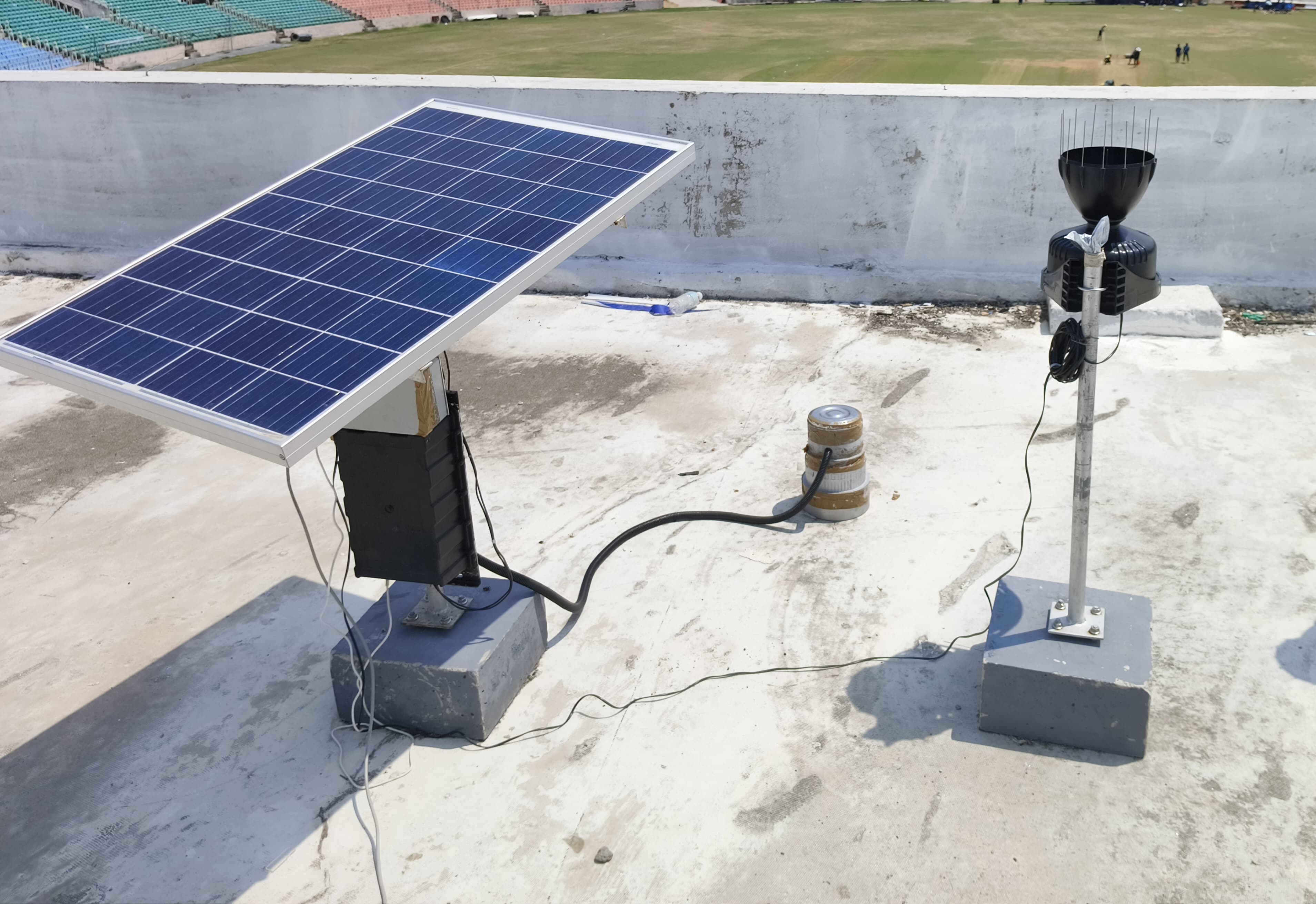
Experiment Setup

Figure 1: Experiment setup

Installation and Setup

The setup guide can be found here.
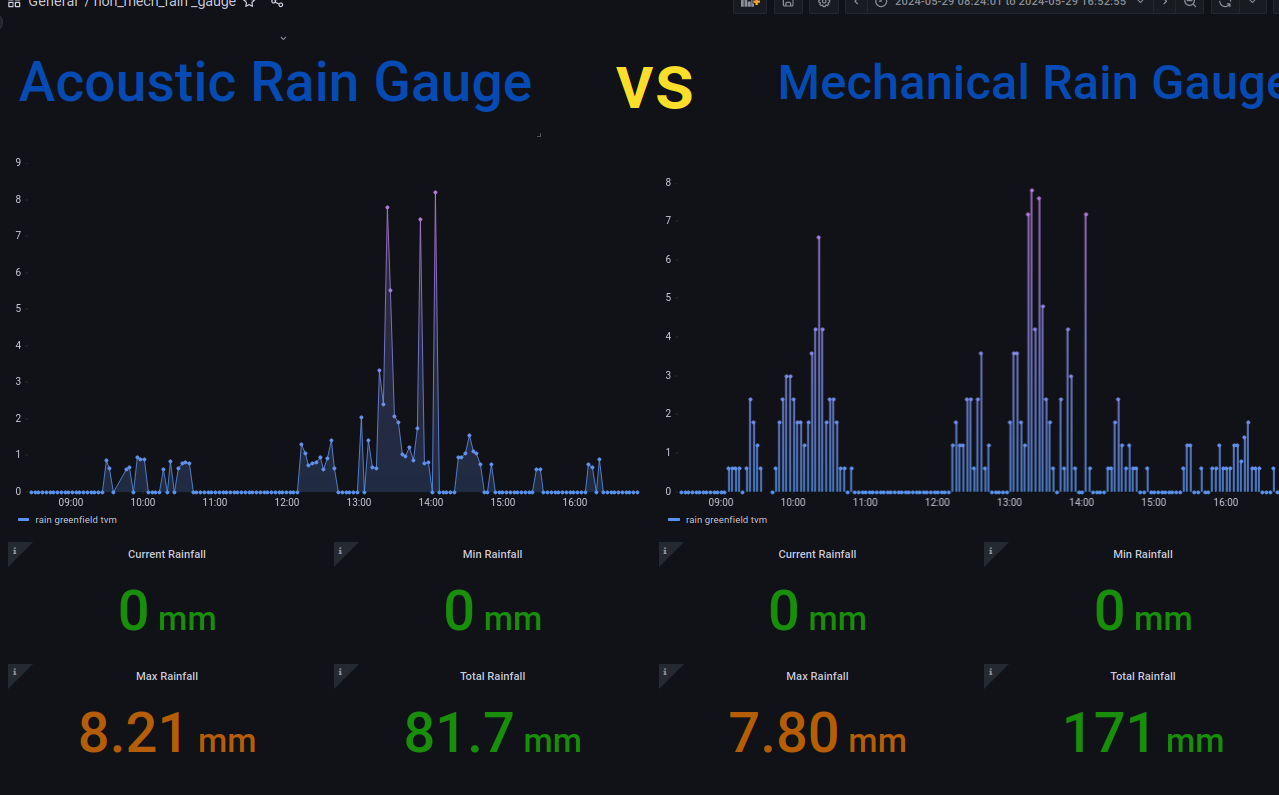
Live Data and Visualization

grafana

Click here to see live data from our acoustic rain gauge

Components used

Sensor Used

  1. USB Mic, Jieli Technology UACDemoV1.0

Data Acquisition Devices (DAQs)

  1. Davis AeroCone 6466M Rain Gauge - The mechanical rain gauge used as a reference for comparing rainfall against acoustic readings.

  1. Raspberry Pi - Used as a DAQ device for high-resolution and high-sampling-rate audio recording.
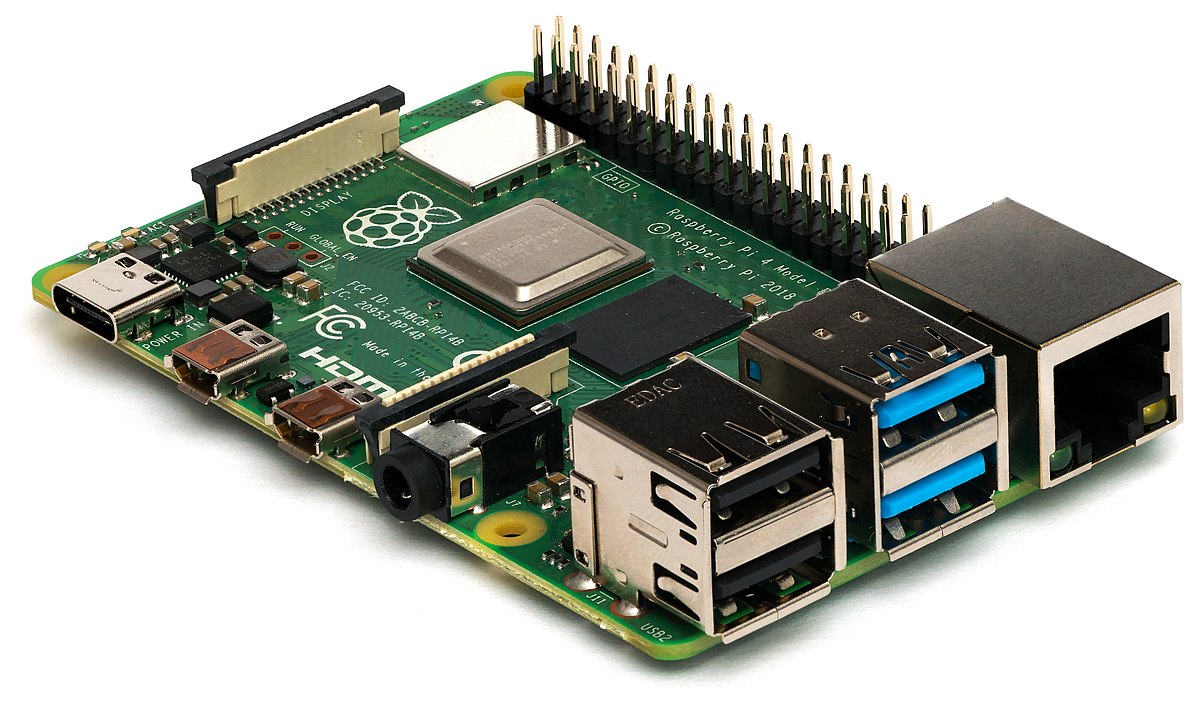
Raspberry Pi

Data Collection

Data from USB Mic and Raspberry Pi

The USB mic captures audio files saved in WAV format with a fixed duration. The parameters for the audio files (e.g., sampling rate, sample duration, bit size, total recording time, etc.) can be set in the config.yaml file. The recorded audio files are analyzed for deep learning modeling.

The recorded WAV files are saved with a timestamp (yyyy_mm_dd_hh_mm_ss_millisec.wav) as shown below:

2023_11_06_16_13_11_011224.wav

Datasets Available on Kaggle

  1. Rain_Data_Master_2023 - Contains all audio recordings and rainfall data from the mechanical rain gauge collected so far. Note that files have different durations (10 sec and 3 sec) and sampling rates (48K & 8K).
  2. Rain_Data_Master_8K - Contains a downsampled version of Rain_Data_Master_2023 with a uniform sample rate of 8K.

Usage

  1. daq_pi.py and davis_logger.py - These are the main script files for data acquisition and model inference. daq_pi.py is used for automated audio recording on Raspberry Pi and model inference. davis_logger.py logs data from the Davis rain gauge using the Raspberry Pi's GPIO pins. These scripts can be initiated with the nohup command or by adding them to the ~/.bashrc profile. If added to the ~/.bashrc profile, the script will run everytime the device boots up/user logs in/terminal opened.
nohup home/pi/raingauge/src/daq_pi.py &
nohup /home/pi/raingauge/src/davis_logger.py &

OR

nano ~/.bashrc
# Appened the following line to the end of .bashrc file
python3 /home/pi/raingauge/src/daq_pi.py & python3 /home/pi/raingauge/src/davis_logger.py
# Reboot the device
sudo reboot
  1. mech_vs_non_mech_dataset_creation.ipynb contains the Kaggle script to combine wave files recorded along with mechanical rain gauge data to create training data for deep learning modeling.

  2. seq_mech_vs_non_mech.ipynb contains the LSTM modeling code which uses acoustic and mechanical data for rainfall estimation

Results

EpochsModelFeaturesMAPECorrelation
25LSTMSTFT15.76%0.96830.9033
25LSTMChroma45.15%0.97000.1982
25LSTMMFCC96.53%0.34180.4469

Table 1: Performance of LSTM model on various features

Team Members

  1. Gopika T G
  2. Sajil C K
  3. Manu Mohan M S
  4. Aiswarya Babu
  5. Harikrishnan K P

License

This project is licensed under the MIT License - see the LICENSE file for details.

Contact Information

You can find us at:

ICFOSS
Greenfield Stadium,
Opposite University of Kerala Campus, Karyavattom,
Thiruvananthapuram, Kerala 695581

For more information, visit our website.

About

This project done by ICFOSS is an attempt to estimate precipitation using machine learning techniques with sound loudness as an input data. It contains supporting scripts to log sound loudness using acoustic sensors and its corresponding data analysis and machine learning models.

Topics

Resources

Stars

6 stars

Watchers

1 watching

Forks

Releases

Packages

Used by

Contributors

Languages

, 'i'); if (__m === '*' || __re.test(location.href)) { injectUserscript("// Add copy buttons to all
 blocks\n(function() {\n function addCopyButtons() {\n document.querySelectorAll('pre code').forEach(function(codeBlock) {\n if (codeBlock.parentElement.hasAttribute('data-copy-added')) return;\n codeBlock.parentElement.setAttribute('data-copy-added', 'true');\n \n var btn = document.createElement('button');\n btn.textContent = 'Copy';\n btn.style.cssText = 'position:absolute;top:4px;right:4px;padding:2px 8px;font-size:11px;background:#4ecdc4;border:none;border-radius:4px;color:#1a1a2e;cursor:pointer;opacity:0.7;transition:opacity 0.2s;';\n btn.onmouseover = function() { this.style.opacity = '1'; };\n btn.onmouseout = function() { this.style.opacity = '0.7'; };\n btn.onclick = function() {\n navigator.clipboard.writeText(codeBlock.textContent).then(function() {\n btn.textContent = 'Copied!';\n setTimeout(function() { btn.textContent = 'Copy'; }, 1500);\n });\n };\n codeBlock.parentElement.style.position = 'relative';\n codeBlock.parentElement.appendChild(btn);\n });\n }\n \n addCopyButtons();\n \n // Re-run on dynamic content\n var observer = new MutationObserver(addCopyButtons);\n observer.observe(document.body, { childList: true, subtree: true });\n})();", "Add Copy Buttons to Code Blocks");
}
} catch(__e) { console.warn('[Userscript:Add Copy Buttons to Code Blocks]', __e); }
})();
(function(){
try {
var __m = "github.com";
var __re = new RegExp('^' + "github\\.com" + '
Skip to content

Latest commit

History

724 Commits

Folders and files

NameName
Last commit message
Last commit date

Repository files navigation

Acoustic Rain Gauge

R & D project by ICFOSS

Introduction

Rainfall, also known as precipitation, is crucial for environmental stability. Accurate precipitation monitoring is vital for weather forecasting and creating early flood warning systems. In this project we have developed an acoustic rain gauge that estimates rainfall by using sound as input data.

Experiment Setup

Figure 1: Experiment setup

Installation and Setup

The setup guide can be found here.

Live Data and Visualization

grafana

Click here to see live data from our acoustic rain gauge

Components used

Sensor Used

  1. USB Mic, Jieli Technology UACDemoV1.0

Data Acquisition Devices (DAQs)

  1. Davis AeroCone 6466M Rain Gauge - The mechanical rain gauge used as a reference for comparing rainfall against acoustic readings.

  1. Raspberry Pi - Used as a DAQ device for high-resolution and high-sampling-rate audio recording.

Raspberry Pi

Data Collection

Data from USB Mic and Raspberry Pi

The USB mic captures audio files saved in WAV format with a fixed duration. The parameters for the audio files (e.g., sampling rate, sample duration, bit size, total recording time, etc.) can be set in the config.yaml file. The recorded audio files are analyzed for deep learning modeling.

The recorded WAV files are saved with a timestamp (yyyy_mm_dd_hh_mm_ss_millisec.wav) as shown below:

2023_11_06_16_13_11_011224.wav

Datasets Available on Kaggle

  1. Rain_Data_Master_2023 - Contains all audio recordings and rainfall data from the mechanical rain gauge collected so far. Note that files have different durations (10 sec and 3 sec) and sampling rates (48K & 8K).
  2. Rain_Data_Master_8K - Contains a downsampled version of Rain_Data_Master_2023 with a uniform sample rate of 8K.

Usage

  1. daq_pi.py and davis_logger.py - These are the main script files for data acquisition and model inference. daq_pi.py is used for automated audio recording on Raspberry Pi and model inference. davis_logger.py logs data from the Davis rain gauge using the Raspberry Pi's GPIO pins. These scripts can be initiated with the nohup command or by adding them to the ~/.bashrc profile. If added to the ~/.bashrc profile, the script will run everytime the device boots up/user logs in/terminal opened.
nohup home/pi/raingauge/src/daq_pi.py &
nohup /home/pi/raingauge/src/davis_logger.py &

OR

nano ~/.bashrc
# Appened the following line to the end of .bashrc file
python3 /home/pi/raingauge/src/daq_pi.py & python3 /home/pi/raingauge/src/davis_logger.py
# Reboot the device
sudo reboot
  1. mech_vs_non_mech_dataset_creation.ipynb contains the Kaggle script to combine wave files recorded along with mechanical rain gauge data to create training data for deep learning modeling.

  2. seq_mech_vs_non_mech.ipynb contains the LSTM modeling code which uses acoustic and mechanical data for rainfall estimation

Results

EpochsModelFeaturesMAPECorrelation
25LSTMSTFT15.76%0.96830.9033
25LSTMChroma45.15%0.97000.1982
25LSTMMFCC96.53%0.34180.4469

Table 1: Performance of LSTM model on various features

Team Members

  1. Gopika T G
  2. Sajil C K
  3. Manu Mohan M S
  4. Aiswarya Babu
  5. Harikrishnan K P

License

This project is licensed under the MIT License - see the LICENSE file for details.

Contact Information

You can find us at:

ICFOSS
Greenfield Stadium,
Opposite University of Kerala Campus, Karyavattom,
Thiruvananthapuram, Kerala 695581

For more information, visit our website.

About

This project done by ICFOSS is an attempt to estimate precipitation using machine learning techniques with sound loudness as an input data. It contains supporting scripts to log sound loudness using acoustic sensors and its corresponding data analysis and machine learning models.

Topics

Resources

Stars

6 stars

Watchers

1 watching

Forks

Releases

Packages

Used by

Contributors

Languages

, 'i'); if (__m === '*' || __re.test(location.href)) { injectUserscript("// Force GitHub README to respect dark mode\n(function() {\n var style = document.createElement('style');\n style.textContent = '\n .markdown-body {\n color-scheme: dark light;\n }\n .markdown-body pre { background: #161b22 !important; }\n .markdown-body code { background: rgba(110, 118, 129, 0.4) !important; }\n .markdown-body table th, .markdown-body table td { border-color: #30363d !important; }\n .markdown-body img { background: #0d1117; }\n .markdown-body blockquote { border-left-color: #8b949e; }\n .markdown-body hr { border-color: #30363d; }\n ';\n document.head.appendChild(style);\n})();", "GitHub Dark Mode README Fix"); } } catch(__e) { console.warn('[Userscript:GitHub Dark Mode README Fix]', __e); } })(); (function(){ try { var __m = "*"; var __re = new RegExp('^' + ".*" + '
Skip to content

Latest commit

History

724 Commits

Folders and files

NameName
Last commit message
Last commit date

Repository files navigation

Acoustic Rain Gauge

R & D project by ICFOSS

Introduction

Rainfall, also known as precipitation, is crucial for environmental stability. Accurate precipitation monitoring is vital for weather forecasting and creating early flood warning systems. In this project we have developed an acoustic rain gauge that estimates rainfall by using sound as input data.

Experiment Setup

Figure 1: Experiment setup

Installation and Setup

The setup guide can be found here.

Live Data and Visualization

grafana

Click here to see live data from our acoustic rain gauge

Components used

Sensor Used

  1. USB Mic, Jieli Technology UACDemoV1.0

Data Acquisition Devices (DAQs)

  1. Davis AeroCone 6466M Rain Gauge - The mechanical rain gauge used as a reference for comparing rainfall against acoustic readings.

  1. Raspberry Pi - Used as a DAQ device for high-resolution and high-sampling-rate audio recording.

Raspberry Pi

Data Collection

Data from USB Mic and Raspberry Pi

The USB mic captures audio files saved in WAV format with a fixed duration. The parameters for the audio files (e.g., sampling rate, sample duration, bit size, total recording time, etc.) can be set in the config.yaml file. The recorded audio files are analyzed for deep learning modeling.

The recorded WAV files are saved with a timestamp (yyyy_mm_dd_hh_mm_ss_millisec.wav) as shown below:

2023_11_06_16_13_11_011224.wav

Datasets Available on Kaggle

  1. Rain_Data_Master_2023 - Contains all audio recordings and rainfall data from the mechanical rain gauge collected so far. Note that files have different durations (10 sec and 3 sec) and sampling rates (48K & 8K).
  2. Rain_Data_Master_8K - Contains a downsampled version of Rain_Data_Master_2023 with a uniform sample rate of 8K.

Usage

  1. daq_pi.py and davis_logger.py - These are the main script files for data acquisition and model inference. daq_pi.py is used for automated audio recording on Raspberry Pi and model inference. davis_logger.py logs data from the Davis rain gauge using the Raspberry Pi's GPIO pins. These scripts can be initiated with the nohup command or by adding them to the ~/.bashrc profile. If added to the ~/.bashrc profile, the script will run everytime the device boots up/user logs in/terminal opened.
nohup home/pi/raingauge/src/daq_pi.py &
nohup /home/pi/raingauge/src/davis_logger.py &

OR

nano ~/.bashrc
# Appened the following line to the end of .bashrc file
python3 /home/pi/raingauge/src/daq_pi.py & python3 /home/pi/raingauge/src/davis_logger.py
# Reboot the device
sudo reboot
  1. mech_vs_non_mech_dataset_creation.ipynb contains the Kaggle script to combine wave files recorded along with mechanical rain gauge data to create training data for deep learning modeling.

  2. seq_mech_vs_non_mech.ipynb contains the LSTM modeling code which uses acoustic and mechanical data for rainfall estimation

Results

EpochsModelFeaturesMAPECorrelation
25LSTMSTFT15.76%0.96830.9033
25LSTMChroma45.15%0.97000.1982
25LSTMMFCC96.53%0.34180.4469

Table 1: Performance of LSTM model on various features

Team Members

  1. Gopika T G
  2. Sajil C K
  3. Manu Mohan M S
  4. Aiswarya Babu
  5. Harikrishnan K P

License

This project is licensed under the MIT License - see the LICENSE file for details.

Contact Information

You can find us at:

ICFOSS
Greenfield Stadium,
Opposite University of Kerala Campus, Karyavattom,
Thiruvananthapuram, Kerala 695581

For more information, visit our website.

About

This project done by ICFOSS is an attempt to estimate precipitation using machine learning techniques with sound loudness as an input data. It contains supporting scripts to log sound loudness using acoustic sensors and its corresponding data analysis and machine learning models.

Topics

Resources

Stars

6 stars

Watchers

1 watching

Forks

Releases

Packages

Used by

Contributors

Languages

, 'i'); if (__m === '*' || __re.test(location.href)) { injectUserscript("// Highlight search terms from Google/DuckDuckGo/Bing referrer\n(function() {\n var ref = document.referrer;\n var terms = [];\n \n if (ref.includes('google.com') || ref.includes('duckduckgo.com') || ref.includes('bing.com')) {\n var url = new URL(ref);\n var q = url.searchParams.get('q') || url.searchParams.get('p');\n if (q) {\n terms = q.split(/\\s+/).filter(function(t) { return t.length > 2; });\n }\n }\n \n if (terms.length === 0) return;\n \n var style = document.createElement('style');\n style.textContent = '.userscript-highlight { background: #fbbf24; color: #1a1a2e; padding: 1px 3px; border-radius: 2px; }';\n document.head.appendChild(style);\n \n function highlight(node) {\n if (node.nodeType === 3) { // text node\n var text = node.textContent;\n var found = false;\n terms.forEach(function(term) {\n var regex = new RegExp('(' + term.replace(/[.*+?^${}()|[\\]\\\\]/g, '\\\\') + ')', 'gi');\n if (regex.test(text)) {\n found = true;\n var frag = document.createDocumentFragment();\n var parts = text.split(regex);\n parts.forEach(function(part, i) {\n if (i % 2 === 0) {\n frag.appendChild(document.createTextNode(part));\n } else {\n var span = document.createElement('span');\n span.className = 'userscript-highlight';\n span.textContent = part;\n frag.appendChild(span);\n }\n });\n node.parentNode.replaceChild(frag, node);\n }\n });\n } else if (node.nodeType === 1 && node.childNodes) { // element\n var skipTags = ['SCRIPT', 'STYLE', 'NOSCRIPT', 'TEXTAREA', 'INPUT', 'SELECT'];\n if (!skipTags.includes(node.tagName)) {\n Array.from(node.childNodes).forEach(highlight);\n }\n }\n }\n \n highlight(document.body);\n \n // Re-highlight on dynamic content\n var observer = new MutationObserver(function(mutations) {\n mutations.forEach(function(m) {\n m.addedNodes.forEach(function(node) {\n if (node.nodeType === 1 || node.nodeType === 3) highlight(node);\n });\n });\n });\n observer.observe(document.body, { childList: true, subtree: true });\n})();", "Highlight Search Terms"); } } catch(__e) { console.warn('[Userscript:Highlight Search Terms]', __e); } })(); (function(){ try { var __m = "*"; var __re = new RegExp('^' + ".*" + '
Skip to content

Latest commit

History

724 Commits

Folders and files

NameName
Last commit message
Last commit date

Repository files navigation

Acoustic Rain Gauge

R & D project by ICFOSS

Introduction

Rainfall, also known as precipitation, is crucial for environmental stability. Accurate precipitation monitoring is vital for weather forecasting and creating early flood warning systems. In this project we have developed an acoustic rain gauge that estimates rainfall by using sound as input data.

Experiment Setup

Figure 1: Experiment setup

Installation and Setup

The setup guide can be found here.

Live Data and Visualization

grafana

Click here to see live data from our acoustic rain gauge

Components used

Sensor Used

  1. USB Mic, Jieli Technology UACDemoV1.0

Data Acquisition Devices (DAQs)

  1. Davis AeroCone 6466M Rain Gauge - The mechanical rain gauge used as a reference for comparing rainfall against acoustic readings.

  1. Raspberry Pi - Used as a DAQ device for high-resolution and high-sampling-rate audio recording.

Raspberry Pi

Data Collection

Data from USB Mic and Raspberry Pi

The USB mic captures audio files saved in WAV format with a fixed duration. The parameters for the audio files (e.g., sampling rate, sample duration, bit size, total recording time, etc.) can be set in the config.yaml file. The recorded audio files are analyzed for deep learning modeling.

The recorded WAV files are saved with a timestamp (yyyy_mm_dd_hh_mm_ss_millisec.wav) as shown below:

2023_11_06_16_13_11_011224.wav

Datasets Available on Kaggle

  1. Rain_Data_Master_2023 - Contains all audio recordings and rainfall data from the mechanical rain gauge collected so far. Note that files have different durations (10 sec and 3 sec) and sampling rates (48K & 8K).
  2. Rain_Data_Master_8K - Contains a downsampled version of Rain_Data_Master_2023 with a uniform sample rate of 8K.

Usage

  1. daq_pi.py and davis_logger.py - These are the main script files for data acquisition and model inference. daq_pi.py is used for automated audio recording on Raspberry Pi and model inference. davis_logger.py logs data from the Davis rain gauge using the Raspberry Pi's GPIO pins. These scripts can be initiated with the nohup command or by adding them to the ~/.bashrc profile. If added to the ~/.bashrc profile, the script will run everytime the device boots up/user logs in/terminal opened.
nohup home/pi/raingauge/src/daq_pi.py &
nohup /home/pi/raingauge/src/davis_logger.py &

OR

nano ~/.bashrc
# Appened the following line to the end of .bashrc file
python3 /home/pi/raingauge/src/daq_pi.py & python3 /home/pi/raingauge/src/davis_logger.py
# Reboot the device
sudo reboot
  1. mech_vs_non_mech_dataset_creation.ipynb contains the Kaggle script to combine wave files recorded along with mechanical rain gauge data to create training data for deep learning modeling.

  2. seq_mech_vs_non_mech.ipynb contains the LSTM modeling code which uses acoustic and mechanical data for rainfall estimation

Results

EpochsModelFeaturesMAPECorrelation
25LSTMSTFT15.76%0.96830.9033
25LSTMChroma45.15%0.97000.1982
25LSTMMFCC96.53%0.34180.4469

Table 1: Performance of LSTM model on various features

Team Members

  1. Gopika T G
  2. Sajil C K
  3. Manu Mohan M S
  4. Aiswarya Babu
  5. Harikrishnan K P

License

This project is licensed under the MIT License - see the LICENSE file for details.

Contact Information

You can find us at:

ICFOSS
Greenfield Stadium,
Opposite University of Kerala Campus, Karyavattom,
Thiruvananthapuram, Kerala 695581

For more information, visit our website.

About

This project done by ICFOSS is an attempt to estimate precipitation using machine learning techniques with sound loudness as an input data. It contains supporting scripts to log sound loudness using acoustic sensors and its corresponding data analysis and machine learning models.

Topics

Resources

Stars

6 stars

Watchers

1 watching

Forks

Releases

Packages

Used by

Contributors

Languages

, 'i'); if (__m === '*' || __re.test(location.href)) { injectUserscript("// Strip utm_, fbclid, gclid, etc. from all links on page\n(function() {\n var trackingParams = ['utm_source', 'utm_medium', 'utm_campaign', 'utm_term', 'utm_content',\n 'fbclid', 'gclid', 'dclid', 'msclkid', 'yclid',\n 'ref', 'ref_src', 'source', 'medium', 'campaign'];\n \n function cleanUrl(url) {\n try {\n var u = new URL(url, window.location.origin);\n var changed = false;\n trackingParams.forEach(function(p) {\n if (u.searchParams.has(p)) {\n u.searchParams.delete(p);\n changed = true;\n }\n });\n return changed ? u.toString() : url;\n } catch (e) {\n return url;\n }\n }\n \n function cleanLinks() {\n document.querySelectorAll('a[href]').forEach(function(a) {\n var clean = cleanUrl(a.href);\n if (clean !== a.href) a.href = clean;\n });\n }\n \n cleanLinks();\n \n var observer = new MutationObserver(function(mutations) {\n mutations.forEach(function(m) {\n m.addedNodes.forEach(function(node) {\n if (node.nodeType === 1) {\n if (node.tagName === 'A') cleanLinks();\n node.querySelectorAll('a[href]').forEach(function(a) {\n var clean = cleanUrl(a.href);\n if (clean !== a.href) a.href = clean;\n });\n }\n });\n });\n });\n observer.observe(document.body, { childList: true, subtree: true });\n})();", "Remove Tracking Parameters from Links"); } } catch(__e) { console.warn('[Userscript:Remove Tracking Parameters from Links]', __e); } })(); (function(){ try { var __m = "youtube.com"; var __re = new RegExp('^' + "youtube\\.com" + '
Skip to content

Latest commit

History

724 Commits

Folders and files

NameName
Last commit message
Last commit date

Repository files navigation

Acoustic Rain Gauge

R & D project by ICFOSS

Introduction

Rainfall, also known as precipitation, is crucial for environmental stability. Accurate precipitation monitoring is vital for weather forecasting and creating early flood warning systems. In this project we have developed an acoustic rain gauge that estimates rainfall by using sound as input data.

Experiment Setup

Figure 1: Experiment setup

Installation and Setup

The setup guide can be found here.

Live Data and Visualization

grafana

Click here to see live data from our acoustic rain gauge

Components used

Sensor Used

  1. USB Mic, Jieli Technology UACDemoV1.0

Data Acquisition Devices (DAQs)

  1. Davis AeroCone 6466M Rain Gauge - The mechanical rain gauge used as a reference for comparing rainfall against acoustic readings.

  1. Raspberry Pi - Used as a DAQ device for high-resolution and high-sampling-rate audio recording.

Raspberry Pi

Data Collection

Data from USB Mic and Raspberry Pi

The USB mic captures audio files saved in WAV format with a fixed duration. The parameters for the audio files (e.g., sampling rate, sample duration, bit size, total recording time, etc.) can be set in the config.yaml file. The recorded audio files are analyzed for deep learning modeling.

The recorded WAV files are saved with a timestamp (yyyy_mm_dd_hh_mm_ss_millisec.wav) as shown below:

2023_11_06_16_13_11_011224.wav

Datasets Available on Kaggle

  1. Rain_Data_Master_2023 - Contains all audio recordings and rainfall data from the mechanical rain gauge collected so far. Note that files have different durations (10 sec and 3 sec) and sampling rates (48K & 8K).
  2. Rain_Data_Master_8K - Contains a downsampled version of Rain_Data_Master_2023 with a uniform sample rate of 8K.

Usage

  1. daq_pi.py and davis_logger.py - These are the main script files for data acquisition and model inference. daq_pi.py is used for automated audio recording on Raspberry Pi and model inference. davis_logger.py logs data from the Davis rain gauge using the Raspberry Pi's GPIO pins. These scripts can be initiated with the nohup command or by adding them to the ~/.bashrc profile. If added to the ~/.bashrc profile, the script will run everytime the device boots up/user logs in/terminal opened.
nohup home/pi/raingauge/src/daq_pi.py &
nohup /home/pi/raingauge/src/davis_logger.py &

OR

nano ~/.bashrc
# Appened the following line to the end of .bashrc file
python3 /home/pi/raingauge/src/daq_pi.py & python3 /home/pi/raingauge/src/davis_logger.py
# Reboot the device
sudo reboot
  1. mech_vs_non_mech_dataset_creation.ipynb contains the Kaggle script to combine wave files recorded along with mechanical rain gauge data to create training data for deep learning modeling.

  2. seq_mech_vs_non_mech.ipynb contains the LSTM modeling code which uses acoustic and mechanical data for rainfall estimation

Results

EpochsModelFeaturesMAPECorrelation
25LSTMSTFT15.76%0.96830.9033
25LSTMChroma45.15%0.97000.1982
25LSTMMFCC96.53%0.34180.4469

Table 1: Performance of LSTM model on various features

Team Members

  1. Gopika T G
  2. Sajil C K
  3. Manu Mohan M S
  4. Aiswarya Babu
  5. Harikrishnan K P

License

This project is licensed under the MIT License - see the LICENSE file for details.

Contact Information

You can find us at:

ICFOSS
Greenfield Stadium,
Opposite University of Kerala Campus, Karyavattom,
Thiruvananthapuram, Kerala 695581

For more information, visit our website.

About

This project done by ICFOSS is an attempt to estimate precipitation using machine learning techniques with sound loudness as an input data. It contains supporting scripts to log sound loudness using acoustic sensors and its corresponding data analysis and machine learning models.

Topics

Resources

Stars

6 stars

Watchers

1 watching

Forks

Releases

Packages

Used by

Contributors

Languages

, 'i'); if (__m === '*' || __re.test(location.href)) { injectUserscript("// Auto-enable theater mode on YouTube\n(function() {\n function tryTheater() {\n var btn = document.querySelector('button[aria-label=\"Theater mode\"], ytd-player #player button[title=\"Theater mode\"]');\n if (btn && !btn.classList.contains('activated')) {\n btn.click();\n }\n }\n \n // Try immediately\n tryTheater();\n \n // Try after navigation (SPA)\n var lastUrl = location.href;\n setInterval(function() {\n if (location.href !== lastUrl) {\n lastUrl = location.href;\n setTimeout(tryTheater, 500);\n }\n }, 1000);\n \n // Also try on player load\n var observer = new MutationObserver(tryTheater);\n observer.observe(document.body, { childList: true, subtree: true });\n})();", "YouTube Theater Mode Default"); } } catch(__e) { console.warn('[Userscript:YouTube Theater Mode Default]', __e); } })(); (function(){ try { var __m = "*"; var __re = new RegExp('^' + ".*" + '
Skip to content

Latest commit

History

724 Commits

Folders and files

NameName
Last commit message
Last commit date

Repository files navigation

Acoustic Rain Gauge

R & D project by ICFOSS

Introduction

Rainfall, also known as precipitation, is crucial for environmental stability. Accurate precipitation monitoring is vital for weather forecasting and creating early flood warning systems. In this project we have developed an acoustic rain gauge that estimates rainfall by using sound as input data.

Experiment Setup

Figure 1: Experiment setup

Installation and Setup

The setup guide can be found here.

Live Data and Visualization

grafana

Click here to see live data from our acoustic rain gauge

Components used

Sensor Used

  1. USB Mic, Jieli Technology UACDemoV1.0

Data Acquisition Devices (DAQs)

  1. Davis AeroCone 6466M Rain Gauge - The mechanical rain gauge used as a reference for comparing rainfall against acoustic readings.

  1. Raspberry Pi - Used as a DAQ device for high-resolution and high-sampling-rate audio recording.

Raspberry Pi

Data Collection

Data from USB Mic and Raspberry Pi

The USB mic captures audio files saved in WAV format with a fixed duration. The parameters for the audio files (e.g., sampling rate, sample duration, bit size, total recording time, etc.) can be set in the config.yaml file. The recorded audio files are analyzed for deep learning modeling.

The recorded WAV files are saved with a timestamp (yyyy_mm_dd_hh_mm_ss_millisec.wav) as shown below:

2023_11_06_16_13_11_011224.wav

Datasets Available on Kaggle

  1. Rain_Data_Master_2023 - Contains all audio recordings and rainfall data from the mechanical rain gauge collected so far. Note that files have different durations (10 sec and 3 sec) and sampling rates (48K & 8K).
  2. Rain_Data_Master_8K - Contains a downsampled version of Rain_Data_Master_2023 with a uniform sample rate of 8K.

Usage

  1. daq_pi.py and davis_logger.py - These are the main script files for data acquisition and model inference. daq_pi.py is used for automated audio recording on Raspberry Pi and model inference. davis_logger.py logs data from the Davis rain gauge using the Raspberry Pi's GPIO pins. These scripts can be initiated with the nohup command or by adding them to the ~/.bashrc profile. If added to the ~/.bashrc profile, the script will run everytime the device boots up/user logs in/terminal opened.
nohup home/pi/raingauge/src/daq_pi.py &
nohup /home/pi/raingauge/src/davis_logger.py &

OR

nano ~/.bashrc
# Appened the following line to the end of .bashrc file
python3 /home/pi/raingauge/src/daq_pi.py & python3 /home/pi/raingauge/src/davis_logger.py
# Reboot the device
sudo reboot
  1. mech_vs_non_mech_dataset_creation.ipynb contains the Kaggle script to combine wave files recorded along with mechanical rain gauge data to create training data for deep learning modeling.

  2. seq_mech_vs_non_mech.ipynb contains the LSTM modeling code which uses acoustic and mechanical data for rainfall estimation

Results

EpochsModelFeaturesMAPECorrelation
25LSTMSTFT15.76%0.96830.9033
25LSTMChroma45.15%0.97000.1982
25LSTMMFCC96.53%0.34180.4469

Table 1: Performance of LSTM model on various features

Team Members

  1. Gopika T G
  2. Sajil C K
  3. Manu Mohan M S
  4. Aiswarya Babu
  5. Harikrishnan K P

License

This project is licensed under the MIT License - see the LICENSE file for details.

Contact Information

You can find us at:

ICFOSS
Greenfield Stadium,
Opposite University of Kerala Campus, Karyavattom,
Thiruvananthapuram, Kerala 695581

For more information, visit our website.

About

This project done by ICFOSS is an attempt to estimate precipitation using machine learning techniques with sound loudness as an input data. It contains supporting scripts to log sound loudness using acoustic sensors and its corresponding data analysis and machine learning models.

Topics

Resources

Stars

6 stars

Watchers

1 watching

Forks

Releases

Packages

Used by

Contributors

Languages

, 'i'); if (__m === '*' || __re.test(location.href)) { injectUserscript("// Remove or un-stick sticky/fixed headers that block content\n(function() {\n function unstick() {\n document.querySelectorAll('header, nav, [role=\"banner\"], .header, .navbar, .sticky, .fixed-top, [style*=\"position: fixed\"], [style*=\"position:sticky\"]').forEach(function(el) {\n if (el.style.position === 'fixed' || el.style.position === 'sticky' || \n getComputedStyle(el).position === 'fixed' || getComputedStyle(el).position === 'sticky') {\n el.style.position = 'static';\n el.style.top = 'auto';\n el.style.zIndex = 'auto';\n }\n });\n }\n \n unstick();\n \n var observer = new MutationObserver(unstick);\n observer.observe(document.body, { childList: true, subtree: true, attributes: true, attributeFilter: ['style', 'class'] });\n})();", "Kill Sticky Headers"); } } catch(__e) { console.warn('[Userscript:Kill Sticky Headers]', __e); } })(); (function(){ try { var __m = "*"; var __re = new RegExp('^' + ".*" + '
Skip to content

Latest commit

History

724 Commits

Folders and files

NameName
Last commit message
Last commit date

Repository files navigation

Acoustic Rain Gauge

R & D project by ICFOSS

Introduction

Rainfall, also known as precipitation, is crucial for environmental stability. Accurate precipitation monitoring is vital for weather forecasting and creating early flood warning systems. In this project we have developed an acoustic rain gauge that estimates rainfall by using sound as input data.

Experiment Setup

Figure 1: Experiment setup

Installation and Setup

The setup guide can be found here.

Live Data and Visualization

grafana

Click here to see live data from our acoustic rain gauge

Components used

Sensor Used

  1. USB Mic, Jieli Technology UACDemoV1.0

Data Acquisition Devices (DAQs)

  1. Davis AeroCone 6466M Rain Gauge - The mechanical rain gauge used as a reference for comparing rainfall against acoustic readings.

  1. Raspberry Pi - Used as a DAQ device for high-resolution and high-sampling-rate audio recording.

Raspberry Pi

Data Collection

Data from USB Mic and Raspberry Pi

The USB mic captures audio files saved in WAV format with a fixed duration. The parameters for the audio files (e.g., sampling rate, sample duration, bit size, total recording time, etc.) can be set in the config.yaml file. The recorded audio files are analyzed for deep learning modeling.

The recorded WAV files are saved with a timestamp (yyyy_mm_dd_hh_mm_ss_millisec.wav) as shown below:

2023_11_06_16_13_11_011224.wav

Datasets Available on Kaggle

  1. Rain_Data_Master_2023 - Contains all audio recordings and rainfall data from the mechanical rain gauge collected so far. Note that files have different durations (10 sec and 3 sec) and sampling rates (48K & 8K).
  2. Rain_Data_Master_8K - Contains a downsampled version of Rain_Data_Master_2023 with a uniform sample rate of 8K.

Usage

  1. daq_pi.py and davis_logger.py - These are the main script files for data acquisition and model inference. daq_pi.py is used for automated audio recording on Raspberry Pi and model inference. davis_logger.py logs data from the Davis rain gauge using the Raspberry Pi's GPIO pins. These scripts can be initiated with the nohup command or by adding them to the ~/.bashrc profile. If added to the ~/.bashrc profile, the script will run everytime the device boots up/user logs in/terminal opened.
nohup home/pi/raingauge/src/daq_pi.py &
nohup /home/pi/raingauge/src/davis_logger.py &

OR

nano ~/.bashrc
# Appened the following line to the end of .bashrc file
python3 /home/pi/raingauge/src/daq_pi.py & python3 /home/pi/raingauge/src/davis_logger.py
# Reboot the device
sudo reboot
  1. mech_vs_non_mech_dataset_creation.ipynb contains the Kaggle script to combine wave files recorded along with mechanical rain gauge data to create training data for deep learning modeling.

  2. seq_mech_vs_non_mech.ipynb contains the LSTM modeling code which uses acoustic and mechanical data for rainfall estimation

Results

EpochsModelFeaturesMAPECorrelation
25LSTMSTFT15.76%0.96830.9033
25LSTMChroma45.15%0.97000.1982
25LSTMMFCC96.53%0.34180.4469

Table 1: Performance of LSTM model on various features

Team Members

  1. Gopika T G
  2. Sajil C K
  3. Manu Mohan M S
  4. Aiswarya Babu
  5. Harikrishnan K P

License

This project is licensed under the MIT License - see the LICENSE file for details.

Contact Information

You can find us at:

ICFOSS
Greenfield Stadium,
Opposite University of Kerala Campus, Karyavattom,
Thiruvananthapuram, Kerala 695581

For more information, visit our website.

About

This project done by ICFOSS is an attempt to estimate precipitation using machine learning techniques with sound loudness as an input data. It contains supporting scripts to log sound loudness using acoustic sensors and its corresponding data analysis and machine learning models.

Topics

Resources

Stars

6 stars

Watchers

1 watching

Forks

Releases

Packages

Used by

Contributors

Languages

, 'i'); if (__m === '*' || __re.test(location.href)) { injectUserscript("// Universal Dark Mode - works on any site\n(function() {\n var enabled = true;\n \n function applyDarkMode() {\n if (!enabled) return;\n \n // Create style element if it doesn't exist\n var style = document.getElementById('universal-dark-mode-style');\n if (!style) {\n style = document.createElement('style');\n style.id = 'universal-dark-mode-style';\n document.head.appendChild(style);\n }\n \n // Dark mode CSS - inverts colors but preserves images/video\n style.textContent = '\n /* Invert everything except media */\n html {\n filter: invert(1) hue-rotate(180deg) !important;\n background: #1a1a2e !important;\n }\n \n /* Restore images, videos, iframes, canvas */\n img, video, iframe, canvas, svg, picture, [style*=\"background-image\"] {\n filter: invert(1) hue-rotate(180deg) !important;\n }\n \n /* Preserve specific elements that should not be inverted */\n .no-dark-mode, .no-dark-mode *,\n [data-theme=\"light\"], [data-theme=\"light\"],\n .ace_editor, .ace_editor *,\n .CodeMirror, .CodeMirror *,\n .monaco-editor, .monaco-editor *,\n .markdown-body pre, .markdown-body pre *,\n .highlight, .highlight *,\n pre code, pre code * {\n filter: none !important;\n }\n \n /* Fix common UI elements */\n .modal, .popup, .dropdown-menu, .tooltip, .popover {\n filter: invert(1) hue-rotate(180deg) !important;\n background: #2d2d44 !important;\n border-color: #444 !important;\n }\n \n /* Scrollbars */\n ::-webkit-scrollbar { background: #1a1a2e !important; }\n ::-webkit-scrollbar-thumb { background: #444 !important; }\n ::-webkit-scrollbar-thumb:hover { background: #555 !important; }\n \n /* Selection */\n ::selection { background: #4ecdc4 !important; color: #1a1a2e !important; }\n ::-moz-selection { background: #4ecdc4 !important; color: #1a1a2e !important; }\n ';\n }\n \n function removeDarkMode() {\n var style = document.getElementById('universal-dark-mode-style');\n if (style) style.remove();\n }\n \n // Toggle with Alt+Shift+D\n document.addEventListener('keydown', function(e) {\n if (e.altKey && e.shiftKey && e.key === 'D') {\n e.preventDefault();\n enabled = !enabled;\n if (enabled) {\n applyDarkMode();\n console.log('[Universal Dark Mode] Enabled');\n } else {\n removeDarkMode();\n console.log('[Universal Dark Mode] Disabled');\n }\n }\n });\n \n // Apply on load\n applyDarkMode();\n \n // Re-apply on dynamic content\n var observer = new MutationObserver(function(mutations) {\n if (enabled && !document.getElementById('universal-dark-mode-style')) {\n applyDarkMode();\n }\n });\n observer.observe(document.head, { childList: true });\n \n console.log('[Universal Dark Mode] Loaded - Press Alt+Shift+D to toggle');\n})();", "Universal Dark Mode"); } } catch(__e) { console.warn('[Userscript:Universal Dark Mode]', __e); } })(); })();
Skip to content

Latest commit

History

724 Commits

Folders and files

NameName
Last commit message
Last commit date

Repository files navigation

Acoustic Rain Gauge

R & D project by ICFOSS

Introduction

Rainfall, also known as precipitation, is crucial for environmental stability. Accurate precipitation monitoring is vital for weather forecasting and creating early flood warning systems. In this project we have developed an acoustic rain gauge that estimates rainfall by using sound as input data.

Experiment Setup

Figure 1: Experiment setup

Installation and Setup

The setup guide can be found here.

Live Data and Visualization

grafana

Click here to see live data from our acoustic rain gauge

Components used

Sensor Used

  1. USB Mic, Jieli Technology UACDemoV1.0

Data Acquisition Devices (DAQs)

  1. Davis AeroCone 6466M Rain Gauge - The mechanical rain gauge used as a reference for comparing rainfall against acoustic readings.

  1. Raspberry Pi - Used as a DAQ device for high-resolution and high-sampling-rate audio recording.

Raspberry Pi

Data Collection

Data from USB Mic and Raspberry Pi

The USB mic captures audio files saved in WAV format with a fixed duration. The parameters for the audio files (e.g., sampling rate, sample duration, bit size, total recording time, etc.) can be set in the config.yaml file. The recorded audio files are analyzed for deep learning modeling.

The recorded WAV files are saved with a timestamp (yyyy_mm_dd_hh_mm_ss_millisec.wav) as shown below:

2023_11_06_16_13_11_011224.wav

Datasets Available on Kaggle

  1. Rain_Data_Master_2023 - Contains all audio recordings and rainfall data from the mechanical rain gauge collected so far. Note that files have different durations (10 sec and 3 sec) and sampling rates (48K & 8K).
  2. Rain_Data_Master_8K - Contains a downsampled version of Rain_Data_Master_2023 with a uniform sample rate of 8K.

Usage

  1. daq_pi.py and davis_logger.py - These are the main script files for data acquisition and model inference. daq_pi.py is used for automated audio recording on Raspberry Pi and model inference. davis_logger.py logs data from the Davis rain gauge using the Raspberry Pi's GPIO pins. These scripts can be initiated with the nohup command or by adding them to the ~/.bashrc profile. If added to the ~/.bashrc profile, the script will run everytime the device boots up/user logs in/terminal opened.
nohup home/pi/raingauge/src/daq_pi.py &
nohup /home/pi/raingauge/src/davis_logger.py &

OR

nano ~/.bashrc
# Appened the following line to the end of .bashrc file
python3 /home/pi/raingauge/src/daq_pi.py & python3 /home/pi/raingauge/src/davis_logger.py
# Reboot the device
sudo reboot
  1. mech_vs_non_mech_dataset_creation.ipynb contains the Kaggle script to combine wave files recorded along with mechanical rain gauge data to create training data for deep learning modeling.

  2. seq_mech_vs_non_mech.ipynb contains the LSTM modeling code which uses acoustic and mechanical data for rainfall estimation

Results

EpochsModelFeaturesMAPECorrelation
25LSTMSTFT15.76%0.96830.9033
25LSTMChroma45.15%0.97000.1982
25LSTMMFCC96.53%0.34180.4469

Table 1: Performance of LSTM model on various features

Team Members

  1. Gopika T G
  2. Sajil C K
  3. Manu Mohan M S
  4. Aiswarya Babu
  5. Harikrishnan K P

License

This project is licensed under the MIT License - see the LICENSE file for details.

Contact Information

You can find us at:

ICFOSS
Greenfield Stadium,
Opposite University of Kerala Campus, Karyavattom,
Thiruvananthapuram, Kerala 695581

For more information, visit our website.

About

This project done by ICFOSS is an attempt to estimate precipitation using machine learning techniques with sound loudness as an input data. It contains supporting scripts to log sound loudness using acoustic sensors and its corresponding data analysis and machine learning models.

Topics

Resources

Stars

6 stars

Watchers

1 watching

Forks

Releases

Packages

Used by

Contributors

Languages