Slim down by using a for/in loop - #31
Conversation
RReverser
commented
May 22, 2019
Really well done! |
lukeed
commented
May 23, 2019
So fun to do this 😆I had the same thing inside I'm definitely all for cheeky golfing, but I think should maybe do a before/after comparison of this change. |
jonasraoni
commented
May 23, 2019
From: I was going to shave a bit more using template literals Whatever, I think there should be a |
kddnewton
commented
May 23, 2019
The other solution I came up with was: exportdefaultfunctiondlv(obj,key,def,p,undef){key=key.split ? key.split('.') : key;for(p=0;obj&&p<key.length;obj=obj[key[p++]]);returnp<key.length||obj===undef ? def : obj;}which does bail out early for deeply nested objects. It depends on if you want the trimmest version possible or the most efficient. If you're going for efficiency then I can change over to this one. Stats for that: It's a difference of 17 bytes, so up to you. |
Bailing out early is what dlv has been doing before my PR - #30 - but I changed it to reduce size and I still believe that early fallout is not common nor does it give any substantial win to justify a more complicated code. |
jonasraoni
commented
May 23, 2019
I agree! But this is an episode of "what has been seen cannot be unseen" :) |
RReverser
commented
May 23, 2019
@jonasraoni FWIW this one
was pretty cool, but results in an actually larger size after compression (as shown by |
luanmuniz
commented
May 23, 2019
Just a note. forin loops are a lot less performative then normal for loops. I don't think this should aim for fewer bytes in the module rather than performance. IMHO Even if we double the byte size, if we increase the performance I think it's still valid. |
RReverser
commented
May 23, 2019
That's precisely the goal of this helper library AFAIK. If someone cares about performance, they shouldn't use string-based dynamic paths in the first place, but when they do, microimprovements of loops are not going to change much. |
mikesherov
commented
May 23, 2019
If performance is not a goal, then array reduce gives a smaller implementation, as pointed out in a few existing PRs: #8 I got: with: |
lukeed
commented
May 23, 2019
Jason's libraries are typically a balance of code size and performance. That's why they're so great. I don't want to speak for him, but losing 13 bytes for less than half the performance is generally not worth it.
|
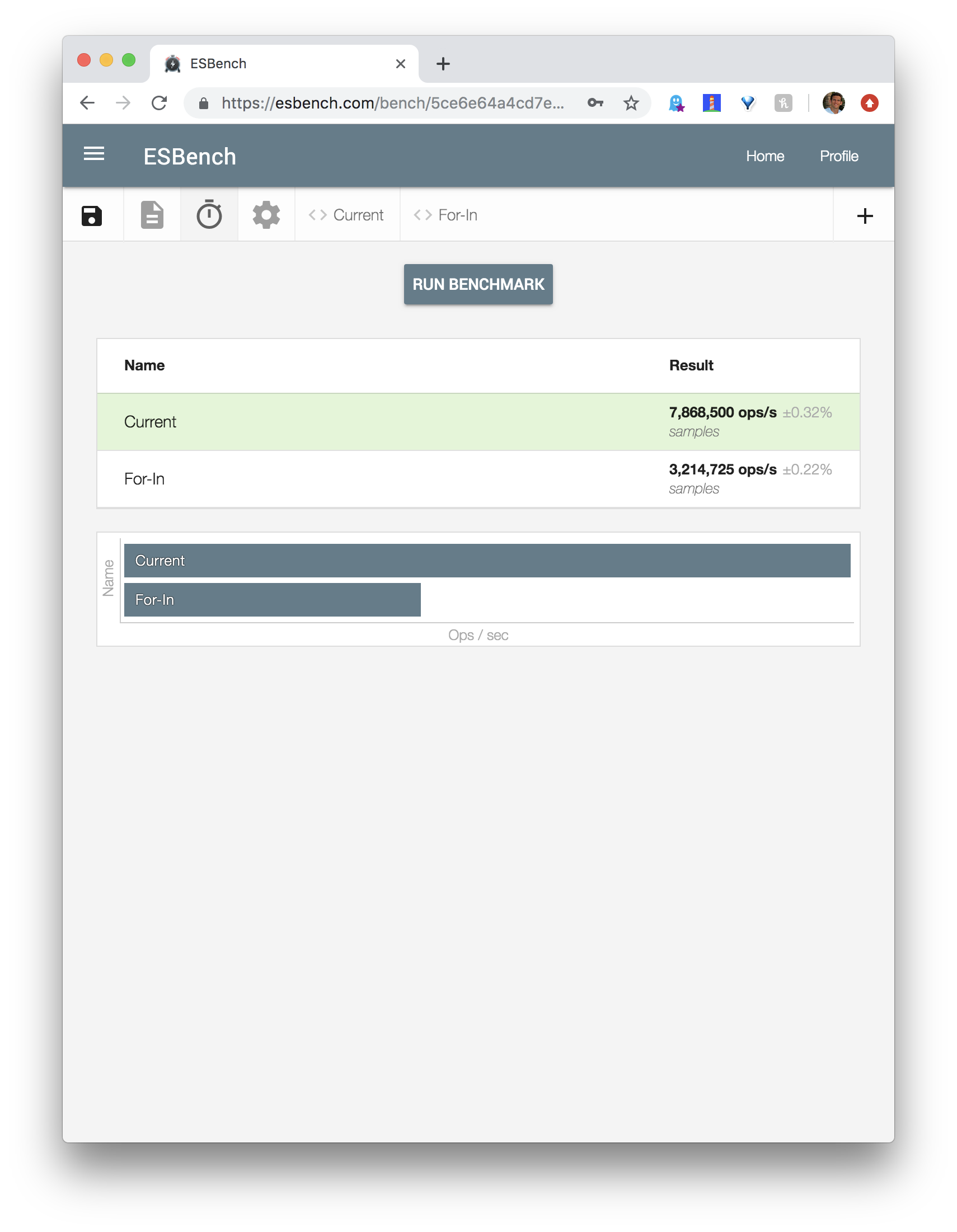
mikesherov
commented
May 23, 2019
Here's the reduce version added to that bench as "Test 3": |
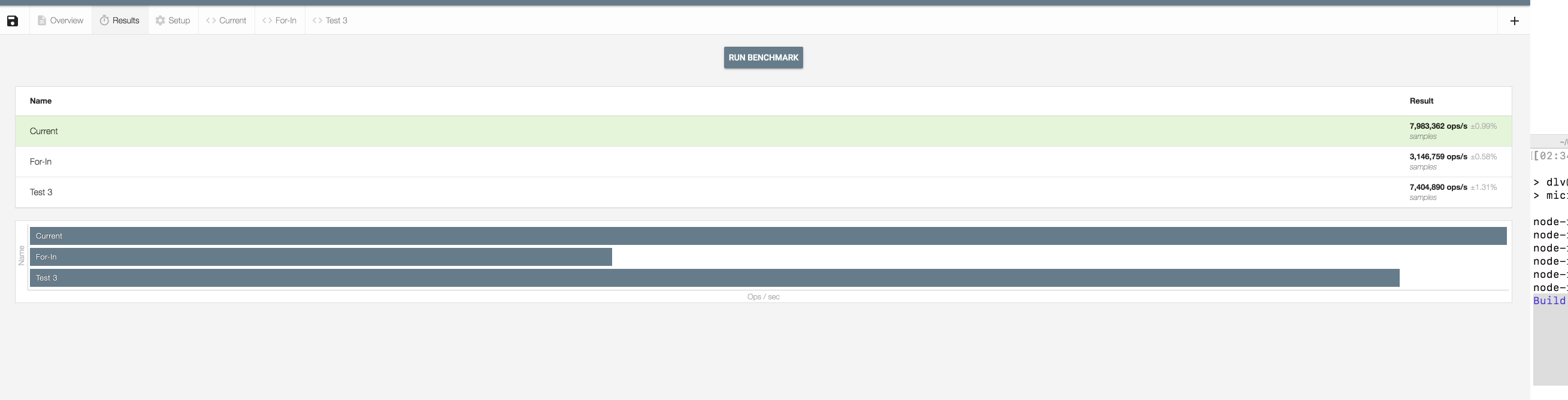
mikesherov
commented
May 23, 2019
Seems like reduce gives the size savings while only being 6% slower than for-in |
mikesherov
commented
May 23, 2019
Sorry, actually smaller!!! for: |
mikesherov
commented
May 23, 2019
I opened a PR for the reduce version: #36 |
for/in returns the index for arrays, so this just works. Passes all the tests.
Before:
After: