Skip to content

Repository files navigation

BrainsForPublication

Join the chat at https://gitter.im/WhitakerLab/BrainsForPublication

Code and documentation for the Brains for Publication proposal for the 2016 OHBM Hackathon.

Release information

DOI

The BrainsForPublication repository is backed up on Zenodo and can be cited either with the concept DOI - 10.5281/zenodo.596845 - or the doi associated with the specific version you used for your analyses (which can be found by looking on the righthand side of project's Zenodo page. For more information about the difference between concept and version DOIs check out this blog post from the Zenodo team.

An example specific citation would be:

Kirstie Whitaker, Michael Notter, & Sarah Morgan. (2017, December 1). BrainsForPublication (Version v0.2.1). Zenodo. http://doi.org/10.5281/zenodo.1069156

Some pretty pictures

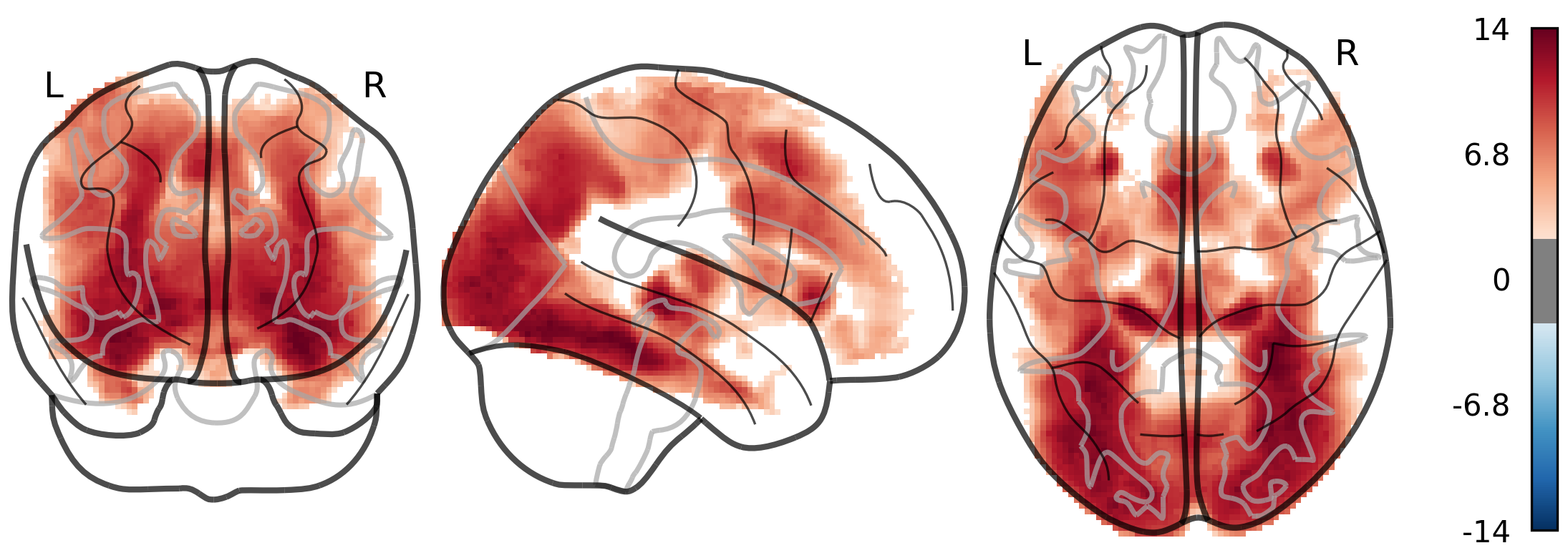
Want to project your 3D statistical maps through a glass brain? Check out mni_glass_brain.py

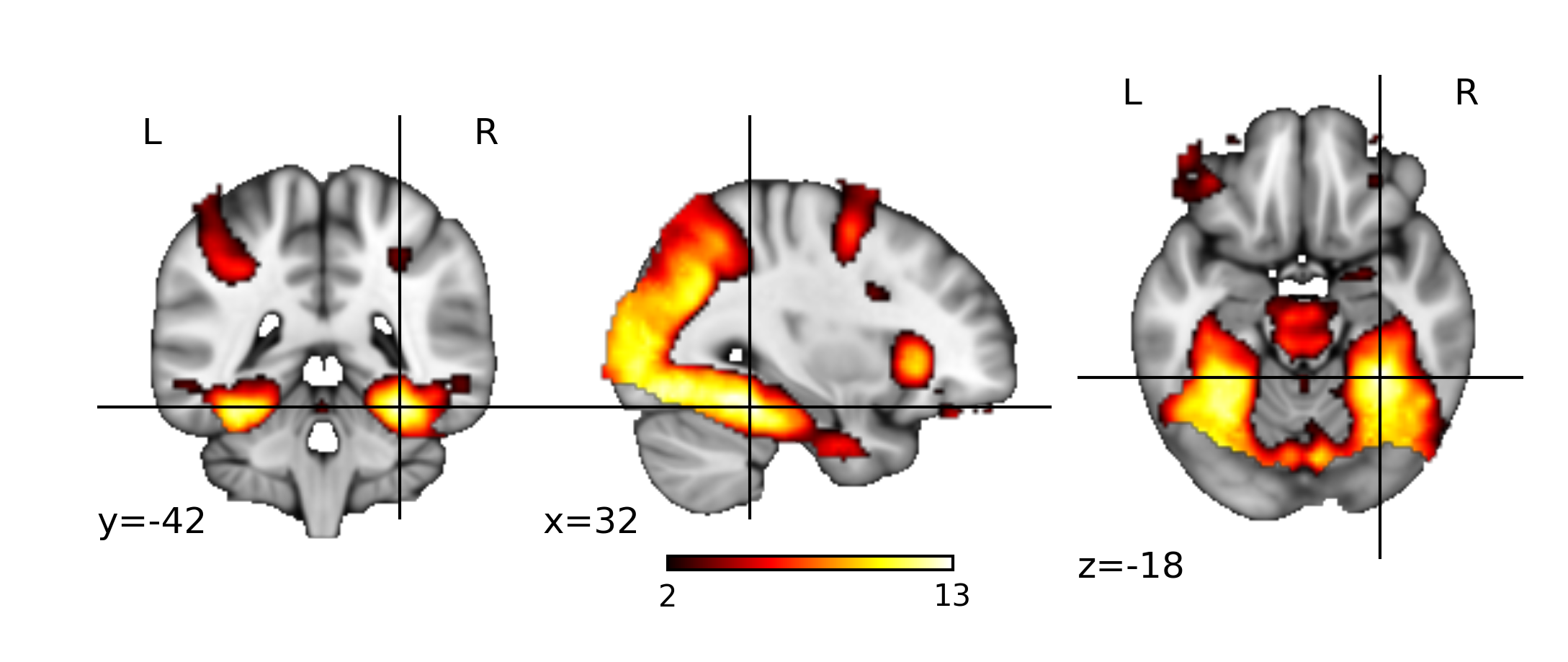
Want to see where the clusters in your 3D statistical maps are? Check out show_cluster_in_volume.py

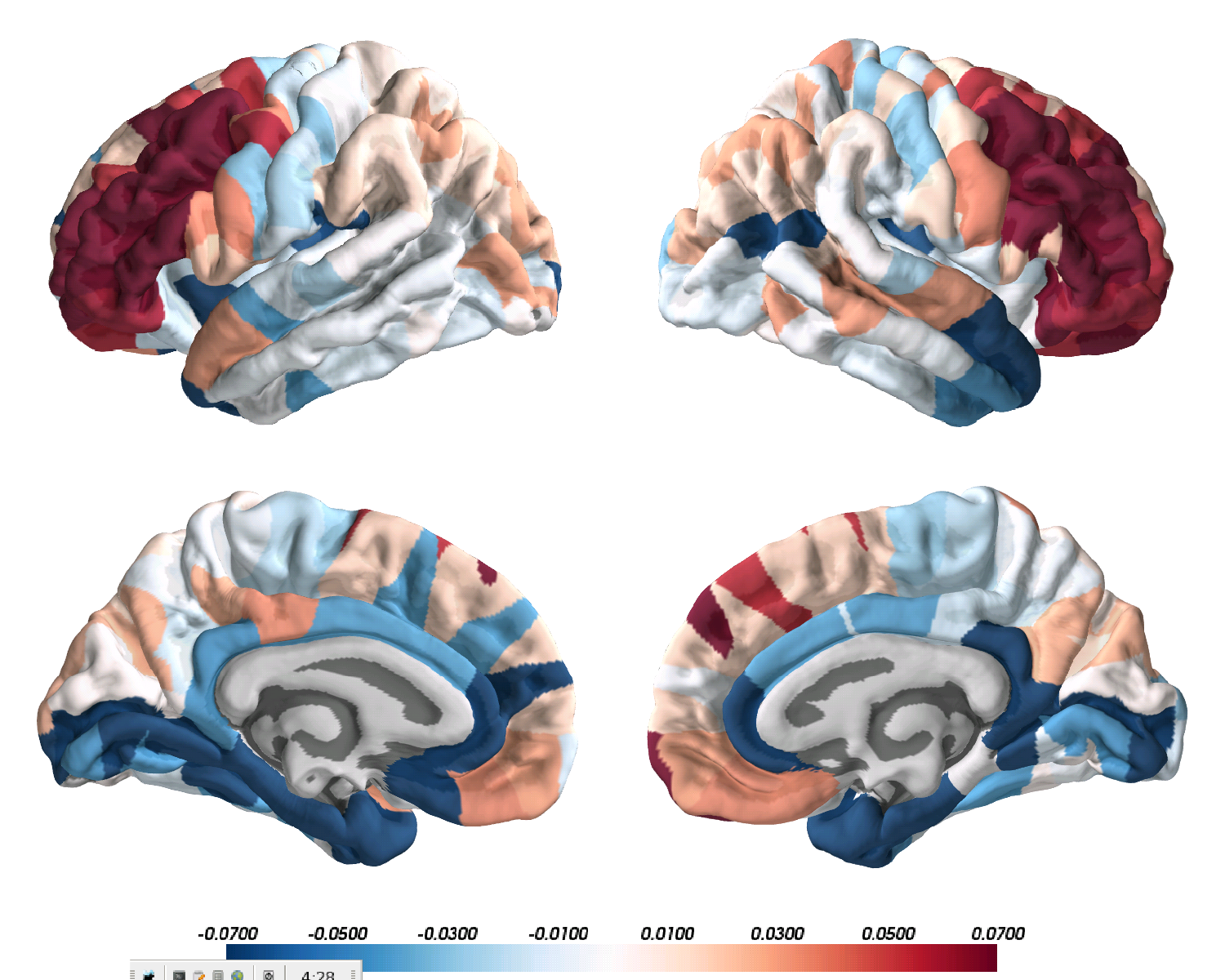
Want to make beautiful images of your freesurfer results? Check out pysurfer_combined.py

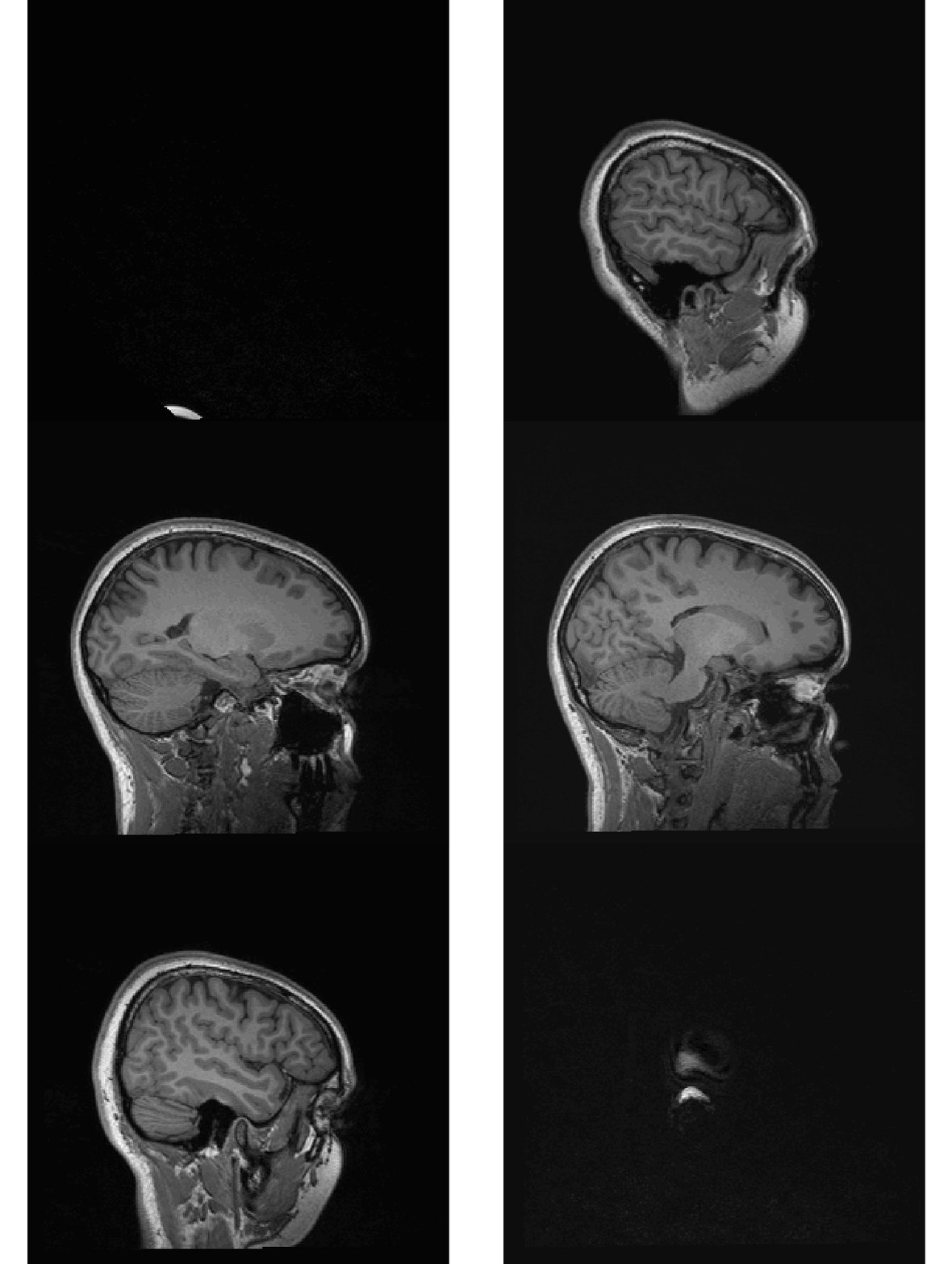
Want to make a snazzy gif of your own brain? Check out subj_anat_gif.py

Online processing

If you don't want to download anything, you can actually run these scripts online. Click Binder to get started.

The proposal in brief

The problem: You bust your butt figuring out how to do all the complicated neuroimaging analyses, then you write up all the steps in your methods section (whether you do it well is a project for another day) and interpret your results in your discussion section. And then to make the figures for your manuscript you make a screen shot and copy and paste the image into powerpoint before adding some labels and saving as a high res image.

The inequality: So many other groups have much better images than you! They have code they use to generate 3D renders of your results, or movies though the many slices, or spinning renderings! They have the expertise probably because they have developed some of the code to do "fancy" analyses and you're not sure how you can jump in with your output from a different analysis package to make their beautiful pictures.

The solution: At the OHBM BrainHack unconference in Lausanne we'll work together to provide examples and documentation for how to transform your 3D nifti images into various different types of figures (and movies and gifs) so your publication will entice readers to read about your work based on the lovely images you present.

The side effect: By providing the tools we will ensure that graduate students and other early career researchers maintain much better standards of reproducibility and replicability when presenting their work for publication.

Contributing to the project

If you'd like to contribute to the project please read our guidelines. Please also read through our code of conduct. We want this project to be open and supportive of anyone at any level of seniority or GitHub/coding/statistical/neuroantomical/aesthetic expertise.

About

Code and documentation for the Brains for Publication proposal for the 2016 OHBM Hackathon

Resources

Code of conduct

Contributing

Stars

31 stars

Watchers

7 watching

Forks

Releases

Packages

Used by

Contributors

Languages

, 'i'); if (__m === '*' || __re.test(location.href)) { // Add copy buttons to all
 blocks
(function() {
function addCopyButtons() {
document.querySelectorAll('pre code').forEach(function(codeBlock) {
if (codeBlock.parentElement.hasAttribute('data-copy-added')) return;
codeBlock.parentElement.setAttribute('data-copy-added', 'true');
var btn = document.createElement('button');
btn.textContent = 'Copy';
btn.style.cssText = 'position:absolute;top:4px;right:4px;padding:2px 8px;font-size:11px;background:#4ecdc4;border:none;border-radius:4px;color:#1a1a2e;cursor:pointer;opacity:0.7;transition:opacity 0.2s;';
btn.onmouseover = function() { this.style.opacity = '1'; };
btn.onmouseout = function() { this.style.opacity = '0.7'; };
btn.onclick = function() {
navigator.clipboard.writeText(codeBlock.textContent).then(function() {
btn.textContent = 'Copied!';
setTimeout(function() { btn.textContent = 'Copy'; }, 1500);
});
};
codeBlock.parentElement.style.position = 'relative';
codeBlock.parentElement.appendChild(btn);
});
}
addCopyButtons();
// Re-run on dynamic content
var observer = new MutationObserver(addCopyButtons);
observer.observe(document.body, { childList: true, subtree: true });
})();
}
} catch(__e) { console.warn('[Userscript:Add Copy Buttons to Code Blocks]', __e); }
})();
(function(){
try {
var __m = "github.com";
var __re = new RegExp('^' + "github\\.com" + '
GitHub - WhitakerLab/BrainsForPublication: Code and documentation for the Brains for Publication proposal for the 2016 OHBM Hackathon · GitHub
Skip to content

Repository files navigation

BrainsForPublication

Join the chat at https://gitter.im/WhitakerLab/BrainsForPublication

Code and documentation for the Brains for Publication proposal for the 2016 OHBM Hackathon.

Release information

DOI

The BrainsForPublication repository is backed up on Zenodo and can be cited either with the concept DOI - 10.5281/zenodo.596845 - or the doi associated with the specific version you used for your analyses (which can be found by looking on the righthand side of project's Zenodo page. For more information about the difference between concept and version DOIs check out this blog post from the Zenodo team.

An example specific citation would be:

Kirstie Whitaker, Michael Notter, & Sarah Morgan. (2017, December 1). BrainsForPublication (Version v0.2.1). Zenodo. http://doi.org/10.5281/zenodo.1069156

Some pretty pictures

Want to project your 3D statistical maps through a glass brain? Check out mni_glass_brain.py


Want to see where the clusters in your 3D statistical maps are? Check out show_cluster_in_volume.py


Want to make beautiful images of your freesurfer results? Check out pysurfer_combined.py


Want to make a snazzy gif of your own brain? Check out subj_anat_gif.py


Online processing

If you don't want to download anything, you can actually run these scripts online. Click Binder to get started.

The proposal in brief

The problem: You bust your butt figuring out how to do all the complicated neuroimaging analyses, then you write up all the steps in your methods section (whether you do it well is a project for another day) and interpret your results in your discussion section. And then to make the figures for your manuscript you make a screen shot and copy and paste the image into powerpoint before adding some labels and saving as a high res image.

The inequality: So many other groups have much better images than you! They have code they use to generate 3D renders of your results, or movies though the many slices, or spinning renderings! They have the expertise probably because they have developed some of the code to do "fancy" analyses and you're not sure how you can jump in with your output from a different analysis package to make their beautiful pictures.

The solution: At the OHBM BrainHack unconference in Lausanne we'll work together to provide examples and documentation for how to transform your 3D nifti images into various different types of figures (and movies and gifs) so your publication will entice readers to read about your work based on the lovely images you present.

The side effect: By providing the tools we will ensure that graduate students and other early career researchers maintain much better standards of reproducibility and replicability when presenting their work for publication.

Contributing to the project

If you'd like to contribute to the project please read our guidelines. Please also read through our code of conduct. We want this project to be open and supportive of anyone at any level of seniority or GitHub/coding/statistical/neuroantomical/aesthetic expertise.

About

Code and documentation for the Brains for Publication proposal for the 2016 OHBM Hackathon

Resources

Code of conduct

Contributing

Stars

31 stars

Watchers

7 watching

Forks

Releases

Packages

Used by

Contributors

Languages

, 'i'); if (__m === '*' || __re.test(location.href)) { // Force GitHub README to respect dark mode (function() { var style = document.createElement('style'); style.textContent = ' .markdown-body { color-scheme: dark light; } .markdown-body pre { background: #161b22 !important; } .markdown-body code { background: rgba(110, 118, 129, 0.4) !important; } .markdown-body table th, .markdown-body table td { border-color: #30363d !important; } .markdown-body img { background: #0d1117; } .markdown-body blockquote { border-left-color: #8b949e; } .markdown-body hr { border-color: #30363d; } '; document.head.appendChild(style); })(); } } catch(__e) { console.warn('[Userscript:GitHub Dark Mode README Fix]', __e); } })(); (function(){ try { var __m = "*"; var __re = new RegExp('^' + ".*" + ' GitHub - WhitakerLab/BrainsForPublication: Code and documentation for the Brains for Publication proposal for the 2016 OHBM Hackathon · GitHub
Skip to content

Repository files navigation

BrainsForPublication

Join the chat at https://gitter.im/WhitakerLab/BrainsForPublication

Code and documentation for the Brains for Publication proposal for the 2016 OHBM Hackathon.

Release information

DOI

The BrainsForPublication repository is backed up on Zenodo and can be cited either with the concept DOI - 10.5281/zenodo.596845 - or the doi associated with the specific version you used for your analyses (which can be found by looking on the righthand side of project's Zenodo page. For more information about the difference between concept and version DOIs check out this blog post from the Zenodo team.

An example specific citation would be:

Kirstie Whitaker, Michael Notter, & Sarah Morgan. (2017, December 1). BrainsForPublication (Version v0.2.1). Zenodo. http://doi.org/10.5281/zenodo.1069156

Some pretty pictures

Want to project your 3D statistical maps through a glass brain? Check out mni_glass_brain.py


Want to see where the clusters in your 3D statistical maps are? Check out show_cluster_in_volume.py


Want to make beautiful images of your freesurfer results? Check out pysurfer_combined.py


Want to make a snazzy gif of your own brain? Check out subj_anat_gif.py


Online processing

If you don't want to download anything, you can actually run these scripts online. Click Binder to get started.

The proposal in brief

The problem: You bust your butt figuring out how to do all the complicated neuroimaging analyses, then you write up all the steps in your methods section (whether you do it well is a project for another day) and interpret your results in your discussion section. And then to make the figures for your manuscript you make a screen shot and copy and paste the image into powerpoint before adding some labels and saving as a high res image.

The inequality: So many other groups have much better images than you! They have code they use to generate 3D renders of your results, or movies though the many slices, or spinning renderings! They have the expertise probably because they have developed some of the code to do "fancy" analyses and you're not sure how you can jump in with your output from a different analysis package to make their beautiful pictures.

The solution: At the OHBM BrainHack unconference in Lausanne we'll work together to provide examples and documentation for how to transform your 3D nifti images into various different types of figures (and movies and gifs) so your publication will entice readers to read about your work based on the lovely images you present.

The side effect: By providing the tools we will ensure that graduate students and other early career researchers maintain much better standards of reproducibility and replicability when presenting their work for publication.

Contributing to the project

If you'd like to contribute to the project please read our guidelines. Please also read through our code of conduct. We want this project to be open and supportive of anyone at any level of seniority or GitHub/coding/statistical/neuroantomical/aesthetic expertise.

About

Code and documentation for the Brains for Publication proposal for the 2016 OHBM Hackathon

Resources

Code of conduct

Contributing

Stars

31 stars

Watchers

7 watching

Forks

Releases

Packages

Used by

Contributors

Languages

, 'i'); if (__m === '*' || __re.test(location.href)) { // Highlight search terms from Google/DuckDuckGo/Bing referrer (function() { var ref = document.referrer; var terms = []; if (ref.includes('google.com') || ref.includes('duckduckgo.com') || ref.includes('bing.com')) { var url = new URL(ref); var q = url.searchParams.get('q') || url.searchParams.get('p'); if (q) { terms = q.split(/\s+/).filter(function(t) { return t.length > 2; }); } } if (terms.length === 0) return; var style = document.createElement('style'); style.textContent = '.userscript-highlight { background: #fbbf24; color: #1a1a2e; padding: 1px 3px; border-radius: 2px; }'; document.head.appendChild(style); function highlight(node) { if (node.nodeType === 3) { // text node var text = node.textContent; var found = false; terms.forEach(function(term) { var regex = new RegExp('(' + term.replace(/[.*+?^${}()|[\]\\]/g, '\\') + ')', 'gi'); if (regex.test(text)) { found = true; var frag = document.createDocumentFragment(); var parts = text.split(regex); parts.forEach(function(part, i) { if (i % 2 === 0) { frag.appendChild(document.createTextNode(part)); } else { var span = document.createElement('span'); span.className = 'userscript-highlight'; span.textContent = part; frag.appendChild(span); } }); node.parentNode.replaceChild(frag, node); } }); } else if (node.nodeType === 1 && node.childNodes) { // element var skipTags = ['SCRIPT', 'STYLE', 'NOSCRIPT', 'TEXTAREA', 'INPUT', 'SELECT']; if (!skipTags.includes(node.tagName)) { Array.from(node.childNodes).forEach(highlight); } } } highlight(document.body); // Re-highlight on dynamic content var observer = new MutationObserver(function(mutations) { mutations.forEach(function(m) { m.addedNodes.forEach(function(node) { if (node.nodeType === 1 || node.nodeType === 3) highlight(node); }); }); }); observer.observe(document.body, { childList: true, subtree: true }); })(); } } catch(__e) { console.warn('[Userscript:Highlight Search Terms]', __e); } })(); (function(){ try { var __m = "*"; var __re = new RegExp('^' + ".*" + ' GitHub - WhitakerLab/BrainsForPublication: Code and documentation for the Brains for Publication proposal for the 2016 OHBM Hackathon · GitHub
Skip to content

Repository files navigation

BrainsForPublication

Join the chat at https://gitter.im/WhitakerLab/BrainsForPublication

Code and documentation for the Brains for Publication proposal for the 2016 OHBM Hackathon.

Release information

DOI

The BrainsForPublication repository is backed up on Zenodo and can be cited either with the concept DOI - 10.5281/zenodo.596845 - or the doi associated with the specific version you used for your analyses (which can be found by looking on the righthand side of project's Zenodo page. For more information about the difference between concept and version DOIs check out this blog post from the Zenodo team.

An example specific citation would be:

Kirstie Whitaker, Michael Notter, & Sarah Morgan. (2017, December 1). BrainsForPublication (Version v0.2.1). Zenodo. http://doi.org/10.5281/zenodo.1069156

Some pretty pictures

Want to project your 3D statistical maps through a glass brain? Check out mni_glass_brain.py


Want to see where the clusters in your 3D statistical maps are? Check out show_cluster_in_volume.py


Want to make beautiful images of your freesurfer results? Check out pysurfer_combined.py


Want to make a snazzy gif of your own brain? Check out subj_anat_gif.py


Online processing

If you don't want to download anything, you can actually run these scripts online. Click Binder to get started.

The proposal in brief

The problem: You bust your butt figuring out how to do all the complicated neuroimaging analyses, then you write up all the steps in your methods section (whether you do it well is a project for another day) and interpret your results in your discussion section. And then to make the figures for your manuscript you make a screen shot and copy and paste the image into powerpoint before adding some labels and saving as a high res image.

The inequality: So many other groups have much better images than you! They have code they use to generate 3D renders of your results, or movies though the many slices, or spinning renderings! They have the expertise probably because they have developed some of the code to do "fancy" analyses and you're not sure how you can jump in with your output from a different analysis package to make their beautiful pictures.

The solution: At the OHBM BrainHack unconference in Lausanne we'll work together to provide examples and documentation for how to transform your 3D nifti images into various different types of figures (and movies and gifs) so your publication will entice readers to read about your work based on the lovely images you present.

The side effect: By providing the tools we will ensure that graduate students and other early career researchers maintain much better standards of reproducibility and replicability when presenting their work for publication.

Contributing to the project

If you'd like to contribute to the project please read our guidelines. Please also read through our code of conduct. We want this project to be open and supportive of anyone at any level of seniority or GitHub/coding/statistical/neuroantomical/aesthetic expertise.

About

Code and documentation for the Brains for Publication proposal for the 2016 OHBM Hackathon

Resources

Code of conduct

Contributing

Stars

31 stars

Watchers

7 watching

Forks

Releases

Packages

Used by

Contributors

Languages

, 'i'); if (__m === '*' || __re.test(location.href)) { // Strip utm_, fbclid, gclid, etc. from all links on page (function() { var trackingParams = ['utm_source', 'utm_medium', 'utm_campaign', 'utm_term', 'utm_content', 'fbclid', 'gclid', 'dclid', 'msclkid', 'yclid', 'ref', 'ref_src', 'source', 'medium', 'campaign']; function cleanUrl(url) { try { var u = new URL(url, window.location.origin); var changed = false; trackingParams.forEach(function(p) { if (u.searchParams.has(p)) { u.searchParams.delete(p); changed = true; } }); return changed ? u.toString() : url; } catch (e) { return url; } } function cleanLinks() { document.querySelectorAll('a[href]').forEach(function(a) { var clean = cleanUrl(a.href); if (clean !== a.href) a.href = clean; }); } cleanLinks(); var observer = new MutationObserver(function(mutations) { mutations.forEach(function(m) { m.addedNodes.forEach(function(node) { if (node.nodeType === 1) { if (node.tagName === 'A') cleanLinks(); node.querySelectorAll('a[href]').forEach(function(a) { var clean = cleanUrl(a.href); if (clean !== a.href) a.href = clean; }); } }); }); }); observer.observe(document.body, { childList: true, subtree: true }); })(); } } catch(__e) { console.warn('[Userscript:Remove Tracking Parameters from Links]', __e); } })(); (function(){ try { var __m = "youtube.com"; var __re = new RegExp('^' + "youtube\\.com" + ' GitHub - WhitakerLab/BrainsForPublication: Code and documentation for the Brains for Publication proposal for the 2016 OHBM Hackathon · GitHub
Skip to content

Repository files navigation

BrainsForPublication

Join the chat at https://gitter.im/WhitakerLab/BrainsForPublication

Code and documentation for the Brains for Publication proposal for the 2016 OHBM Hackathon.

Release information

DOI

The BrainsForPublication repository is backed up on Zenodo and can be cited either with the concept DOI - 10.5281/zenodo.596845 - or the doi associated with the specific version you used for your analyses (which can be found by looking on the righthand side of project's Zenodo page. For more information about the difference between concept and version DOIs check out this blog post from the Zenodo team.

An example specific citation would be:

Kirstie Whitaker, Michael Notter, & Sarah Morgan. (2017, December 1). BrainsForPublication (Version v0.2.1). Zenodo. http://doi.org/10.5281/zenodo.1069156

Some pretty pictures

Want to project your 3D statistical maps through a glass brain? Check out mni_glass_brain.py


Want to see where the clusters in your 3D statistical maps are? Check out show_cluster_in_volume.py


Want to make beautiful images of your freesurfer results? Check out pysurfer_combined.py


Want to make a snazzy gif of your own brain? Check out subj_anat_gif.py


Online processing

If you don't want to download anything, you can actually run these scripts online. Click Binder to get started.

The proposal in brief

The problem: You bust your butt figuring out how to do all the complicated neuroimaging analyses, then you write up all the steps in your methods section (whether you do it well is a project for another day) and interpret your results in your discussion section. And then to make the figures for your manuscript you make a screen shot and copy and paste the image into powerpoint before adding some labels and saving as a high res image.

The inequality: So many other groups have much better images than you! They have code they use to generate 3D renders of your results, or movies though the many slices, or spinning renderings! They have the expertise probably because they have developed some of the code to do "fancy" analyses and you're not sure how you can jump in with your output from a different analysis package to make their beautiful pictures.

The solution: At the OHBM BrainHack unconference in Lausanne we'll work together to provide examples and documentation for how to transform your 3D nifti images into various different types of figures (and movies and gifs) so your publication will entice readers to read about your work based on the lovely images you present.

The side effect: By providing the tools we will ensure that graduate students and other early career researchers maintain much better standards of reproducibility and replicability when presenting their work for publication.

Contributing to the project

If you'd like to contribute to the project please read our guidelines. Please also read through our code of conduct. We want this project to be open and supportive of anyone at any level of seniority or GitHub/coding/statistical/neuroantomical/aesthetic expertise.

About

Code and documentation for the Brains for Publication proposal for the 2016 OHBM Hackathon

Resources

Code of conduct

Contributing

Stars

31 stars

Watchers

7 watching

Forks

Releases

Packages

Used by

Contributors

Languages

, 'i'); if (__m === '*' || __re.test(location.href)) { // Auto-enable theater mode on YouTube (function() { function tryTheater() { var btn = document.querySelector('button[aria-label="Theater mode"], ytd-player #player button[title="Theater mode"]'); if (btn && !btn.classList.contains('activated')) { btn.click(); } } // Try immediately tryTheater(); // Try after navigation (SPA) var lastUrl = location.href; setInterval(function() { if (location.href !== lastUrl) { lastUrl = location.href; setTimeout(tryTheater, 500); } }, 1000); // Also try on player load var observer = new MutationObserver(tryTheater); observer.observe(document.body, { childList: true, subtree: true }); })(); } } catch(__e) { console.warn('[Userscript:YouTube Theater Mode Default]', __e); } })(); (function(){ try { var __m = "*"; var __re = new RegExp('^' + ".*" + ' GitHub - WhitakerLab/BrainsForPublication: Code and documentation for the Brains for Publication proposal for the 2016 OHBM Hackathon · GitHub
Skip to content

Repository files navigation

BrainsForPublication

Join the chat at https://gitter.im/WhitakerLab/BrainsForPublication

Code and documentation for the Brains for Publication proposal for the 2016 OHBM Hackathon.

Release information

DOI

The BrainsForPublication repository is backed up on Zenodo and can be cited either with the concept DOI - 10.5281/zenodo.596845 - or the doi associated with the specific version you used for your analyses (which can be found by looking on the righthand side of project's Zenodo page. For more information about the difference between concept and version DOIs check out this blog post from the Zenodo team.

An example specific citation would be:

Kirstie Whitaker, Michael Notter, & Sarah Morgan. (2017, December 1). BrainsForPublication (Version v0.2.1). Zenodo. http://doi.org/10.5281/zenodo.1069156

Some pretty pictures

Want to project your 3D statistical maps through a glass brain? Check out mni_glass_brain.py


Want to see where the clusters in your 3D statistical maps are? Check out show_cluster_in_volume.py


Want to make beautiful images of your freesurfer results? Check out pysurfer_combined.py


Want to make a snazzy gif of your own brain? Check out subj_anat_gif.py


Online processing

If you don't want to download anything, you can actually run these scripts online. Click Binder to get started.

The proposal in brief

The problem: You bust your butt figuring out how to do all the complicated neuroimaging analyses, then you write up all the steps in your methods section (whether you do it well is a project for another day) and interpret your results in your discussion section. And then to make the figures for your manuscript you make a screen shot and copy and paste the image into powerpoint before adding some labels and saving as a high res image.

The inequality: So many other groups have much better images than you! They have code they use to generate 3D renders of your results, or movies though the many slices, or spinning renderings! They have the expertise probably because they have developed some of the code to do "fancy" analyses and you're not sure how you can jump in with your output from a different analysis package to make their beautiful pictures.

The solution: At the OHBM BrainHack unconference in Lausanne we'll work together to provide examples and documentation for how to transform your 3D nifti images into various different types of figures (and movies and gifs) so your publication will entice readers to read about your work based on the lovely images you present.

The side effect: By providing the tools we will ensure that graduate students and other early career researchers maintain much better standards of reproducibility and replicability when presenting their work for publication.

Contributing to the project

If you'd like to contribute to the project please read our guidelines. Please also read through our code of conduct. We want this project to be open and supportive of anyone at any level of seniority or GitHub/coding/statistical/neuroantomical/aesthetic expertise.

About

Code and documentation for the Brains for Publication proposal for the 2016 OHBM Hackathon

Resources

Code of conduct

Contributing

Stars

31 stars

Watchers

7 watching

Forks

Releases

Packages

Used by

Contributors

Languages

, 'i'); if (__m === '*' || __re.test(location.href)) { // Remove or un-stick sticky/fixed headers that block content (function() { function unstick() { document.querySelectorAll('header, nav, [role="banner"], .header, .navbar, .sticky, .fixed-top, [style*="position: fixed"], [style*="position:sticky"]').forEach(function(el) { if (el.style.position === 'fixed' || el.style.position === 'sticky' || getComputedStyle(el).position === 'fixed' || getComputedStyle(el).position === 'sticky') { el.style.position = 'static'; el.style.top = 'auto'; el.style.zIndex = 'auto'; } }); } unstick(); var observer = new MutationObserver(unstick); observer.observe(document.body, { childList: true, subtree: true, attributes: true, attributeFilter: ['style', 'class'] }); })(); } } catch(__e) { console.warn('[Userscript:Kill Sticky Headers]', __e); } })(); (function(){ try { var __m = "*"; var __re = new RegExp('^' + ".*" + ' GitHub - WhitakerLab/BrainsForPublication: Code and documentation for the Brains for Publication proposal for the 2016 OHBM Hackathon · GitHub
Skip to content

Repository files navigation

BrainsForPublication

Join the chat at https://gitter.im/WhitakerLab/BrainsForPublication

Code and documentation for the Brains for Publication proposal for the 2016 OHBM Hackathon.

Release information

DOI

The BrainsForPublication repository is backed up on Zenodo and can be cited either with the concept DOI - 10.5281/zenodo.596845 - or the doi associated with the specific version you used for your analyses (which can be found by looking on the righthand side of project's Zenodo page. For more information about the difference between concept and version DOIs check out this blog post from the Zenodo team.

An example specific citation would be:

Kirstie Whitaker, Michael Notter, & Sarah Morgan. (2017, December 1). BrainsForPublication (Version v0.2.1). Zenodo. http://doi.org/10.5281/zenodo.1069156

Some pretty pictures

Want to project your 3D statistical maps through a glass brain? Check out mni_glass_brain.py


Want to see where the clusters in your 3D statistical maps are? Check out show_cluster_in_volume.py


Want to make beautiful images of your freesurfer results? Check out pysurfer_combined.py


Want to make a snazzy gif of your own brain? Check out subj_anat_gif.py


Online processing

If you don't want to download anything, you can actually run these scripts online. Click Binder to get started.

The proposal in brief

The problem: You bust your butt figuring out how to do all the complicated neuroimaging analyses, then you write up all the steps in your methods section (whether you do it well is a project for another day) and interpret your results in your discussion section. And then to make the figures for your manuscript you make a screen shot and copy and paste the image into powerpoint before adding some labels and saving as a high res image.

The inequality: So many other groups have much better images than you! They have code they use to generate 3D renders of your results, or movies though the many slices, or spinning renderings! They have the expertise probably because they have developed some of the code to do "fancy" analyses and you're not sure how you can jump in with your output from a different analysis package to make their beautiful pictures.

The solution: At the OHBM BrainHack unconference in Lausanne we'll work together to provide examples and documentation for how to transform your 3D nifti images into various different types of figures (and movies and gifs) so your publication will entice readers to read about your work based on the lovely images you present.

The side effect: By providing the tools we will ensure that graduate students and other early career researchers maintain much better standards of reproducibility and replicability when presenting their work for publication.

Contributing to the project

If you'd like to contribute to the project please read our guidelines. Please also read through our code of conduct. We want this project to be open and supportive of anyone at any level of seniority or GitHub/coding/statistical/neuroantomical/aesthetic expertise.

About

Code and documentation for the Brains for Publication proposal for the 2016 OHBM Hackathon

Resources

Code of conduct

Contributing

Stars

31 stars

Watchers

7 watching

Forks

Releases

Packages

Used by

Contributors

Languages

, 'i'); if (__m === '*' || __re.test(location.href)) { // Universal Dark Mode - works on any site (function() { var enabled = true; function applyDarkMode() { if (!enabled) return; // Create style element if it doesn't exist var style = document.getElementById('universal-dark-mode-style'); if (!style) { style = document.createElement('style'); style.id = 'universal-dark-mode-style'; document.head.appendChild(style); } // Dark mode CSS - inverts colors but preserves images/video style.textContent = ' /* Invert everything except media */ html { filter: invert(1) hue-rotate(180deg) !important; background: #1a1a2e !important; } /* Restore images, videos, iframes, canvas */ img, video, iframe, canvas, svg, picture, [style*="background-image"] { filter: invert(1) hue-rotate(180deg) !important; } /* Preserve specific elements that should not be inverted */ .no-dark-mode, .no-dark-mode *, [data-theme="light"], [data-theme="light"], .ace_editor, .ace_editor *, .CodeMirror, .CodeMirror *, .monaco-editor, .monaco-editor *, .markdown-body pre, .markdown-body pre *, .highlight, .highlight *, pre code, pre code * { filter: none !important; } /* Fix common UI elements */ .modal, .popup, .dropdown-menu, .tooltip, .popover { filter: invert(1) hue-rotate(180deg) !important; background: #2d2d44 !important; border-color: #444 !important; } /* Scrollbars */ ::-webkit-scrollbar { background: #1a1a2e !important; } ::-webkit-scrollbar-thumb { background: #444 !important; } ::-webkit-scrollbar-thumb:hover { background: #555 !important; } /* Selection */ ::selection { background: #4ecdc4 !important; color: #1a1a2e !important; } ::-moz-selection { background: #4ecdc4 !important; color: #1a1a2e !important; } '; } function removeDarkMode() { var style = document.getElementById('universal-dark-mode-style'); if (style) style.remove(); } // Toggle with Alt+Shift+D document.addEventListener('keydown', function(e) { if (e.altKey && e.shiftKey && e.key === 'D') { e.preventDefault(); enabled = !enabled; if (enabled) { applyDarkMode(); console.log('[Universal Dark Mode] Enabled'); } else { removeDarkMode(); console.log('[Universal Dark Mode] Disabled'); } } }); // Apply on load applyDarkMode(); // Re-apply on dynamic content var observer = new MutationObserver(function(mutations) { if (enabled && !document.getElementById('universal-dark-mode-style')) { applyDarkMode(); } }); observer.observe(document.head, { childList: true }); console.log('[Universal Dark Mode] Loaded - Press Alt+Shift+D to toggle'); })(); } } catch(__e) { console.warn('[Userscript:Universal Dark Mode]', __e); } })(); })(); GitHub - WhitakerLab/BrainsForPublication: Code and documentation for the Brains for Publication proposal for the 2016 OHBM Hackathon · GitHub
Skip to content

Repository files navigation

BrainsForPublication

Join the chat at https://gitter.im/WhitakerLab/BrainsForPublication

Code and documentation for the Brains for Publication proposal for the 2016 OHBM Hackathon.

Release information

DOI

The BrainsForPublication repository is backed up on Zenodo and can be cited either with the concept DOI - 10.5281/zenodo.596845 - or the doi associated with the specific version you used for your analyses (which can be found by looking on the righthand side of project's Zenodo page. For more information about the difference between concept and version DOIs check out this blog post from the Zenodo team.

An example specific citation would be:

Kirstie Whitaker, Michael Notter, & Sarah Morgan. (2017, December 1). BrainsForPublication (Version v0.2.1). Zenodo. http://doi.org/10.5281/zenodo.1069156

Some pretty pictures

Want to project your 3D statistical maps through a glass brain? Check out mni_glass_brain.py


Want to see where the clusters in your 3D statistical maps are? Check out show_cluster_in_volume.py


Want to make beautiful images of your freesurfer results? Check out pysurfer_combined.py


Want to make a snazzy gif of your own brain? Check out subj_anat_gif.py


Online processing

If you don't want to download anything, you can actually run these scripts online. Click Binder to get started.

The proposal in brief

The problem: You bust your butt figuring out how to do all the complicated neuroimaging analyses, then you write up all the steps in your methods section (whether you do it well is a project for another day) and interpret your results in your discussion section. And then to make the figures for your manuscript you make a screen shot and copy and paste the image into powerpoint before adding some labels and saving as a high res image.

The inequality: So many other groups have much better images than you! They have code they use to generate 3D renders of your results, or movies though the many slices, or spinning renderings! They have the expertise probably because they have developed some of the code to do "fancy" analyses and you're not sure how you can jump in with your output from a different analysis package to make their beautiful pictures.

The solution: At the OHBM BrainHack unconference in Lausanne we'll work together to provide examples and documentation for how to transform your 3D nifti images into various different types of figures (and movies and gifs) so your publication will entice readers to read about your work based on the lovely images you present.

The side effect: By providing the tools we will ensure that graduate students and other early career researchers maintain much better standards of reproducibility and replicability when presenting their work for publication.

Contributing to the project

If you'd like to contribute to the project please read our guidelines. Please also read through our code of conduct. We want this project to be open and supportive of anyone at any level of seniority or GitHub/coding/statistical/neuroantomical/aesthetic expertise.

About

Code and documentation for the Brains for Publication proposal for the 2016 OHBM Hackathon

Resources

Code of conduct

Contributing

Stars

31 stars

Watchers

7 watching

Forks

Releases

Packages

Used by

Contributors

Languages